Managing Social Media for a Brand? 10 Marketing Mistakes to Avoid
Social media can grow a brand incredibly fast. It can help you build trust, stay visible, connect with customers, and even drive direct sales. And with more than 5.24 billion people actively using social media worldwide as of 2025, the opportunity is massive.
But here’s the problem: a lot of brands are still getting the basics wrong.
Some post inconsistently and disappear for weeks. Others focus too much on selling and forget to actually engage with their audience.
Some ignore analytics completely and keep repeating strategies that clearly aren’t working. These mistakes may look small at first, but over time, they quietly weaken a brand’s online presence and make growth much harder than it needs to be.
The good news is that most of these mistakes are fixable once you know what to look for. In this guide, we’ll break down 10 common social media marketing mistakes brands make and, more importantly, how to avoid them so your strategy can actually produce long-term results.
Table of Contents
- 1 Why Smart Social Media Management Matters More Than Ever
- 2 10 Social Media Marketing Mistakes Brands Should Avoid
- 2.1 1. Posting Without Truly Understanding Your Target Audience
- 2.2 2. Running Social Media Without a Clear Strategy
- 2.3 3. Posting Inconsistently
- 2.4 4. Treating Social Media Like a One-Way Broadcast
- 2.5 5. Posting Too Many Sales-Driven Content
- 2.6 6. Posting the Exact Same Content Everywhere
- 2.7 7. Ignoring Analytics and Performance Insights
- 2.8 8. Refusing to Adapt to Trends and Platform Changes
- 2.9 9. Handling Negative Feedback Poorly
- 2.10 10. Trying to Manage Everything Manually
- 3 How OnlySocial Can Help You Avoid These Social Media Mistakes
- 4 How to Bounce Back After Social Media Mistakes
- 5 Final Note
- 6 FAQs
Why Smart Social Media Management Matters More Than Ever
Social media management is no longer just about posting nice graphics and hoping people engage. For most brands today, it directly affects visibility, customer trust, reputation, and even revenue.
When a brand manages its social media properly, people notice. The brand feels active, reliable, and connected to its audience. Customers are more likely to engage with posts, respond to offers, recommend the business to others, and stay loyal over time.
A strong social presence also helps brands stay relevant in crowded industries where attention is constantly shifting.
Good social media management also gives brands a competitive edge. Instead of posting randomly, successful businesses use strategy, analytics, and consistency to guide their content. They understand what their audience responds to, which platforms drive results, and how to create content that keeps people interested.
And perhaps most importantly, effective social media management helps brands avoid wasting effort. Without structure and clear direction, it’s easy to spend hours creating content that produces little to no impact. The right strategy helps businesses focus on content that actually supports growth, engagement, and long-term brand awareness.
That’s why understanding what not to do is just as important as knowing the latest social media trends. A few avoidable mistakes can quietly weaken your online presence, while the right habits can steadily build a much stronger brand over time.
10 Social Media Marketing Mistakes Brands Should Avoid
A lot of social media problems don’t happen because brands lack effort. They happen because the strategy behind the content is weak, inconsistent, or completely missing. And in most cases, the damage builds slowly until engagement drops and audience starts losing interest.
Here are some of the biggest mistakes brands still make when managing social media today.
1. Posting Without Truly Understanding Your Target Audience

One of the fastest ways to struggle on social media is creating content without knowing who it’s actually for.
A surprising number of brands post content based on what they personally like instead of what their audience cares about. The result is usually low engagement, weak conversations, and content that feels disconnected from the people it’s supposed to attract.
Understanding your audience means knowing:
- What problems they have
- What type of content they enjoy
- Which platforms they spend time on
- How they speak online
- What motivates them to engage or buy
For example, a B2B audience on LinkedIn will usually respond differently from a younger audience on TikTok or Instagram. Treating every audience the same rarely works.
The best-performing brands spend time studying their audience before creating content. They look at comments, analytics, trends, and customer behavior instead of simply posting blindly.
2. Running Social Media Without a Clear Strategy
A lot of brands post regularly but still struggle to grow because there’s no actual strategy behind the content.
They post random graphics one day, promotions the next day, and trending memes the day after that without any real direction tying things together.
Over time, the page starts feeling inconsistent and confusing.
A proper social media strategy helps answer important questions like:
- What are we trying to achieve?
- Who are we speaking to?
- What type of content supports those goals?
- Which platforms matter most?
- How do we measure success?
Without those answers, social media quickly becomes reactive instead of intentional.
The strongest brands usually have clear content pillars, posting goals, brand voice guidelines, and a consistent approach to engagement. That structure makes content feel more focused and professional.
3. Posting Inconsistently

Consistency matters more than many brands realize.
You don’t need to post ten times a day to grow online. But disappearing for weeks at a time and then suddenly posting five times in one day usually hurts momentum.
Social media platforms reward consistency because consistent activity keeps audiences engaged. More importantly, people begin to trust brands that show up regularly.
Inconsistent posting usually causes your audience to forget about your brand, leading to a drop in engagement over time and less visibility.
A consistent schedule helps build familiarity and keeps your brand active in people’s minds.
This is also why many businesses now use scheduling tools and content calendars. Planning content ahead makes it much easier to stay visible without scrambling for ideas every day.
4. Treating Social Media Like a One-Way Broadcast
A lot of brands post content consistently but completely ignore the people interacting with it.
They rarely reply to comments, miss DMs for days, and barely acknowledge conversations happening under their posts. Over time, this makes the brand feel distant and uninterested in its own audience.
Social media works best when it feels social.
People want interaction. Even small things like replying to comments, reacting to mentions, or answering questions quickly can make followers feel seen and valued. That engagement also helps boost visibility because platforms notice when conversations happen around your content.
5. Posting Too Many Sales-Driven Content
Nobody wants to follow a page that feels like one long advertisement.
One of the most common mistakes brands make is constantly pushing products, offers, and promotions without giving people any real reason to stay connected.
When every post feels like:
- “Buy now”
- “Limited offer”
- “Shop today”
people eventually tune out.
The best brand pages balance promotional content with value-driven content. They educate, entertain, inspire, or start conversations alongside their marketing efforts.
Helpful tips, behind-the-scenes content, relatable posts, industry insights, customer stories, and entertaining content often perform much better long-term than endless promotions.
Ironically, brands usually sell more when they stop sounding like they’re trying to sell all the time.
6. Posting the Exact Same Content Everywhere

Cross-posting saves time. But blindly copying and pasting the exact same content across every platform is rarely effective.
Every social platform behaves differently.
What works on LinkedIn may feel too formal for TikTok. A Twitter-style text thread may not perform well on Instagram. A short Instagram caption may feel empty on Facebook.
Each platform has:
- Different audience behavior
- Different content styles
- Different algorithms
- Different engagement expectations
Strong social media management involves adapting content slightly for each platform instead of treating them all the same.
That doesn’t mean creating entirely new content every single time. It simply means adjusting formatting, captions, visuals, tone, or structure so the content feels native to the platform where it’s being posted.
7. Ignoring Analytics and Performance Insights
A lot of brands spend hours creating content but never take time to study how that content actually performs.
They keep posting without checking:
- Which posts get the most engagement
- What time their audience is active
- Which platform drives the best results
- What type of content people respond to most
That’s a huge mistake.
Analytics help remove guesswork from social media marketing. They show you what’s working, what’s failing, and where your audience is paying attention. Without that information, brands often keep repeating weak strategies for months without realizing it.
The best social media strategies are usually data-driven. They evolve based on audience behavior, not assumptions.
8. Refusing to Adapt to Trends and Platform Changes
Social media changes constantly.
Algorithms shift. Content formats evolve. New features appear almost every month. Brands that refuse to adapt usually start losing visibility without understanding why.
A few years ago, static image posts dominated many platforms. Now short-form videos, carousels, and conversational content often perform much better. Brands that ignored those changes struggled to keep up.
This doesn’t mean chasing every trend blindly. But it does mean staying aware of platform updates, new content formats, audience behavior shifts, and emerging trends in your industry.
9. Handling Negative Feedback Poorly
Every brand eventually faces criticism online. It’s normal. The real problem is how brands respond when it happens.
Some businesses ignore complaints completely. Others become defensive, argumentative, or delete negative comments too quickly. In many cases, that damages trust more than the original complaint itself.
People pay attention to how brands behave publicly.
A calm, professional response to criticism often builds credibility instead of destroying it. Even when a customer is upset, responding respectfully and trying to solve the issue shows maturity and accountability.
Poor crisis management can escalate small problems into major reputation issues very quickly on social media.
That’s why brands need clear communication guidelines and a proper process for handling negative feedback before problems happen.
10. Trying to Manage Everything Manually
Many brands waste huge amounts of time doing social media manually when better systems already exist.
They post manually every day, switch endlessly between platforms, struggle to stay consistent, and scramble for content ideas at the last minute.
Eventually, burnout kicks in.
This is where the right tools make a massive difference.
Scheduling platforms, analytics dashboards, AI content tools, content calendars, and engagement management systems help brands stay organized and save time. They reduce repetitive work and make social media management much more sustainable long-term.
How OnlySocial Can Help You Avoid These Social Media Mistakes
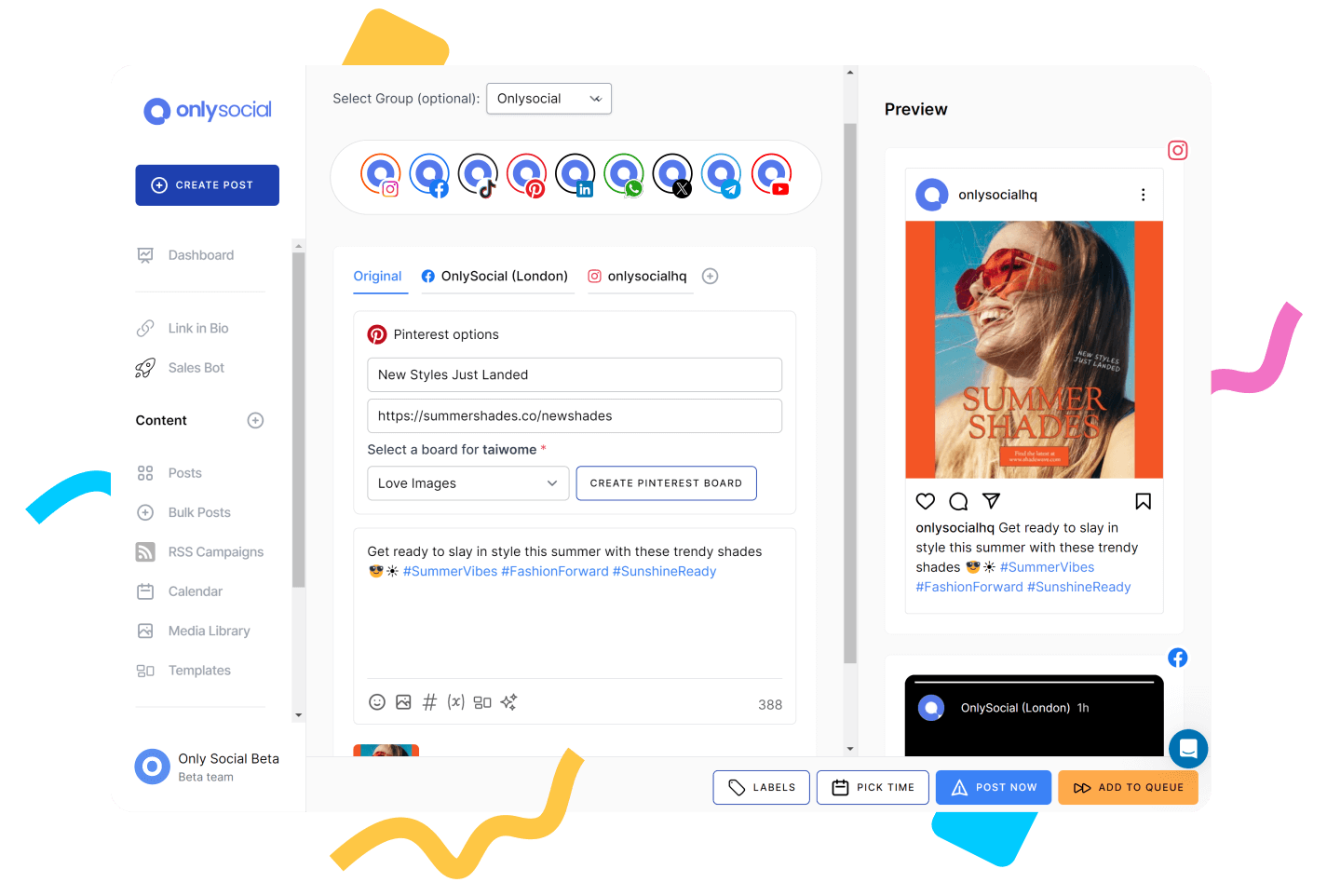
Managing social media becomes much easier when you have the right system behind your workflow. A lot of the mistakes brands make don’t happen because the team lacks creativity. They happen because the process is disorganized, inconsistent, or difficult to manage manually.
That’s where OnlySocial can make a real difference.
The platform brings scheduling, planning, analytics, engagement, collaboration, and AI tools into one place, helping brands stay organized and consistent without feeling overwhelmed.
Better content planning and consistency
One of the easiest ways to avoid inconsistent posting is by planning content ahead.
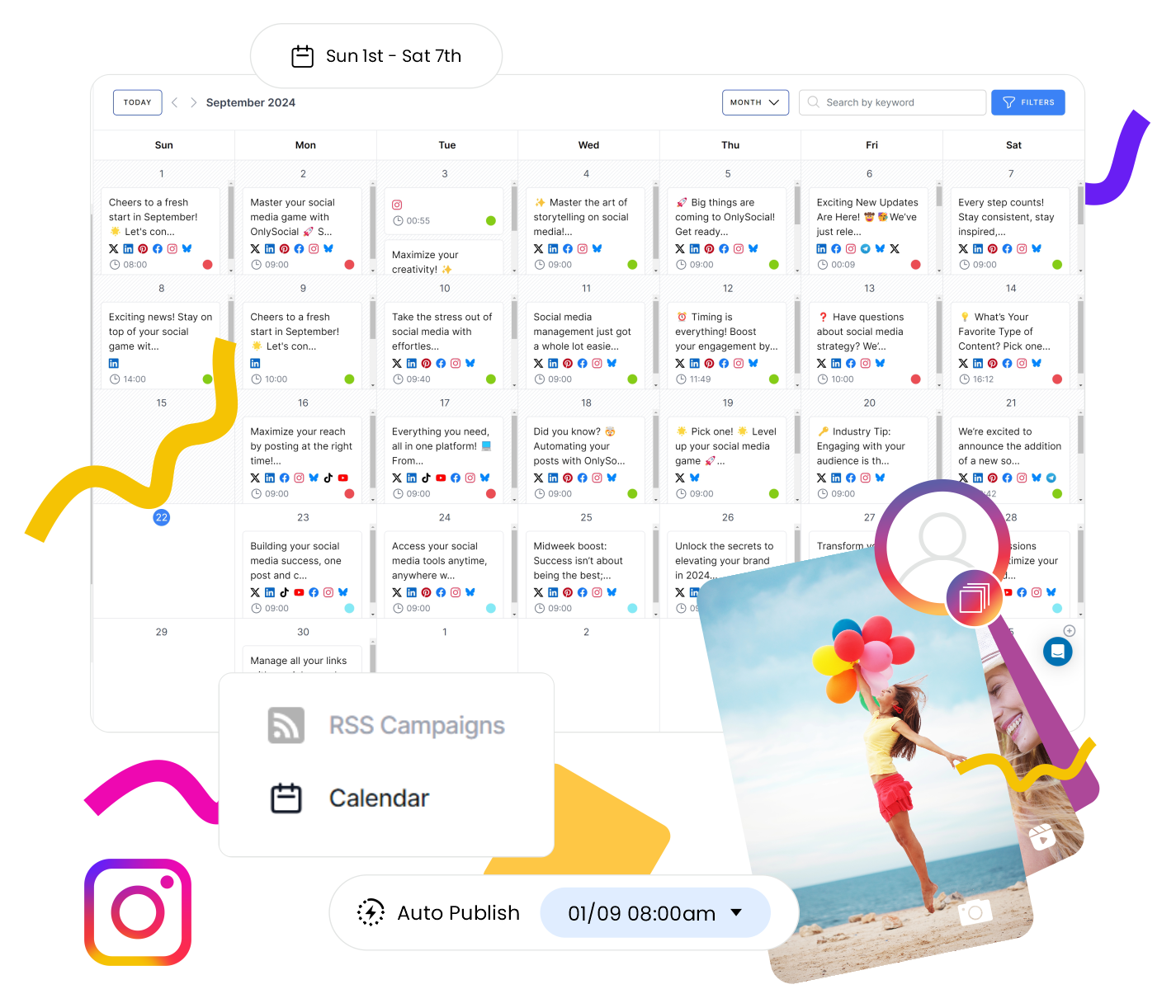
OnlySocial’s drag-and-drop content calendar makes it easy to organize campaigns, schedule posts in advance, and visualize your entire publishing strategy across multiple platforms.
Instead of scrambling for ideas daily, brands can batch content and maintain a more reliable posting schedule.
The bulk scheduling feature also saves a huge amount of time, especially for teams managing multiple accounts.
AI tools that help speed up content creation
Writer’s block is real, especially when you’re managing content every single day. OnlySocial’s AI-powered tools help generate: captions, hashtags, content ideas, and even visuals for your posts.
This makes it easier to create value-driven content consistently instead of rushing out repetitive promotional posts just to stay active.
Multi-platform management from one dashboard
A lot of brands struggle because they try to manage every platform separately.
OnlySocial simplifies this by supporting over 15 major social platforms, including:
- TikTok
- X
- Threads
- YouTube
- Bluesky
- Google Business Profile
That makes it much easier to adapt content for different platforms without constantly switching tools.
Built-in analytics for smarter decisions
Ignoring analytics becomes much harder when the data is easy to access and understand. OnlySocial gives brands clear performance insights across platforms, helping teams track:
- Engagement
- Reach
- Audience growth
- Top-performing posts
- Campaign performance
This helps brands stop guessing and start making content decisions based on actual audience behavior.
Easier audience engagement and collaboration
The platform also includes a unified inbox that brings conversations, comments, and messages into one place.
For teams, collaboration features like approval workflows, shared workspaces, and role assignments help keep content organized and reduce mistakes before posts go live.
Instead of social media feeling chaotic, the workflow becomes much more structured and manageable.
How to Bounce Back After Social Media Mistakes
No brand gets social media right all the time.
Even experienced marketing teams make mistakes sometimes. A campaign may flop, engagement may suddenly drop, or a post may receive negative reactions. What separates strong brands from struggling ones is usually how quickly they respond and adapt afterward.
Here are some smart ways to recover when things go wrong.
1. Step Back and Audit What’s Not Working
The first thing to do is stop guessing.
Take time to review your recent content, engagement numbers, audience reactions, and posting patterns. Look closely at:
- Which posts performed poorly
- What content people ignored
- Which platforms lost engagement
- How your audience responded in comments or DMs
Sometimes the issue becomes obvious once you look at the data properly.
A social media audit helps brands identify weak spots instead of repeating the same mistakes blindly.
2. Adjust Your Content Strategy Quickly
Once you identify the problem, don’t keep forcing the same approach.
If engagement is dropping, your audience may be tired of repetitive content. If reach is declining, your posting style or format may no longer match how the platform currently works.
Strong brands are willing to adapt.
That could mean:
- Changing content formats
- Improving captions
- Posting at different times
- Creating more audience-focused content
- Reducing overly promotional posts
3. Start Testing New Ideas Consistently
One of the biggest mistakes brands make after failure is becoming too cautious.
Social media changes constantly, so experimentation matters. Instead of sticking rigidly to one content style, test different approaches and study the results.
You can experiment with:
- Short-form videos
- Carousels
- Storytelling posts
- Behind-the-scenes content
- User-generated content
- New posting schedules
The goal is to learn what your audience responds to now, not what worked six months ago.
4. Be Transparent When Necessary
If a brand makes a public mistake, silence often makes things worse.
Deleting comments, ignoring criticism, or pretending nothing happened can damage trust quickly. In many situations, a simple honest response works much better.
Audiences usually respond positively when brands:
- Acknowledge mistakes calmly
- Communicate clearly
- Explain what’s being fixed
- Show accountability
People don’t expect perfection online. They mostly expect honesty and professionalism.
Final Note
Managing social media for a brand is much more than posting content regularly. It’s about understanding your audience, staying consistent, adapting to changes, and building real connections over time.
Small mistakes may not look serious at first, but they can slowly weaken engagement, reduce visibility, and make growth much harder than it needs to be.
The good news is that most of these mistakes are completely avoidable with the right strategy and tools. Platforms like OnlySocial help simplify the process by bringing scheduling, analytics, collaboration, and engagement into one place.
That gives brands more structure, more consistency, and more time to focus on creating content people actually care about.
FAQs
What is the biggest mistake brands make on social media?
One of the biggest mistakes is posting without a clear strategy. Many brands create content randomly without understanding their audience, goals, or what type of content actually performs well.
How often should a brand post on social media?
There’s no perfect number for every brand, but consistency matters more than volume. It’s usually better to post consistently three times a week than post heavily one week and disappear the next.
Why is audience engagement important on social media?
Engagement helps build trust and community around a brand. Replying to comments, messages, and mentions makes followers feel valued and also helps improve visibility on many social platforms.
How can brands improve their social media strategy?
Brands can improve by studying analytics, understanding their audience better, testing different content formats, and maintaining a more consistent posting schedule.
Can social media management tools really help brands grow?
Yes. Good social media management tools help brands stay organized, schedule content efficiently, track performance, manage engagement, and save time through automation.
What type of content performs best for brands on social media?
It depends on the platform and audience, but educational, entertaining, relatable, and value-driven content usually performs better long-term than overly promotional posts.