YouTube Shorts vs Long-Form Videos: Which Is Better for Your Brand in 2026?
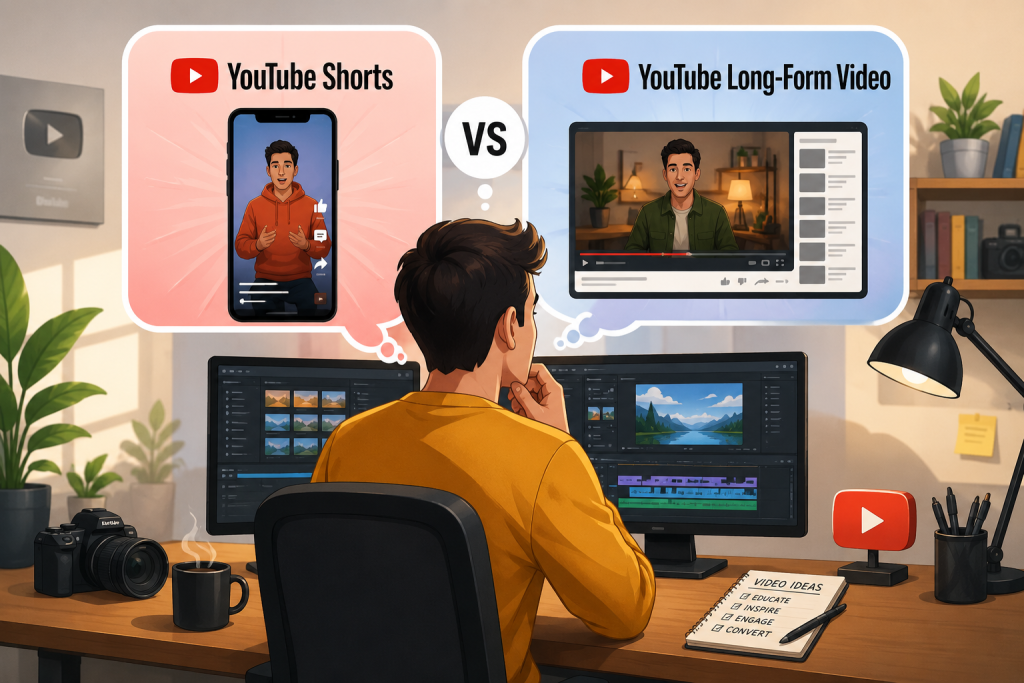
A lot of brands are asking the same question right now: Should we be investing more in YouTube Shorts, or should we keep focusing on long-form videos?
It’s an understandable dilemma.
Shorts can generate thousands of views in a matter of hours, while long-form videos often take more time, planning, and production. Yet many of those longer videos continue to deliver stronger engagement, deeper trust, and lasting value.
The truth is, there isn’t a single format that’s right for every brand. The best choice depends on your goals, audience, and the type of content you create.
In this guide, we’ll compare YouTube Shorts and long-form videos, look at what the latest data and algorithm changes tell us, and help you decide which format deserves the biggest place in your content strategy. You’ll also learn how to combine both formats to reach more people without doubling your workload.
Table of Contents
- 1 YouTube Shorts vs Long-Form Videos: What’s the Difference?
- 2 What the Data Says About YouTube Shorts vs Long-Form Videos
- 3 YouTube’s Recent Algorithm Changes: What Brands Need to Know
- 4 How to Determine Which Format Is Better for Your Brand
- 5 How to Repurpose Long-Form Videos into YouTube Shorts
- 6 Simplify Your YouTube Strategy with OnlySocial
- 7 Frequently Asked Questions
- 7.0.1 Is YouTube Shorts better than long-form videos?
- 7.0.2 Should brands post YouTube Shorts or long-form videos?
- 7.0.3 Can YouTube Shorts help grow my channel?
- 7.0.4 How often should I post YouTube Shorts and long-form videos?
- 7.0.5 Can I turn my long-form videos into YouTube Shorts?
- 7.0.6 Do YouTube Shorts make less money than long-form videos?
- 7.0.7 Does posting Shorts hurt my long-form video performance?
- 7.0.8 Which video format is better for selling products or services?
YouTube Shorts vs Long-Form Videos: What’s the Difference?
At first glance, the biggest difference between YouTube Shorts and long-form videos is their length. Shorts are designed for quick, vertical viewing, while long-form videos give creators more time to explore a topic in depth.
But the real distinction goes far beyond video duration. Each format serves a different purpose within YouTube’s ecosystem and supports a different stage of the viewer journey.
For brands, understanding this difference is important. Shorts are built to introduce your content to new audiences, while long-form videos help you build trust, educate potential customers, and convert viewers into subscribers or buyers. Treating both formats as interchangeable often leads to disappointing results.
| Feature | YouTube Shorts | Long-Form Videos |
| Orientation | Vertical (9:16) | Horizontal (16:9) |
| Length | Up to 3 minutes (although under 60 seconds often performs best) | No fixed limit, with 8–15 minutes being a common sweet spot for many brands |
| Where viewers find them | Shorts feed, Home feed, recommendations | Home feed, Search, Suggested Videos, Subscriptions |
| Primary purpose | Reach new audiences and increase discovery | Build trust, educate viewers, and drive conversions |
| Key performance signals | Viewer retention, swipe-away rate, replays, shares, engagement | Watch time, audience retention, viewer satisfaction, session duration |
| Best suited for | Trends, quick tips, product highlights, teasers, behind-the-scenes clips | Tutorials, product demonstrations, reviews, interviews, case studies, webinars |
A simple way to think about it is this:
- Shorts help people discover your brand.
- Long-form videos help people get to know your brand.
For example, a fitness company might publish a 30-second Short demonstrating one effective exercise. That Short introduces the brand to thousands of potential viewers.
The same company could then link viewers to a 12-minute workout video that explains proper technique, common mistakes, and a complete routine. Together, the two formats move viewers from discovery to deeper engagement.
What the Data Says About YouTube Shorts vs Long-Form Videos

It’s easy to get caught up in view counts, especially when a Short racks up hundreds of thousands of views overnight. But views alone don’t tell the whole story. If you’re deciding where to invest your time and budget, it’s worth looking at what the data says about reach, engagement, and revenue.
Long-Form Videos Earn More Revenue Per View
The data: YouTube’s revenue-sharing model favors long-form content. Creators receive 55% of net ad revenue generated from ads shown on their long-form videos.
For Shorts, creators receive 45% of a shared revenue pool, which is distributed based on their share of total eligible Shorts views. This structure comes directly from YouTube’s monetization model.
What it means: Every successful long-form video has the potential to generate revenue based on the ads shown on that specific video. Shorts, on the other hand, compete within a much larger shared pool. If monetization is a key goal for your brand, long-form content generally offers greater earning potential.
Shorts Can Reach More People Faster
The data: Brands and creators regularly see Shorts outperform long-form videos in raw reach, especially during the first few days after publishing. The swipe-based Shorts feed gives new creators more opportunities to appear in front of viewers who have never interacted with their channel.
What it means: If your goal is to increase brand awareness or attract new subscribers, Shorts can be a powerful discovery tool. They’re particularly effective for introducing your content to audiences who might never have found your channel through search or recommendations.
Long-Form Builds Deeper Engagement
The data: Long-form videos consistently generate more watch time per viewer and provide more opportunities for people to interact with your content. Viewers who choose to watch an eight- or ten-minute video are typically investing much more attention than someone who watches a 30-second Short.
What it means: This deeper engagement gives you more time to explain products, answer questions, tell stories, demonstrate expertise, and build trust. For brands selling products or services that require education or consideration, long-form content often delivers stronger business results than short-form alone.
High View Counts Don’t Always Mean Higher Business Impact
The data: In many industries, a long-form video with tens of thousands of views can generate more revenue, leads, and meaningful engagement than a Short with several hundred thousand views.
Revenue per thousand views (RPM) for long-form videos is typically much higher than for Shorts, although exact figures vary depending on industry, audience, and location.
What it means: Reporting success based only on view count can be misleading. A viral Short may dramatically increase exposure, but that doesn’t necessarily translate into sales, qualified leads, or long-term audience growth.
Looking at watch time, subscriber quality, website traffic, and conversions provides a much clearer picture of performance.
The Strongest Channels Use Both Formats
The data: Many of YouTube’s fastest-growing creators and brands now publish both Shorts and long-form videos as part of the same strategy. Shorts attract new viewers, while long-form videos give those viewers a reason to subscribe and keep coming back.
What it means: Rather than asking which format is “better,” a more useful question is what role each format should play in your marketing strategy. Shorts excel at discovery. Long-form videos excel at building relationships, authority, and long-term value.
Brands that combine both are often able to grow their audience more consistently than those relying on a single format.
YouTube’s Recent Algorithm Changes: What Brands Need to Know
YouTube’s recommendation system is constantly evolving, and the past year has brought several notable changes that affect how both Shorts and long-form videos are discovered.
While the platform hasn’t completely rewritten its algorithm, it has adjusted how content is surfaced across the Home feed and what signals it appears to value most. For brands, these changes make it even more important to understand the role each video format plays.
Long-Form Videos Receive Less Home Feed Exposure
One of the biggest shifts has been the way YouTube’s Home feed is organized. According to analysis shared by YouTube retention strategist Mario Joos, the Home feed now displays fewer long-form videos than it did previously, giving more screen space to Shorts and other content recommendations.
For brands, this means fewer opportunities for someone to casually discover a long-form video while scrolling the Home page. Instead, long-form content increasingly relies on viewers who actively search for a topic, subscribe to your channel, or click through from another video.
Viewer Satisfaction Matters More Than Ever
Watch time is still an important ranking factor, but it’s no longer the only signal that matters. Industry observers, including the team at vidIQ, have reported that YouTube appears to place greater emphasis on overall viewer satisfaction and whether a video keeps people engaged on the platform beyond a single watch.
Although YouTube hasn’t publicly confirmed every detail of these ranking signals, many creators have noticed similar patterns. Videos that encourage viewers to continue watching related content often perform better than standalone uploads with no clear connection to the rest of the channel.
Shorts Have Become a Stronger Discovery Tool
As Shorts continue to receive prominent placement across YouTube, they’ve become one of the easiest ways for brands to introduce their content to new audiences. The swipe-based experience exposes videos to viewers who may have never searched for your brand before, creating opportunities to grow awareness much faster than relying on search alone.
That doesn’t make Shorts a replacement for long-form content. Instead, they work best as the top of the funnel, helping people discover your brand before directing interested viewers toward more in-depth videos.
What These Changes Mean for Your Strategy
Rather than treating Shorts and long-form videos as competitors, it’s becoming more effective to use them together.
A practical strategy looks something like this:
- Use YouTube Shorts to reach new viewers and capitalize on discovery opportunities.
- Create long-form videos that answer questions, educate your audience, or showcase your expertise.
- Link Shorts to related long-form videos whenever possible through comments, descriptions, or channel organization.
- Group related long-form videos into playlists and use end screens to encourage viewers to continue watching.
As YouTube’s algorithm increasingly rewards viewer satisfaction and longer viewing sessions, brands that build connected content rather than isolated videos are likely to see stronger long-term results.
How to Determine Which Format Is Better for Your Brand
The good news is that you don’t have to choose one format forever. The better question is: What are you trying to achieve? Your marketing goals should determine how much time and budget you invest in YouTube Shorts versus long-form videos.
As a general rule, Shorts are best at attracting attention, while long-form videos are better at building trust and helping people make decisions. The right balance depends on where your audience is in the customer journey.
| Brand Goal | Recommended Shorts | Recommended Long-Form | Why |
| B2B lead generation | 30% | 70% | Business buyers often need detailed information, demonstrations, and proof before making purchasing decisions. |
| E-commerce brand awareness | 70% | 30% | Short, engaging videos help showcase products to larger audiences and encourage discovery. |
| Customer education | 40% | 60% | Tutorials, walkthroughs, and product guides benefit from longer videos, while Shorts work well for quick tips and updates. |
| Recruitment and employer branding | 50% | 50% | Shorts highlight company culture, while longer videos allow potential candidates to learn more about your team and workplace. |
These percentages aren’t fixed rules. They’re a starting point. As your channel grows, your own analytics will provide a clearer picture of what works for your audience.
It’s also important to measure the right success metrics. A video that generates millions of views isn’t necessarily your best-performing content if it doesn’t support your business objectives.
Here’s what to focus on:
- Lead generation: Track demo requests, contact form submissions, and qualified leads generated from your videos.
- Brand awareness: Measure reach, impressions, new viewers, and subscriber growth instead of view count alone.
- Customer education: Pay attention to audience retention, average view duration, and video completion rates to see if people are consuming the information you’ve created.
- Sales and conversions: Monitor clicks to your website, product page visits, and purchases driven by your videos.
Start with a Sustainable Publishing Schedule
One of the biggest mistakes brands make is trying to produce more content than they can consistently maintain. A realistic schedule almost always outperforms an ambitious one that’s abandoned after a month.
For many small and medium-sized businesses, a practical starting point is:
- 2–3 YouTube Shorts each week to maintain visibility and reach new audiences.
- 1 high-quality long-form video every one or two weeks to educate viewers, build authority, and strengthen your relationship with subscribers.
As your team, budget, or content library grows, you can adjust that balance based on performance. The most successful YouTube channels rarely rely entirely on one format.
Instead, they use Shorts to bring new viewers into the funnel and long-form videos to turn those viewers into loyal subscribers and customers.
How to Repurpose Long-Form Videos into YouTube Shorts
One of the biggest advantages of running both Shorts and long-form content is that you don’t have to create everything from scratch. A single well-produced YouTube video can often become several engaging Shorts, helping you reach more people without doubling your production time.
The key is to treat Shorts as standalone pieces of content rather than simply cutting a random section from a longer video. Each Short should tell a complete story or communicate one clear idea in just a few seconds.
Step 1: Find the Moments Worth Sharing
After publishing your long-form video, watch it again with Shorts in mind. Look for moments that would still make sense even if someone had never watched the full video.
Some of the best clips include:
- A surprising statistic or result.
- A bold opinion or memorable quote.
- A practical tip someone can apply immediately.
- An emotional reaction or unexpected moment.
- A question that sparks curiosity.
As a general rule, a 10- to 20-minute video can often produce three to five high-quality Shorts. Trying to create too many usually means you’re stretching content that wasn’t meant to stand on its own.
Step 2: Focus on the Hook
People decide within the first few seconds whether they’ll keep watching a Short. That’s why it’s important to remove slow introductions and get straight to the most interesting part.
Instead of opening with greetings or background information, begin with the statement, question, or moment that immediately grabs attention. If viewers want the full context, they’ll be much more likely to visit the original video.
Step 3: Reformat for Vertical Viewing
A horizontal YouTube video doesn’t automatically become a good Short by cropping the sides.
For better results:
- Reframe the video for a 9:16 vertical format so the speaker remains centered.
- Add large, easy-to-read captions since many people watch Shorts without sound.
- Keep branding, colors, and editing style consistent with your main YouTube channel.
- Trim unnecessary pauses to maintain a fast pace from beginning to end.
Step 4: Give People a Reason to Watch the Full Video
The best Shorts don’t replace your long-form content. They promote it.
A great example of this approach comes from The Diary of a CEO podcast. In one episode, Steven Bartlett interviews billionaire investor Jeremy Grantham about artificial intelligence, investing, and the future of the economy. The full interview runs for well over an hour, giving viewers an in-depth discussion packed with context and analysis.
From that same conversation, the channel also published several YouTube Shorts. One particularly popular Short highlights Jeremy Grantham sharing financial advice for the average investor.
The clip stands on its own, delivers immediate value, and sparks curiosity, while naturally encouraging viewers to watch the full interview for the complete discussion.

This is exactly how brands should think about repurposing content. The long-form video delivers the complete story, while each Short highlights one compelling takeaway that attracts new viewers and encourages them to explore more of your content.
Step 5: Build a Repeatable Workflow
Repurposing shouldn’t be an afterthought. Plan for it before you even hit record.
When scripting or filming a long-form video, identify moments that could later become standalone Shorts. This makes editing much easier and ensures every recording session produces content for multiple formats.
With this approach, one well-planned YouTube video can fuel your content calendar for weeks, helping you maintain a consistent presence on YouTube without significantly increasing your production workload.
Simplify Your YouTube Strategy with OnlySocial
Building a successful YouTube channel isn’t just about creating great videos. Consistency, planning, and performance tracking are just as important. That’s where OnlySocial helps.
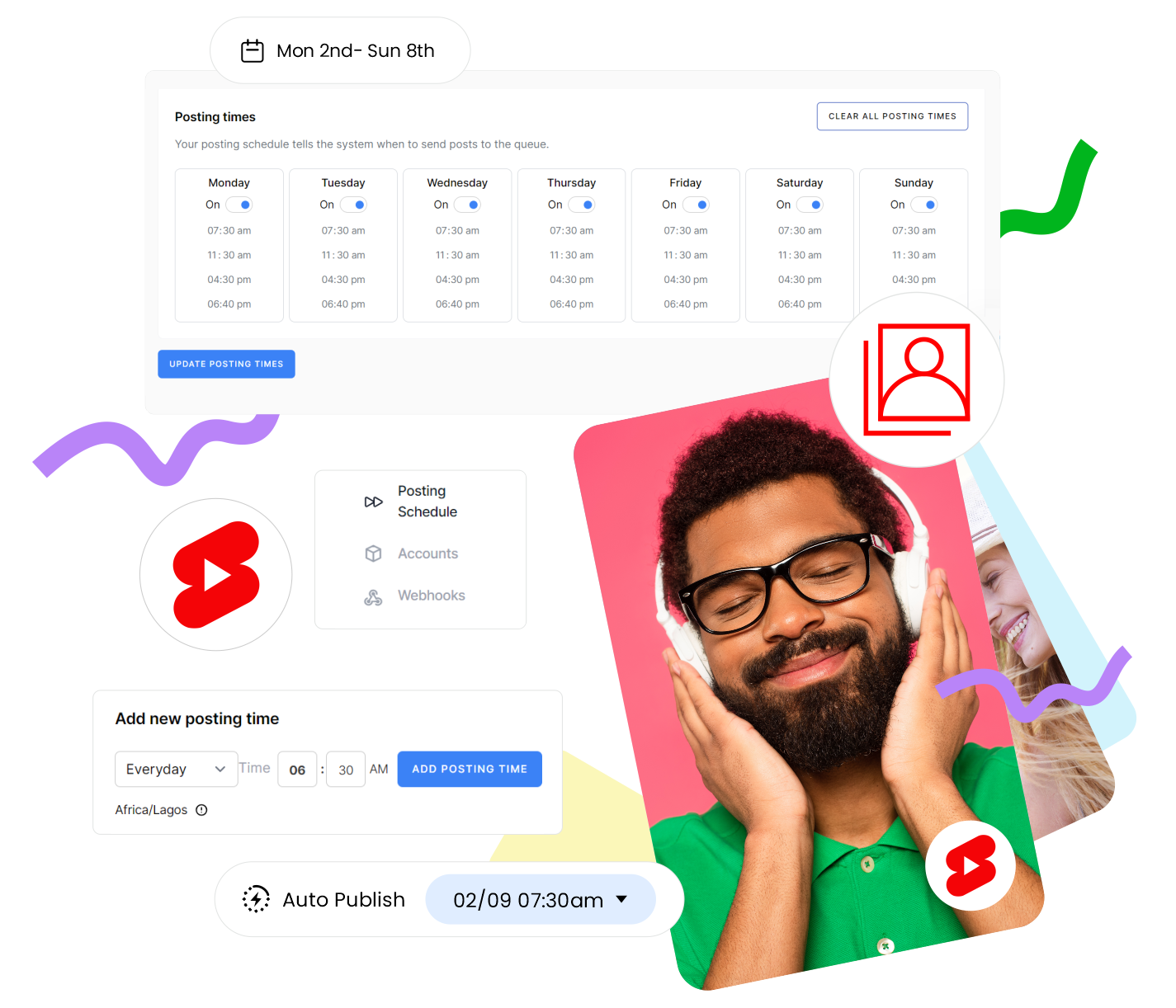
With OnlySocial, you can schedule both YouTube Shorts and long-form videos from one dashboard, making it easier to maintain a balanced publishing schedule. Instead of manually uploading content every time, you can plan weeks of videos in advance using the visual content calendar.
If you’re managing multiple brands or channels, OnlySocial also lets you organize content across different YouTube accounts alongside your other social media platforms. You can use AI to generate titles, descriptions, captions, and hashtags, helping you speed up content creation while keeping your messaging consistent.
Rather than managing every step separately, OnlySocial gives you one place to plan, publish, and optimize your entire YouTube content strategy alongside the rest of your social media marketing.
Frequently Asked Questions
Is YouTube Shorts better than long-form videos?
Not necessarily. Each format serves a different purpose. Shorts are excellent for reaching new audiences and increasing visibility, while long-form videos are better for building trust, educating viewers, and driving conversions. The best choice depends on your marketing goals.
Should brands post YouTube Shorts or long-form videos?
Most brands benefit from publishing both. Shorts help attract new viewers, while long-form videos give those viewers a reason to subscribe, engage with your content, and learn more about your products or services.
Can YouTube Shorts help grow my channel?
Yes. Shorts can significantly increase your reach because they’re featured in YouTube’s dedicated Shorts feed. Many creators use Shorts to gain subscribers and then guide those viewers toward their long-form content for deeper engagement.
How often should I post YouTube Shorts and long-form videos?
A good starting point for many businesses is to publish two to three Shorts per week and one high-quality long-form video every one to two weeks. As you collect performance data, you can adjust your schedule based on what works best for your audience.
Can I turn my long-form videos into YouTube Shorts?
Absolutely. In fact, it’s one of the most effective content strategies on YouTube. You can repurpose tutorials, interviews, webinars, podcasts, and product demonstrations into multiple Shorts by highlighting valuable tips, memorable quotes, or key insights from the original video.
Do YouTube Shorts make less money than long-form videos?
In most cases, yes. Long-form videos generally generate higher revenue per view because they use YouTube’s standard ad revenue-sharing model. Shorts are monetized through a shared revenue pool, so they typically earn less per thousand views.
Does posting Shorts hurt my long-form video performance?
No. YouTube has repeatedly stated that Shorts and long-form videos are separate content formats, and publishing Shorts does not automatically reduce the performance of your longer videos. When used strategically, Shorts can actually introduce new viewers to your long-form content.
Which video format is better for selling products or services?
If your product requires explanation, demonstrations, or customer education, long-form videos are usually more effective because they allow you to build trust and answer questions in detail. Shorts work best for grabbing attention and encouraging viewers to learn more through your longer content or website.