Buyer Personas Explained: Complete Guide + Examples

You can have great content, polished ads, and a solid product… and still get ignored.
Why? Because good marketing only works when it speaks to the right people.
A lot of businesses make the mistake of talking to “everyone.” The problem is, when your message tries to reach everybody, it usually connects with nobody.
That’s where buyer personas come in. They help you understand who your ideal customer really is, what they care about, and how to speak their language in a way that actually gets attention.
In this guide, we’ll break down what buyer personas are, why they matter, and how to create ones that make your marketing feel more targeted, relevant, and effective.
Table of Contents
- 1 What Are Buyer Personas?
- 2 The Different Buyer Persona Types You Need to Understand
- 3 How to Build Buyer Personas That Actually Help Your Marketing
- 4 Real Buyer Persona Examples to Learn From
- 5 How OnlySocial Helps You Put Buyer Personas into Action
- 6 Best Practices for Creating Buyer Personas That Actually Work
- 6.0.1 1. Base Your Personas on Real Data, Not Assumptions
- 6.0.2 2. Focus on Motivations, Not Just Demographics
- 6.0.3 3. Don’t Create Too Many Personas
- 6.0.4 4. Keep Updating Them Over Time
- 6.0.5 5. Make Them Practical for Your Team
- 6.0.6 6. Align Content with Different Persona Stages
- 6.0.7 7. Validate Personas with Real Campaign Results
- 7 Final Note
- 8 Frequently Asked Questions
What Are Buyer Personas?
Buyer personas are detailed profiles of your ideal customers.
They’re not random guesses or made-up characters. The best buyer personas are built using real customer data, behavior patterns, research, and insights. They help you understand who you’re talking to, what they care about, and why they make buying decisions.
In simple terms, buyer personas help your marketing sound less generic and more relevant.
Instead of creating content for “everyone,” you start speaking directly to the people most likely to care about your product or service.
How is it different from audience and customer?
A lot of people mix these up. But they’re not the same thing.
- An audience is broad. It’s the general group of people you want to reach
- A customer is someone who has already bought from you
- A buyer persona is a specific profile of the kind of person you want to attract and convert
That difference matters.
Because when you treat your entire audience the same way, your messaging becomes too broad to truly connect with anyone.
Why Buyer Personas Matter
Buyer personas help different parts of your business work smarter.
Your sales team can use them to understand objections and tailor conversations better. Your content team can create blogs, emails, and social posts that actually feel relevant. Your campaign team can target ads more effectively and improve conversions.
Without clear buyer personas, marketing often turns into guesswork.
You post content. Run ads. Send emails. But nothing really lands because the messaging isn’t aligned with what your ideal customer actually wants or needs.
That’s the real value of buyer personas.
They help you stop talking at people and start speaking to them properly.
The Different Buyer Persona Types You Need to Understand
Not every customer thinks the same way.
Some people buy quickly. Others need weeks of research. Some care about price above everything else, while others just want a brand they can trust.
That’s why buyer personas aren’t one-size-fits-all.
The better you understand the different types of buyers in your audience, the easier it becomes to create marketing that actually connects.
Here are some of the most common buyer persona types brands deal with.
The Decision-Maker
This person focuses on outcomes.
They care about results, value, efficiency, and return on investment. They’re usually the ones approving purchases or making final decisions.
For this type of persona, your messaging needs to be clear, confident, and focused on benefits that matter long-term.
The Researcher
Researchers don’t buy quickly.
They compare options, read reviews, check details, and want proof before committing to anything. They’re careful buyers who need information to feel comfortable making a decision.
This type responds well to:
- Case studies
- Detailed guides
- Product comparisons
- Testimonials
The more clarity you give them, the easier it is to build trust.
The Price-Conscious Buyer
This persona is always calculating value.
They’re comparing prices, looking for deals, and asking whether something is truly worth the cost. Discounts, bundles, and clear pricing often influence their decisions heavily.
But price-conscious doesn’t always mean “cheap.” It usually means they want to feel like they’re getting the best value possible.
The Loyalty-Focused Customer
These are the people brands love. Once they trust you, they stick around.
They value consistency, good experiences, and long-term relationships. Loyalty-focused buyers are more likely to become repeat customers and recommend your brand to others.
Keeping them engaged matters just as much as attracting new people.
The Impulsive Buyer
This persona moves fast. They respond to emotion, urgency, excitement, and strong visuals. They’re less likely to spend weeks researching and more likely to act in the moment.
This is why flash sales, limited-time offers, and emotional hooks work so well for certain audiences.
Now, one thing you should bear in mind about buyer personas is context. Context matters a lot.
The same type of buyer can behave very differently depending on the environment.
In B2B marketing, buying decisions usually involve more people, more research, and more caution. Logic, ROI, and long-term value tend to drive decisions.
In B2C, decisions are often quicker and more emotional. Convenience, lifestyle, and personal preference play a much bigger role.
That’s why understanding your industry matters just as much as understanding your audience.
A buyer persona only becomes useful when it reflects how people actually behave in your specific market.
How to Build Buyer Personas That Actually Help Your Marketing
If your marketing feels random, there’s a good chance your understanding of your audience is too.
Strong buyer personas fix that.
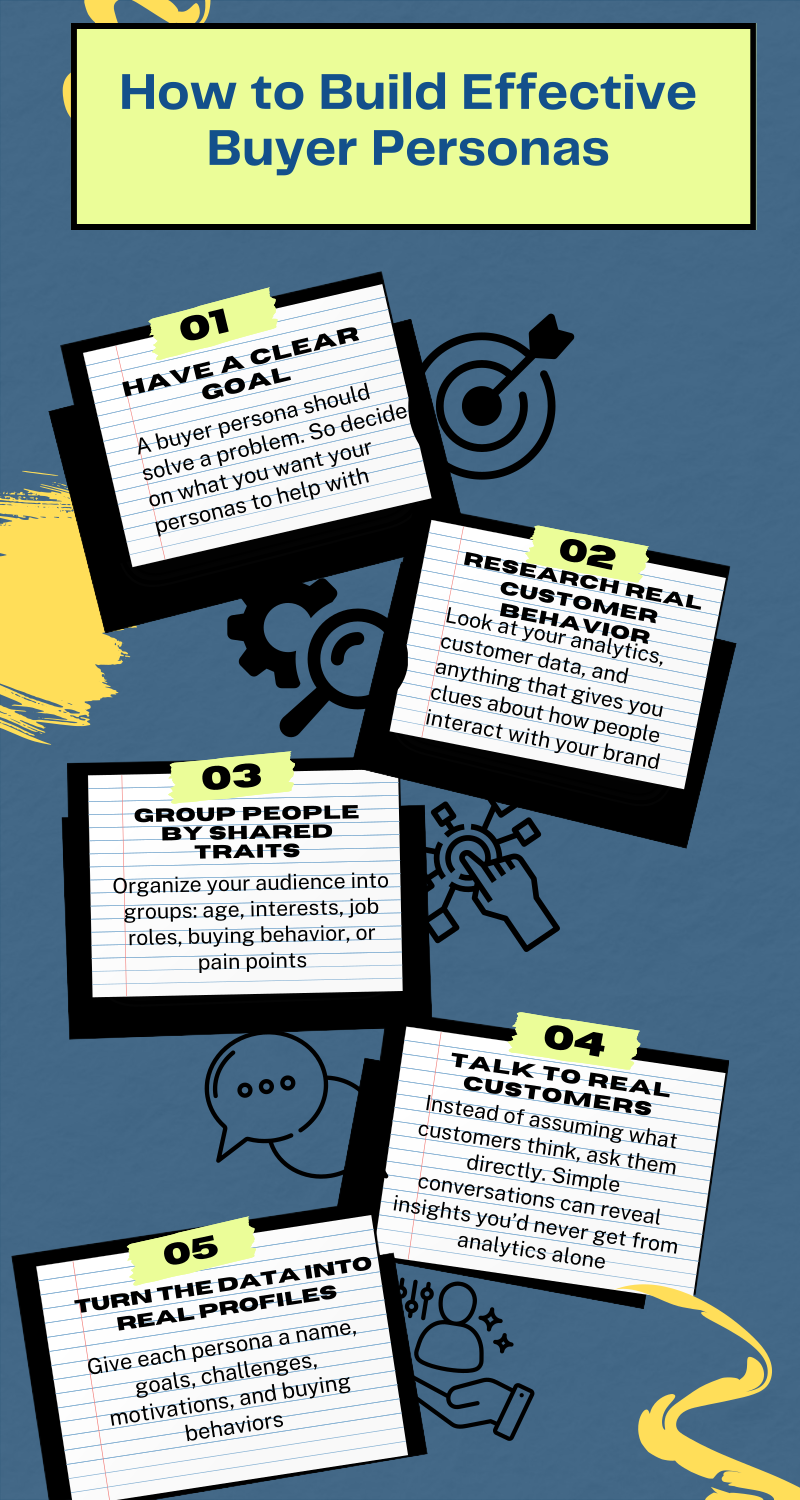
They help you stop making assumptions and start making decisions based on real behavior, real needs, and real patterns. Here’s a simple process you can follow to create buyer personas that are actually useful.
1. Start with a Clear Goal
Before you collect any data, decide what you want your personas to help with.
Are you trying to:
- Improve targeting?
- Increase conversions?
- Create better content?
- Refine your messaging?
Be specific.
A buyer persona should solve a problem, not just exist as a document nobody uses.
2. Research Real Customer Behavior
This is where the real work starts.
Look at your analytics, customer data, website behavior, social insights, and anything else that gives you clues about how people interact with your brand.
Pay attention to patterns:
- What content gets the most engagement?
- Which pages do people spend time on?
- Where do they drop off?
You’re trying to understand how people behave, not just who they are.
Once you have enough information, start organizing your audience into groups.
These groups could be based on age, interests, job roles, buying behavior, or pain points. You’ll quickly notice that not everyone buys for the same reasons or at the same speed.
Some people need more reassurance. Others are ready almost immediately.
4. Talk to Real Customers
Instead of assuming what customers think, ask them directly. Simple conversations can reveal insights you’d never get from analytics alone.
Ask things like:
- What problem were you trying to solve?
- Why did you choose us?
- What nearly stopped you from buying?
The answers often show you exactly what your marketing should focus on.
5. Turn the Data into Real Profiles
Now it’s time to build the personas themselves. Give each persona:
- A name
- Goals
- Challenges
- Motivations
- Buying behaviors
The key here is realism. These profiles should reflect actual research and patterns, not imaginary characters created for fun.
You want them to feel like real people your team can understand and market to properly.
6. Test, Update, and Improve
Buyer personas are not permanent. People change. Markets shift. Trends evolve.
That means your personas need updates too. Use your campaigns to test whether your personas are still accurate. If the messaging stops connecting or the behavior changes, adjust the profiles based on new data.
The best personas evolve with your audience.
Real Buyer Persona Examples to Learn From
Sometimes buyer personas sound overly theoretical.
But once you see them in action, the whole idea becomes much easier to understand.
The goal isn’t to create fictional characters for fun. It’s to build realistic profiles that reflect how different types of customers actually think, buy, and behave.
So let’s talk about a few common examples.
“Marketing Mary” (B2B SaaS)
Mary is a marketing manager at a growing software company.
She’s constantly balancing deadlines, campaign performance, reporting, and pressure from leadership. She doesn’t care about flashy features unless they clearly save time or improve results.
What matters to her:
- Efficiency
- ROI
- Reliable tools
- Clear reporting
She usually researches thoroughly before making decisions and pays close attention to reviews, demos, and case studies.
Typical mindset:
“I need something that makes my workflow easier, not more complicated.”
“Budget Ben” (eCommerce/DTC)
Ben loves getting value for his money.
Before buying anything, he compares prices, checks reviews, and looks for deals or discounts. He’s not necessarily looking for the cheapest option. He just wants to feel like he’s getting the best value possible.
Things that influence him:
- Discounts
- Free shipping
- Product reviews
- Bundle offers
If your pricing feels unclear or overpriced, he’ll move on quickly.
“Founder Felix” (Startup/B2B)
Felix runs a growing startup.
He’s busy, stretched thin, and constantly making decisions. He doesn’t have time for unnecessary complexity. He wants solutions that are fast, scalable, and easy to implement.
He responds well to:
- Straightforward messaging
- Clear benefits
- Time-saving tools
- Quick onboarding
If your marketing feels too vague or full of jargon, you’ll lose his attention immediately.
“Creator Chloe” (Content Creator/Personal Brand)
Chloe creates content full-time.
She’s active across multiple social platforms and constantly looking for tools that help her stay consistent without burning out. She values simplicity, flexibility, and anything that helps her save time while growing her audience.
What usually matters to her:
- Ease of use
- Scheduling and automation
- Analytics
- Content ideas and inspiration
She’s highly influenced by social proof and recommendations from other creators.
Example Persona Snapshot
Here’s what a simple buyer persona can look like when fully structured.
Persona: Marketing Mary
- Role: Marketing Manager at a SaaS company
- Main Goal: Improve campaign performance and prove ROI
- Biggest Challenge: Too many tools and not enough time
- Pain Point: Messy workflows and unclear reporting
- Buying Behavior: Research-heavy, compares options carefully
- Preferred Content: Case studies, demos, practical guides
- Quote: “I need tools that actually save time instead of creating more work.”
How OnlySocial Helps You Put Buyer Personas into Action
Creating buyer personas is great. Actually using them consistently in your marketing? That’s the harder part.
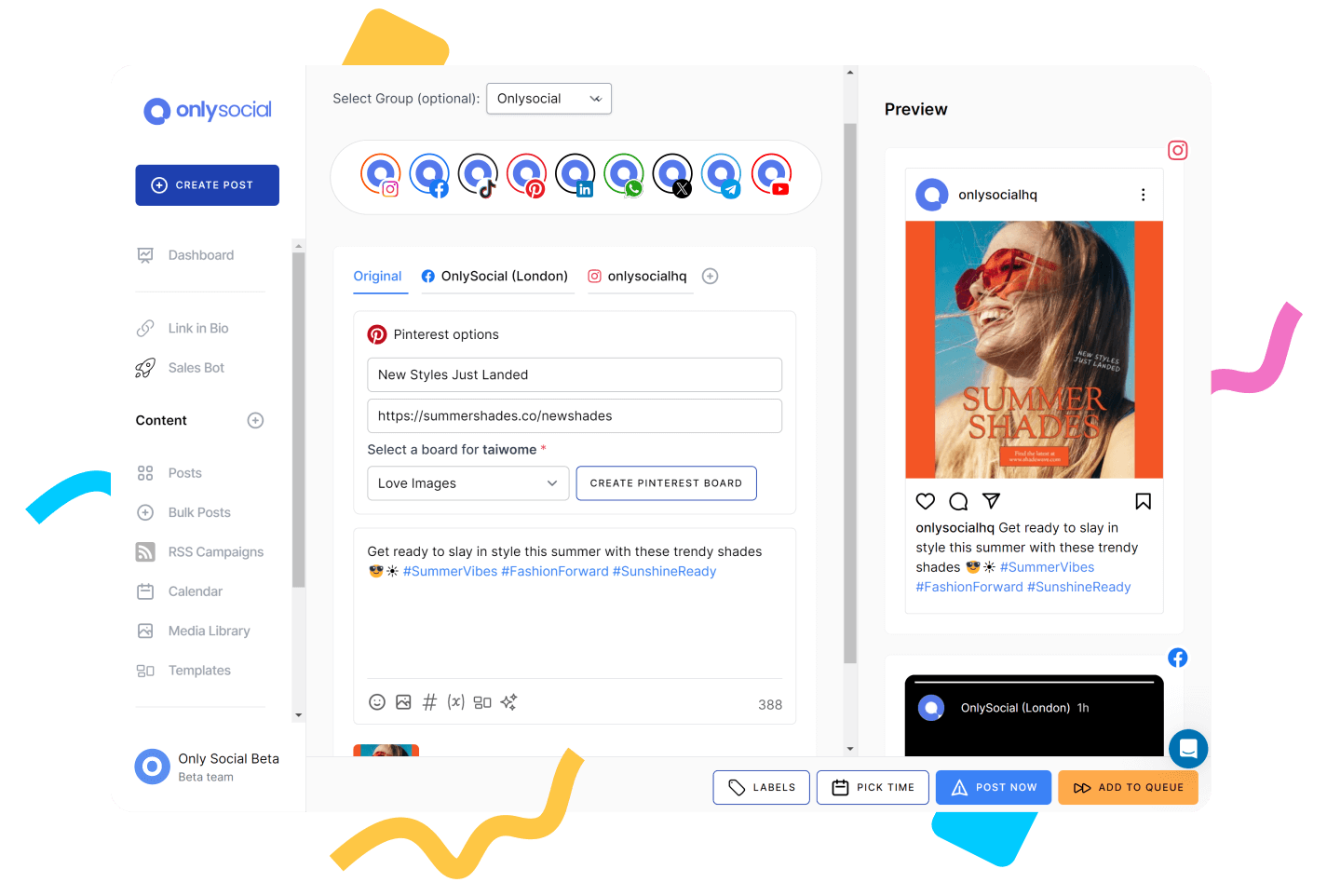
A lot of brands build personas once, then completely forget about them when it’s time to create content. That’s where OnlySocial helps. It turns audience insights into a structured content strategy instead of random posting.
Create Content That Feels More Relevant
Once you understand your personas, your content becomes more intentional.
Instead of posting generic updates for “everyone,” you can create content that speaks directly to different audience types. One post might target price-conscious buyers. Another might speak to busy decision-makers looking for efficiency.
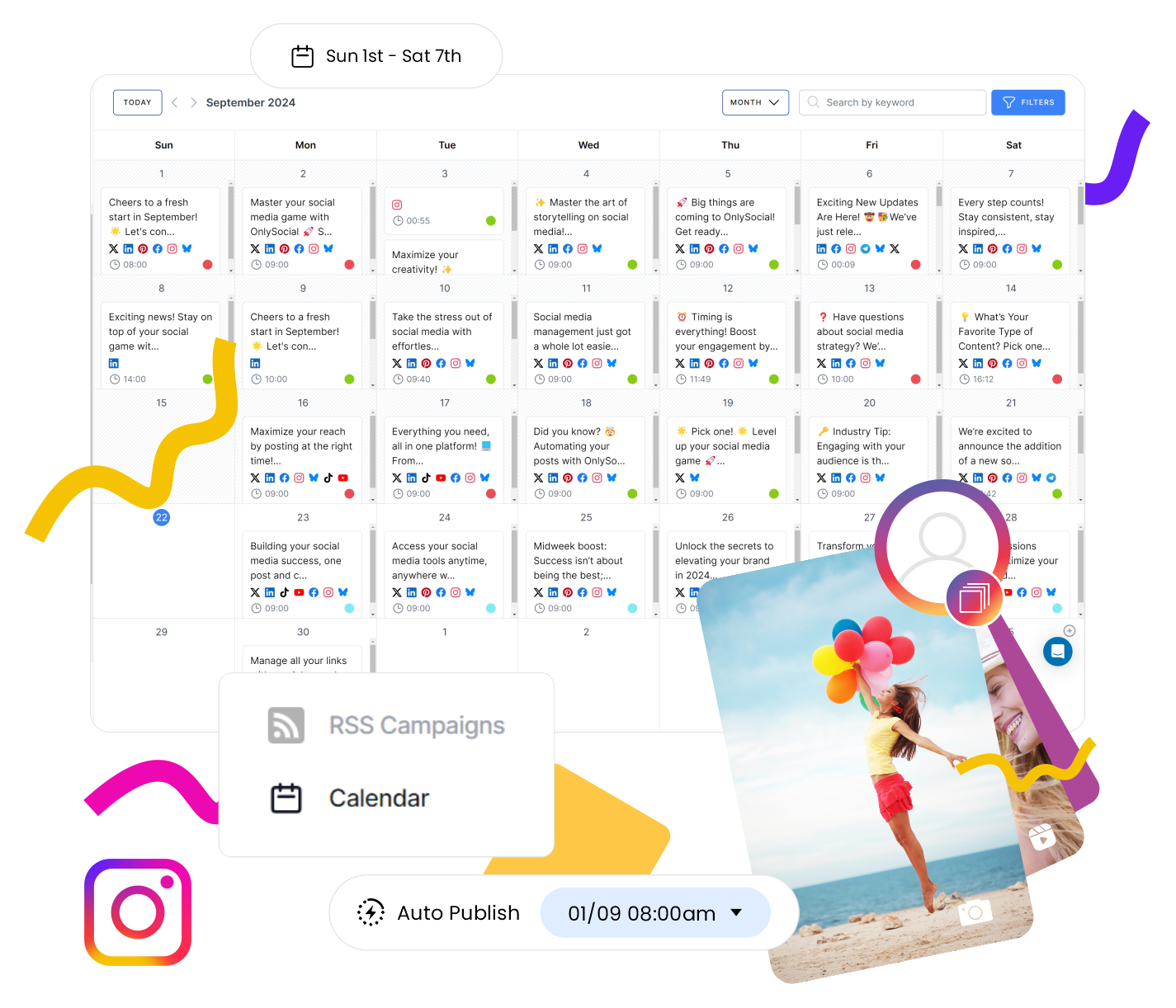
OnlySocial’s content calendar makes it easier to organize these different content angles in advance so your messaging stays balanced and purposeful.
Plan Content Around Different Audience Segments
Not every persona wants the same thing at the same time.
Some people need educational content. Others respond better to social proof, promotions, or behind-the-scenes content. With OnlySocial, you can map all of this visually inside one calendar and make sure you’re consistently speaking to different segments of your audience.
This helps you avoid repetitive content and keeps your messaging aligned with real customer needs.
Post at the Right Time for the Right People
Timing matters more than most brands realize.
Different personas behave differently online. Professionals may engage early in the morning. Younger audiences may be more active late at night. If you post at the wrong time, even strong content can get ignored.
OnlySocial helps you identify the best times to post so your content reaches people when they’re actually active.
Adapt Your Messaging Across Platforms
Your personas don’t all live on the same platform.
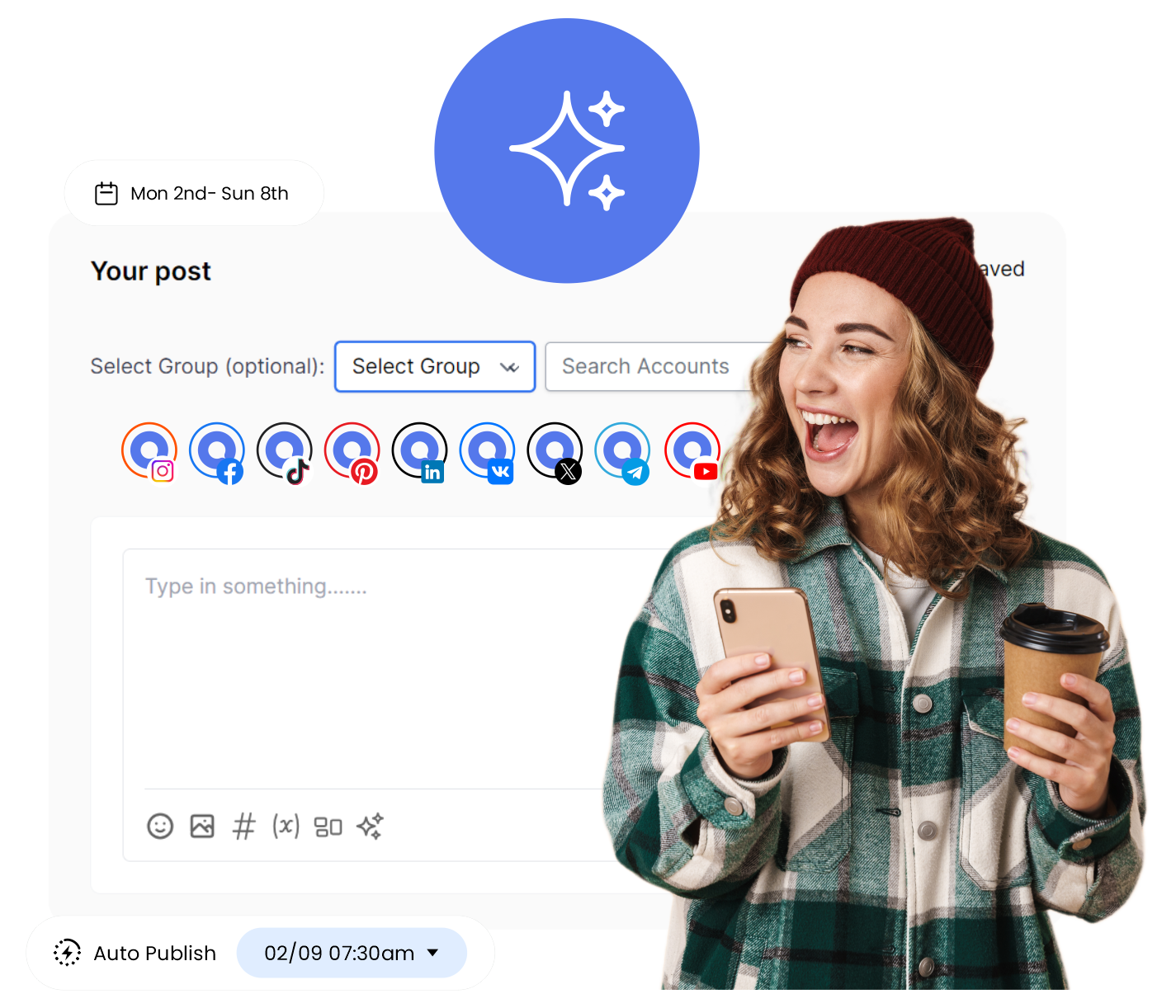
The way you speak to someone on LinkedIn shouldn’t look identical to how you speak to someone on Instagram or TikTok. Different platforms attract different audience behaviors.
OnlySocial helps you customize and schedule content for multiple platforms from one place, so your messaging stays relevant wherever your audience spends time.
Use Analytics to Refine Your Personas Over Time
Buyer personas shouldn’t stay static forever.
As your audience changes, your strategy should too. OnlySocial’s analytics help you track which content performs best, what your audience engages with most, and which messaging angles actually connect.
That means your personas become more accurate over time, not less.
Best Practices for Creating Buyer Personas That Actually Work
A buyer persona is only useful if it reflects reality.
A lot of brands create personas that look good on paper but don’t help with actual marketing decisions. The goal is not to create fictional characters. The goal is to understand real people better.
Here are some best practices that make buyer personas more accurate and more effective.
1. Base Your Personas on Real Data, Not Assumptions
This is the biggest mistake brands make. They guess what customers want instead of researching it properly.
Use:
- Analytics
- Customer interviews
- Sales conversations
- Surveys
- Behavior data
The stronger the data behind your personas, the more useful they become.
2. Focus on Motivations, Not Just Demographics
Age and job titles only tell part of the story. What matters more is:
- What people want
- What frustrates them
- What influences their decisions
- What problem they’re trying to solve
Two people with the same demographic profile can behave completely differently when buying.
3. Don’t Create Too Many Personas
More isn’t always better. If you create ten different personas, your messaging becomes messy and difficult to manage. Start with a few core personas that represent your main audience segments clearly.
You can always refine or expand later.
4. Keep Updating Them Over Time
Buyer personas are not permanent. Audience behavior changes. Markets shift. Platforms evolve. What mattered to your customers last year may not matter now.
Review your personas regularly and update them based on fresh insights and performance data.
5. Make Them Practical for Your Team
A buyer persona should help people make decisions. If your personas are full of vague descriptions and unnecessary details, nobody will actually use them. Keep them clear, simple, and directly connected to marketing and sales actions.
Your team should quickly understand:
- Who this person is
- What they care about
- How to speak to them
6. Align Content with Different Persona Stages
Not everyone is ready to buy immediately.
Some personas are discovering the problem. Others are comparing solutions. Some are almost ready to purchase.
Your content should match where they are in the decision-making process. Educational content works differently from sales-focused content, and both have their place.
7. Validate Personas with Real Campaign Results
The real test is performance. If your messaging improves engagement, targeting becomes easier, and conversions increase, your personas are probably accurate. If campaigns still feel disconnected, your personas may need adjusting.
Good personas improve marketing results. That’s the point.
Final Note
Buyer personas help you stop guessing.
Instead of creating random content and hoping it works, you start building marketing around real people, real behaviors, and real motivations. That shift changes everything. Your messaging becomes clearer, your campaigns feel more relevant, and your audience starts paying attention because the content actually speaks to them.
The key is to keep your personas practical, updated, and connected to real data. And when you combine that with a system like OnlySocial to plan and execute your content consistently, your marketing becomes far more intentional and effective over time.
Frequently Asked Questions
What is the main purpose of a buyer persona?
A buyer persona helps businesses understand their ideal customers better.
It gives you a clearer picture of your audience’s goals, behaviors, challenges, and motivations so your marketing feels more targeted and relevant.
How many buyer personas should a business have?
There’s no fixed number. Most businesses start with two to five core personas that represent their main audience groups. The goal is clarity, not complexity.
Are buyer personas only useful for marketing teams?
No.
Sales, product, customer support, and content teams can all benefit from buyer personas. They help different departments understand customers better and make smarter decisions.
How often should buyer personas be updated?
You should review them regularly. Customer behavior changes over time, so it’s a good idea to revisit your personas every few months or whenever you notice major shifts in audience behavior or campaign performance.
What’s the biggest mistake businesses make with buyer personas?
The biggest mistake is relying on assumptions instead of real data. Strong buyer personas are built from research, customer feedback, analytics, and real behavioral patterns, not guesses.
Can small businesses benefit from buyer personas too?
Absolutely.
In fact, small businesses often benefit the most because they need their marketing efforts to be more focused and efficient. Clear buyer personas help them avoid wasting time and budget on the wrong audience.