Content Batching for Social Media in 2026: How to Create Weeks of Content in a Day
If you’ve ever opened your phone and thought, “What am I even posting today?” – you’re not alone.
Social media can feel like a daily obligation. Post. Engage. Repeat. And just when you think you’re ahead, it’s time to do it all over again. That constant cycle is exhausting, and it pulls you away from actually growing your business.
There’s a better way to do it. It’s called content batching.
Instead of creating posts one by one every day, you sit down once, focus, and produce multiple pieces of content in a single session. Captions, visuals, videos – all done in one go. Then you schedule everything ahead and free up your time.
In this guide, we’ll walk you through how to batch your content the right way. We will show you the simple steps and practical examples you can follow, as well as the systems you can actually stick to. The goal is to help you stay consistent, reduce stress, and finally get out of “what do I post today?” mode for good.
Table of Contents
- 1 What Is Content Batching (And Why It Changes Everything)?
- 2 What Content Should You Batch?
- 3 Building a Simple Content Batching System to Make Things Easier
- 4 Tapping into the Power of Content Repurposing
- 5 Turn Your Content System into a Workflow with OnlySocial
- 6 Final Note
- 7 Frequently Asked Questions
- 7.0.1 What type of content can I create for social media?
- 7.0.2 Which social media platform is best for my brand/business?
- 7.0.3 How long should a batch creating session take?
- 7.0.4 Can you really create 30 days of content in 3 hours?
- 7.0.5 Will batch creating make my content feel less “current”?
- 7.0.6 How far in advance should I batch create content?
- 7.0.7 What tools do I need for batch creating?
- 7.0.8 Should I batch create for all social media platforms at once?
- 7.0.9 What is the biggest mistake people make with content batching?
What Is Content Batching (And Why It Changes Everything)?
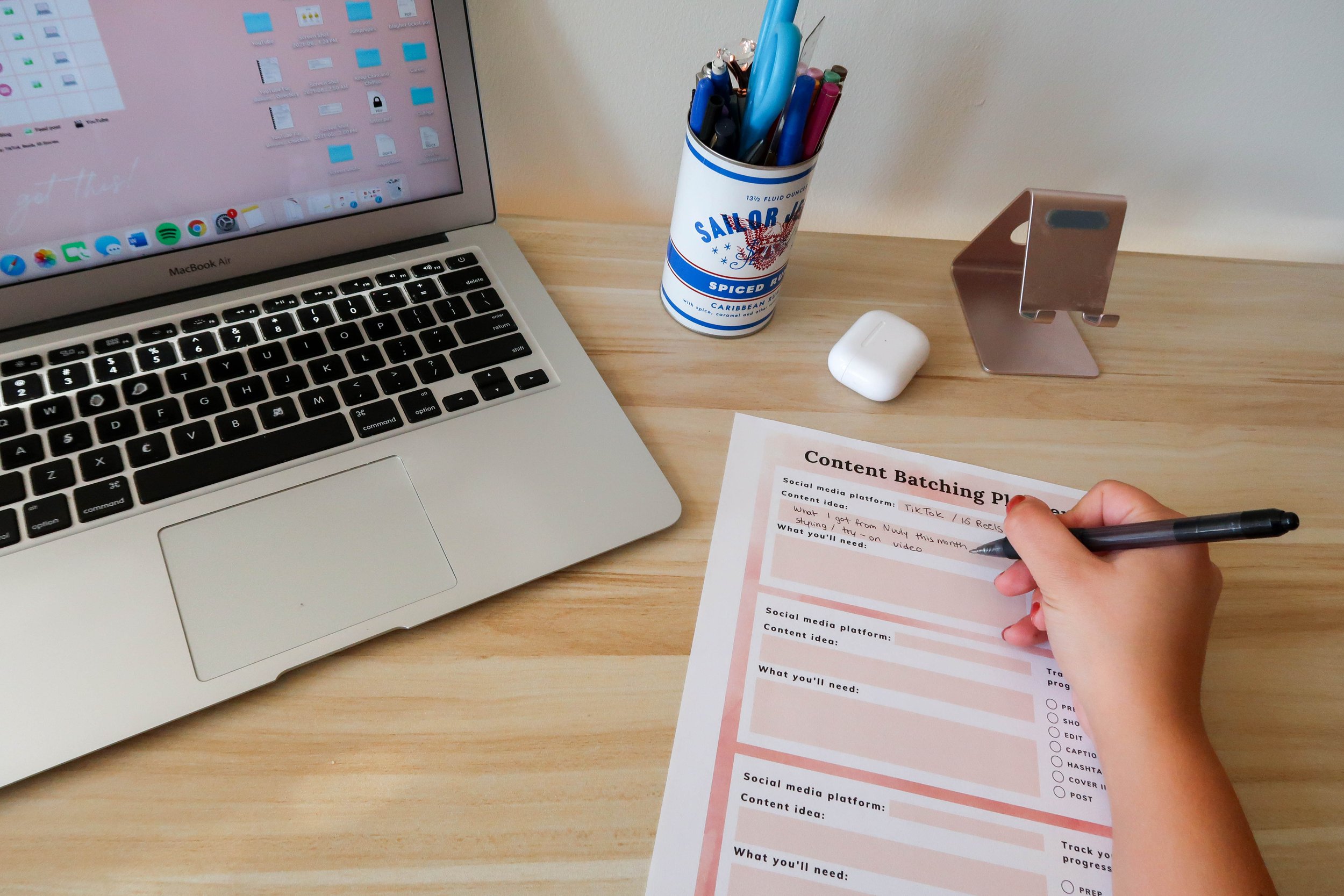
Content batching is simple.
It means creating multiple pieces of content in one focused session instead of posting one-by-one every day.
Think of it like cooking for the week instead of making a fresh meal every single day. You prep once. You save time. You stay consistent.
Most people don’t do this with social media.
They open their phone, scramble for an idea, create something quickly, post it, and move on. Then repeat the same process tomorrow. It feels productive, but it’s actually draining your time and attention.
Why Content Batching Matters More Than Ever
Here’s the real issue. Every time you stop what you’re doing to create a post, you break your focus. And getting that focus back isn’t instant. Research from the University of California found that it can take around 20+ minutes to fully regain concentration after a distraction.
Now imagine doing that every day.
You’re constantly switching between running your business and “quickly posting something.” That back-and-forth kills momentum.
Batching is a good way to fix that.
When you sit down with one goal – to create content – you enter a flow state. Ideas come faster. Your content feels more connected. And you’re not starting from zero every time.
And then there’s consistency.
Social media rewards accounts that show up regularly. Not randomly. Not when you feel like it. Consistently. Batching makes that possible.
Instead of hoping you’ll post today, you already have a week (or month) of content ready to go. Your audience sees you regularly. Your brand stays visible. And you’re not stressed trying to keep up.
What Content Should You Batch?
Batching isn’t just about creating more content. It’s about creating the right mix of content.
If every post is promotional, people tune out. If every post is educational, you might struggle to convert. So, the goal is to maintain a balance.
Your feed should feel helpful, interesting, and human – not like a sales machine.
Here’s a simple way to structure what you batch.
#1: Owned Content (Your Core Assets)
This is your foundation. Owned content includes anything you’ve created yourself. This could be blog posts, videos, guides, case studies, product demos, or tutorials. This is where you build authority and drive traffic back to your business.
When batching, break one piece of content into multiple posts. A single blog post can become:
- 3-5 short tips
- A carousel
- A short video
- A quote graphic
You’re not creating from scratch every time. You’re extracting more value from what you already have.
#2: Curated Content
You don’t have to create everything yourself. Curated content is about sharing valuable insights from others in your industry. Think reports, trends, studies, or even a strong opinion from a credible source.
This shows your audience that you stay informed, care about providing value, and you’re not just here to promote yourself.
Remember to add your perspective when sharing. That’s what makes it yours.
This is the content people save, share, and come back to. It could be short tips, quick wins, relatable thoughts, or bite-sized insights. These posts are easy to consume and easy to remember.
For example:
- “3 mistakes people make when posting on TikTok”
- “A simple way to improve your captions”
- “What I wish I knew before starting my business”
When batching, create multiple of these in one sitting. They’re quick to produce and great for keeping your audience engaged.
#4: Promotional Content
This is where you sell. Product launches. Offers. Calls to action. Service highlights.
But here’s the mistake most people make. They overdo it.
If your feed feels like constant promotion, people disengage. You need to earn attention before asking for action.
The Simple Rule to Follow
A good rule of thumb is the 3:1 ratio.
For every three value-driven posts (education, insights, or curated content), you post one promotional piece. This keeps your audience engaged while still giving you space to sell.
Building a Simple Content Batching System to Make Things Easier
Batching works best when there’s a system behind it.
Without structure, you’ll still end up guessing, overthinking, and scrambling. With the right setup, everything flows. You know what to create, when to create it, and how it fits into your overall strategy.
Here’s how to build that system.
1. Start with Clear Content Categories
Before you create anything, define your content pillars. These are the buckets your posts will fall into. For most brands, it looks something like:
- Blog or long-form content
- Educational tips and how-to posts
- Engagement posts (questions, polls, opinions)
- Curated industry insights
- Promotional content and offers
- Behind-the-scenes or brand updates
This is important because it removes guesswork. You’re not asking, “What should I post?” You’re asking, “Which category am I creating for today?”
One brand we have seen that tends to understand how content pillars work and have mastered it for their brand is Ello Products, a brand that sells reusable food and liquid products. On their social media channels, you will often see them publish posts around things like meal prepping, sustainability, and customer-driven campaigns.
View this post on Instagram
2. Mix Your Content (Don’t Repeat Yourself)
Variety keeps people interested. If you post the same type of content back-to-back, your feed starts to feel repetitive. Engagement drops. People scroll past.
Instead, rotate your categories across the week.
For example:
- Monday: Educational post
- Tuesday: Engagement question
- Wednesday: Tip or quick win
- Thursday: Curated insight
- Friday: Blog or promotional post
This keeps your content fresh without making your workflow complicated.
3. Plan Ahead for Seasonal Content
One of the biggest advantages of batching is preparation. You don’t have to rush when a holiday or campaign comes up. You already have content ready.
Think ahead:
- Seasonal themes (summer, back-to-school, holiday season)
- Industry events or launches
- Promotions tied to specific dates
Create these posts in advance and schedule them early. That way, when everyone else is scrambling, you’re already done.
4. Schedule Time for Engagement Too
Batching isn’t just about posting. It’s also about how you manage interaction.
Instead of checking your notifications all day, set a dedicated window. Even 10-15 minutes daily is enough to reply to comments, DMs, and mentions.
This keeps you responsive without breaking your focus throughout the day.

Tapping into the Power of Content Repurposing
Here’s a truth most people miss. Sometimes, you don’t need more content. You just need more use out of the content you already have.
Batching becomes ten times easier when you stop trying to create something new every single time. That’s where content repurposing comes in.
One Piece of Content = Multiple Posts
Let’s say you write a blog post. Most people share it once and move on. That’s wasted potential.
That same blog post can turn into a full week of content:
- Share the blog link with a strong hook
- Turn one key idea into a short tip
- Ask a question based on the topic
- Pull out a quote or insight and turn it into a graphic
- Add a soft promotion tied to the content
Now, instead of one post, you’ve created five. And none of it required starting from scratch.
This doesn’t just work for blogs. You can apply it to everything you create.
You can repurpose:
- Podcasts into short clips or quotes
- Webinars into tips or carousel posts
- YouTube videos into short-form content
- Interviews into insights or key takeaways
Every long-form piece is a content engine. Your job is to break it down into smaller, platform-friendly formats.
Why Repurposing Works So Well
First, it saves time. You’re not constantly creating new ideas. You’re expanding on existing ones.
Second, it improves consistency.
When your content is connected, your messaging feels clearer. Your audience starts to understand what you’re about.
And third, it increases reach.
Not everyone sees your content the first time. Repurposing gives your ideas more chances to be seen, understood, and acted on.
Turn Your Content System into a Workflow with OnlySocial
Batching content is one thing. Managing it all smoothly is another.
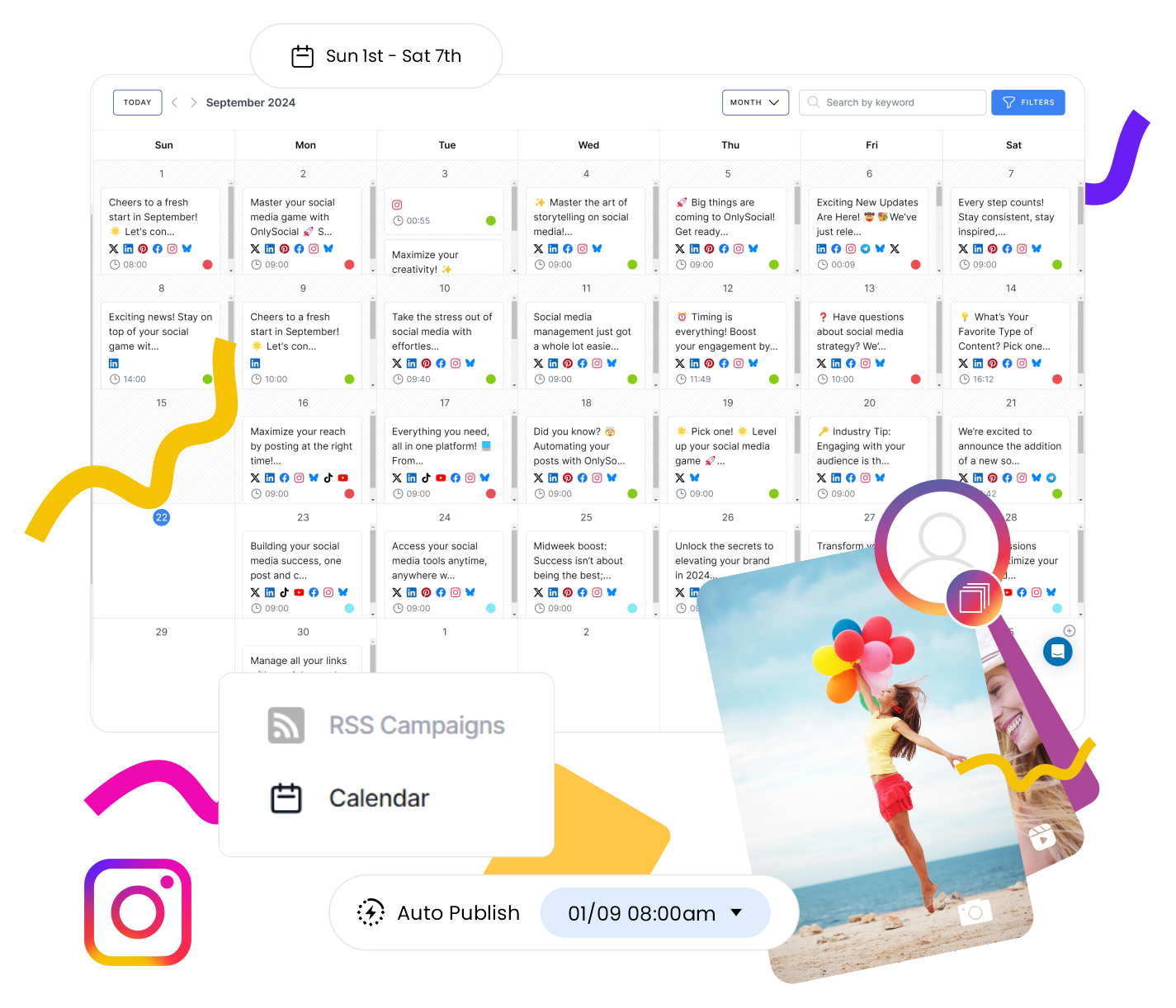
That’s where OnlySocial comes in. Instead of juggling spreadsheets, reminders, and multiple tools, you can plan, create, and schedule everything in one place. Upload your content in bulk, organize it by categories, and schedule posts across all your platforms in advance. It keeps your workflow clean and your posting consistent without daily effort.
It also helps on the creative side. With AI-generated captions, hashtag suggestions, and performance insights, you’re not guessing what works. You’re refining as you go.
So instead of just batching content, you’re building a system that runs, improves, and scales with you.
Final Note
Batching is supposed to make your life easier.
But if you turn it into a rigid system where you feel pressured to always stay ahead, it can do the opposite. You end up replacing daily stress with “batching stress.”
That’s not the goal.
Content batching should give you breathing room. It should remove the daily pressure of “I need to post today,” not replace it with “I need to create 30 posts right now.”
Keep it flexible. You don’t need to batch a full month of content in one sitting. Start smaller.
Set aside a few hours each week to create and schedule a handful of posts. That’s enough to stay ahead without overwhelming yourself. Over time, you’ll naturally build a backlog.
And if life gets busy and you miss a post? That’s fine. Consistency matters, but perfection doesn’t. Your audience won’t disappear because you skipped a day.
Frequently Asked Questions
You’ve got more options than you think. A strong mix usually includes educational tips, behind-the-scenes moments, curated insights, engagement posts (like questions or polls), and promotional content. You can also repurpose blogs, videos, podcasts, or even client conversations into posts.
It depends on where your audience spends time. If you’re visual or product-based, platforms like TikTok, Instagram, and Pinterest work well. If you’re more B2B or service-focused, LinkedIn might be a better fit. You don’t need to be everywhere. Start with one or two platforms, get consistent, then expand.
How long should a batch creating session take?
There’s no fixed rule. For most people, 2-4 hours is enough to create a solid batch of content. The key is focus. One session for ideas, another for creation, another for captions. Short, focused sessions work better than trying to do everything in one long stretch.
Can you really create 30 days of content in 3 hours?
It’s possible, but it depends on your setup. If you already have ideas, templates, and a clear system, you can move fast. But if you’re starting from scratch, it’ll take longer.
Will batch creating make my content feel less “current”?
Not if you leave room for flexibility. Batch your core content in advance, but keep space for real-time posts, trends, or spontaneous ideas. That way, you get the best of both worlds. Structure and relevance.
How far in advance should I batch create content?
Most people aim for 1-2 weeks ahead. As you get more comfortable, you can extend that to a month. The goal is to stay ahead without feeling locked in.
What tools do I need for batch creating?
You don’t need much to start. A simple setup could include:
- A notes app or content planner
- A design tool (like Canva)
- A scheduling tool like OnlySocial
As your workflow grows, you can add more tools. But keep it simple at the beginning.
You can, but you don’t have to. A smarter approach is creating core content first, then adapting it for different platforms. One idea can become a TikTok video, an Instagram post, and a LinkedIn update. That way, you’re not reinventing the wheel for each platform.
What is the biggest mistake people make with content batching?
Trying to do too much too soon. People attempt to create a full month of content in one go without a system. They burn out and quit. So, start small. Build a process you can maintain. Then scale from there. That’s what makes batching work long term.