10 Powerful Chatfuel Alternatives to Consider in 2025
Chatfuel has long been one of the best-known names in chatbot automation. It’s helped businesses build bots for Facebook, Instagram, and WhatsApp, offering features like live chat, a shared inbox, and official WhatsApp API support. For many, it’s been a go-to solution.
But here’s the thing: Chatfuel isn’t perfect.
As businesses grow, they often need more flexibility, deeper automation, or tools that cover more than just messaging apps.
That’s why so many companies are now exploring alternatives – platforms that combine smart AI with broader integrations, better scalability, and sometimes even all-in-one social media management.
In this guide, we’ll walk through 10 powerful Chatfuel alternatives in 2025, starting with OnlySocial’s Salesbot, and show you which one might be the right fit for your business.
Table of Contents
- 1 Why Are Businesses Looking for Chatfuel Alternatives?
- 2 Top Chatfuel Alternatives in 2025
- 3 1. OnlySocial
- 4 9 Other Powerful Chatfuel Alternatives Worth Considering for Your Brand
- 5 2. Tidio
- 6 3. ManyChat
- 7 4. MobileMonkey
- 8 5. Botsify
- 9 6. IBM Watsonx Assistant
- 10 7. SendPulse
- 11 8. Landbot
- 12 9. LiveChat
- 13 10. Tars
- 14 How to Choose the Best Chatfuel Alternative
- 15 Final Note
- 16 FAQs
- 16.0.1 What is the best Chatfuel alternative for small businesses?
- 16.0.2 Which Chatfuel alternative is best for advanced AI chatbots?
- 16.0.3 Can I find a Chatfuel alternative that supports multiple channels, not just Messenger or WhatsApp?
- 16.0.4 What’s the most cost-effective Chatfuel alternative?
- 16.0.5 Which Chatfuel alternative is best for e-commerce businesses?
- 16.0.6 How do I know which Chatfuel alternative is right for my business?
Why Are Businesses Looking for Chatfuel Alternatives?
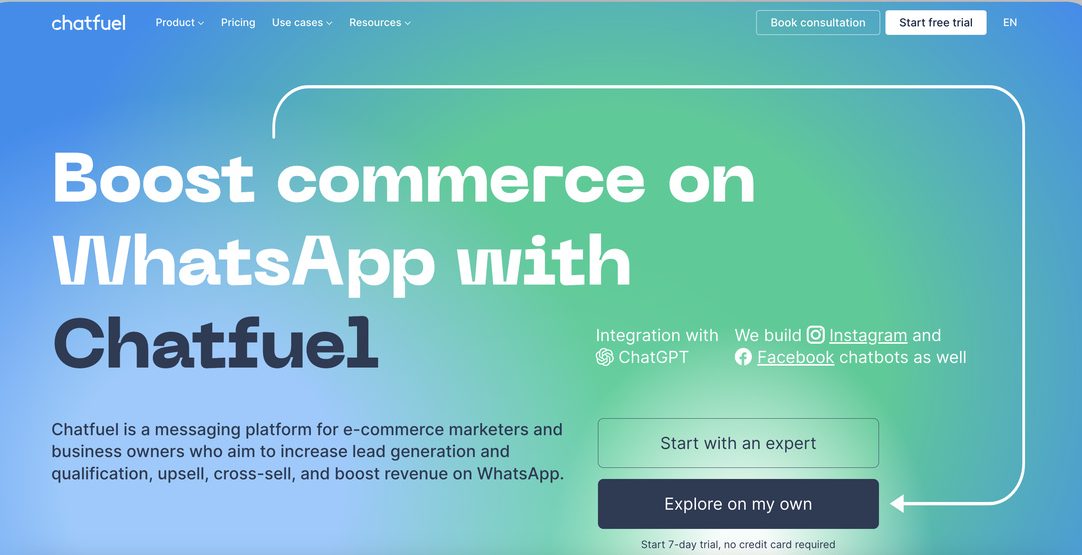
Chatfuel has been around for years, and for a lot of businesses, it was the first step into chatbot automation. It works well with Facebook Messenger, Instagram, and WhatsApp, and it gives you handy features like live chat, a shared inbox, and automated flows.
For many, that’s been enough.
But here’s the catch – customer expectations have moved on. Businesses now want smarter AI, smoother multi-channel reach, and more freedom to customize. And that’s where Chatfuel starts to feel like it’s falling short.
It still leans heavily on the Facebook ecosystem, so if you want to connect with customers on your website, Discord, or other growing platforms, you’ll quickly feel boxed in.
Cost and complexity are also part of the story. Some of the most useful features only show up on higher-tier plans, which can feel pricey if you’re scaling up.
And while it’s powerful, Chatfuel often requires time and technical effort to really get it working the way you want. For teams that just want a tool that “clicks” without too much setup, that can be frustrating.
This is why many businesses are now exploring alternatives. They’re looking for chat platforms that are easier to set up, more flexible to grow with, and capable of handling real conversations with AI that feels natural.
Simply put: the bar has been raised, and businesses want more than Chatfuel’s basics.
Top Chatfuel Alternatives in 2025
1. OnlySocial
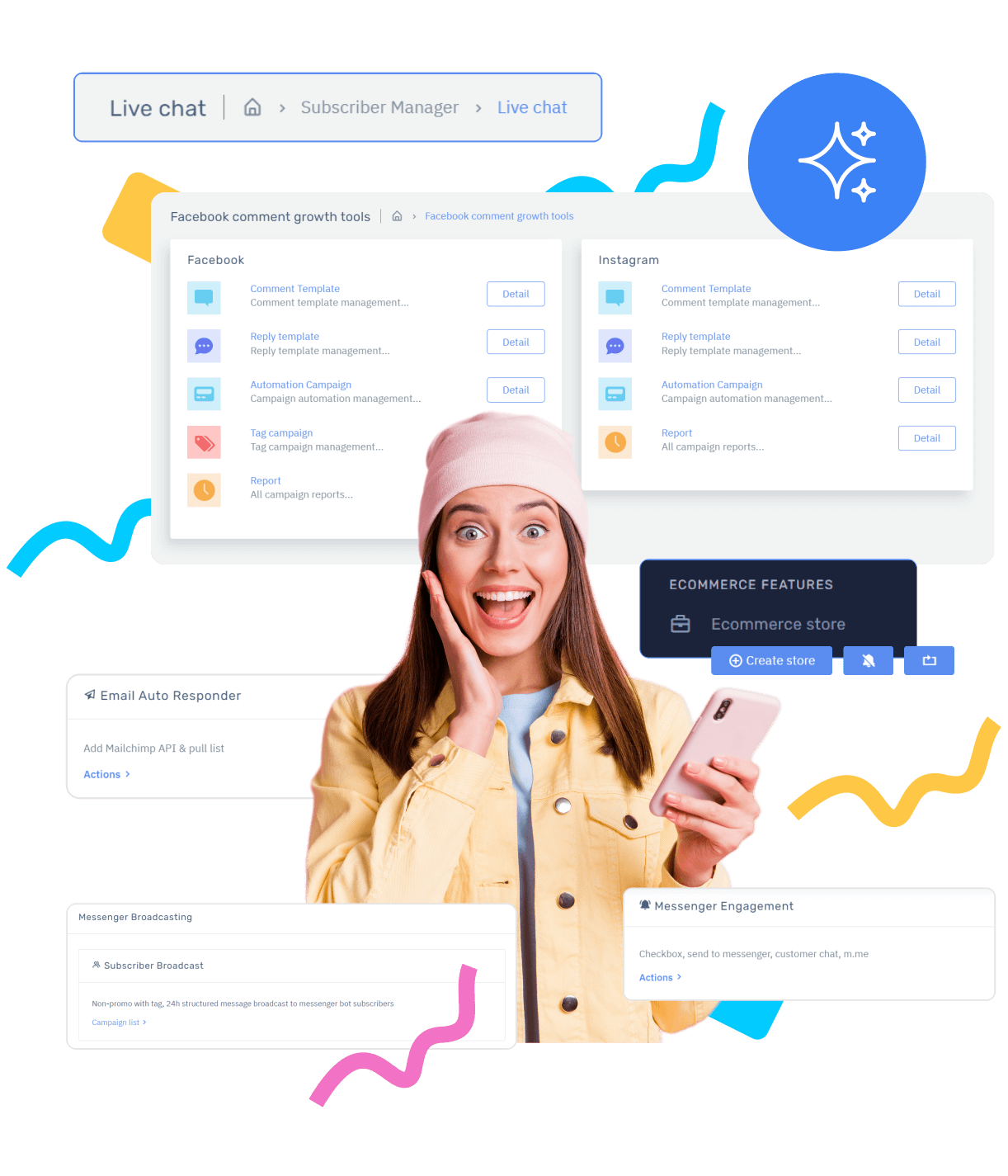
OnlySocial is more than just a chatbot builder – it’s an all-in-one platform that combines powerful AI-driven chat automation with full social media management.
Its Salesbot is designed to help businesses of any size create smarter, more engaging conversations with customers, while also streamlining content management and engagement across multiple channels.
Why OnlySocial is the Best Chatfuel Alternative
Unlike Chatfuel, which often leans heavily on template-driven setups and the Facebook ecosystem, OnlySocial takes a much broader, more adaptable approach.
It’s built to scale, easy to use, and offers advanced AI features that make automation not just functional, but genuinely valuable for both customers and businesses. Here’s what makes it stand out:
No-Code Chatbot Creation
OnlySocial keeps chatbot building simple. With its user-friendly interface, you can design, upgrade, and customize bots without writing a single line of code.
This makes it easy for teams – technical or not – to build workflows that fit their exact needs without the steep learning curve.
Advanced AI Capabilities
At the heart of OnlySocial is strong AI and machine learning. The Salesbot understands context and intent, so conversations feel natural and meaningful.
Instead of relying on basic keyword triggers, your chatbot can deliver responses that align more closely with what customers actually want.
Content-Powered AI
This is one of OnlySocial’s most powerful features. Instead of building conversations manually, you can feed the chatbot with your existing content. This can be via PDFs, YouTube videos, webpages, and more.
The Salesbot then uses this material to answer questions directly and accurately. This makes it ideal for businesses with large documentation libraries, educators with learning materials, or creators with multimedia content.
Full Customization
Everything about your chatbot – from the way it looks to the tone it uses – can be tailored to match your brand. You can even assign different roles to your bot, making it act like a support agent, a sales assistant, or a coach, depending on your needs.
This ensures that every customer interaction feels consistent with your brand personality.
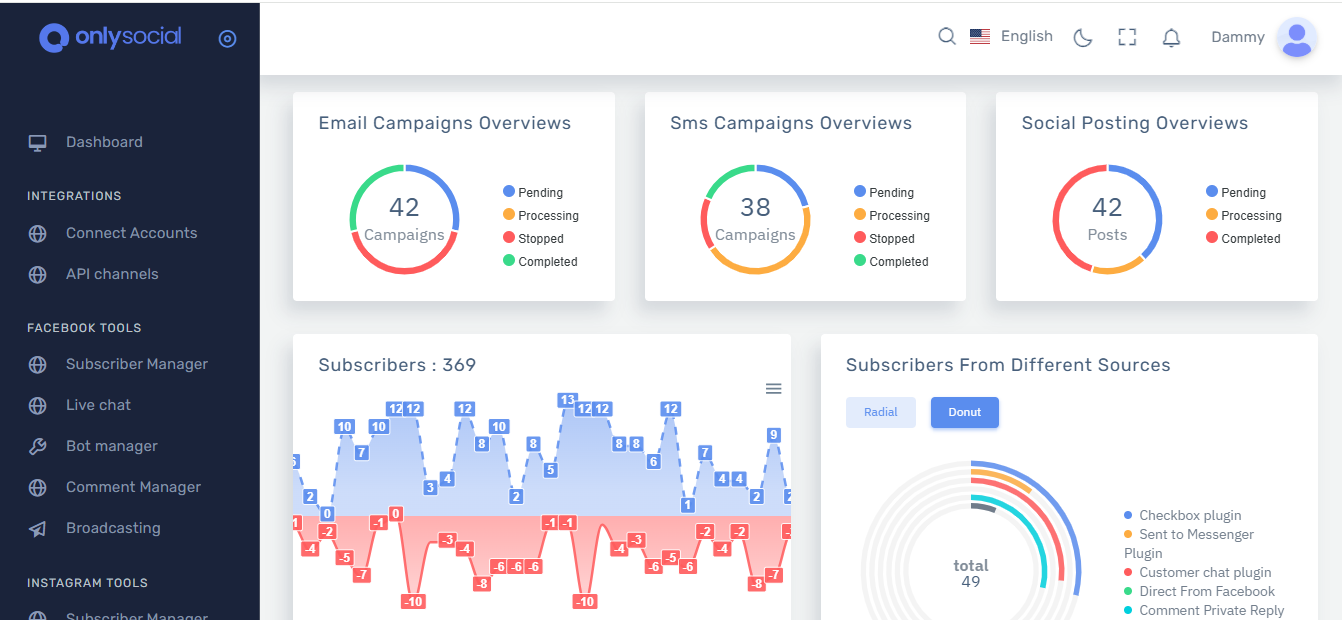
Advanced Chatbot Analytics
OnlySocial doesn’t just automate; it measures and improves. Its analytics dashboard gives you deep insights into user interactions, resolution rates, and conversion points. With this data, you can refine your chatbot flows, boost engagement, and drive more sales.
Integration Power
The platform integrates smoothly with third-party tools like CRMs, e-commerce platforms, social media, and email marketing apps. Using Zapier, Make, APIs, and webhooks, OnlySocial fits right into your existing tech stack, keeping workflows seamless.
Affordability
High-end AI chatbot tools can get expensive fast, but OnlySocial is designed to be budget-friendly. With just $29 per month, the tool makes advanced AI chatbots accessible to freelancers, startups, and enterprises alike – without breaking the bank.
Full Social Media Management
Here’s where OnlySocial really leaves Chatfuel behind. Beyond chatbot automation, it doubles as a full social media management suite.
You can schedule posts, bulk publish across multiple social platforms, manage engagement through a unified inbox, and even generate captions and visuals with AI. This all-in-one approach means fewer tools, less complexity, and a smoother workflow.
9 Other Powerful Chatfuel Alternatives Worth Considering for Your Brand
2. Tidio
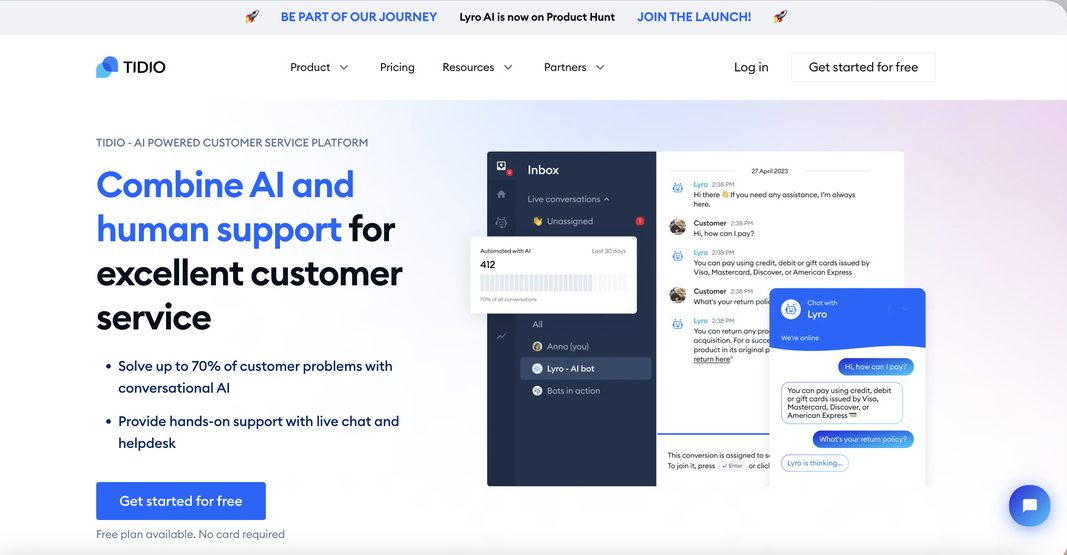
Tidio is a chatbot and live chat platform designed to help businesses handle support, sales, and customer engagement more efficiently.
It combines live chat and chatbot automation in one dashboard, making it a practical choice for small and mid-sized businesses that want to provide instant responses while still having the option for human support.
Key Features
- Unified Live Chat & Chatbot – Manage human and automated responses in one interface.
- E-commerce Integrations – Works well with Shopify, WordPress, and other e-commerce tools.
- Visual Editor – Easy-to-use flow builder for chatbot creation.
- AI Automation – Automates replies and handles common queries with AI.
- Multichannel Support – Covers website chat, Messenger, and Instagram.
Pros
- Easy to set up and very user-friendly.
- Combines live chat with chatbot automation in one place.
- Well-suited for e-commerce stores and customer service teams.
Cons
- Limited reach outside social platforms and websites.
- Some advanced features are locked behind higher-tier plans.
- Customization options can feel too basic for more complex needs.
3. ManyChat
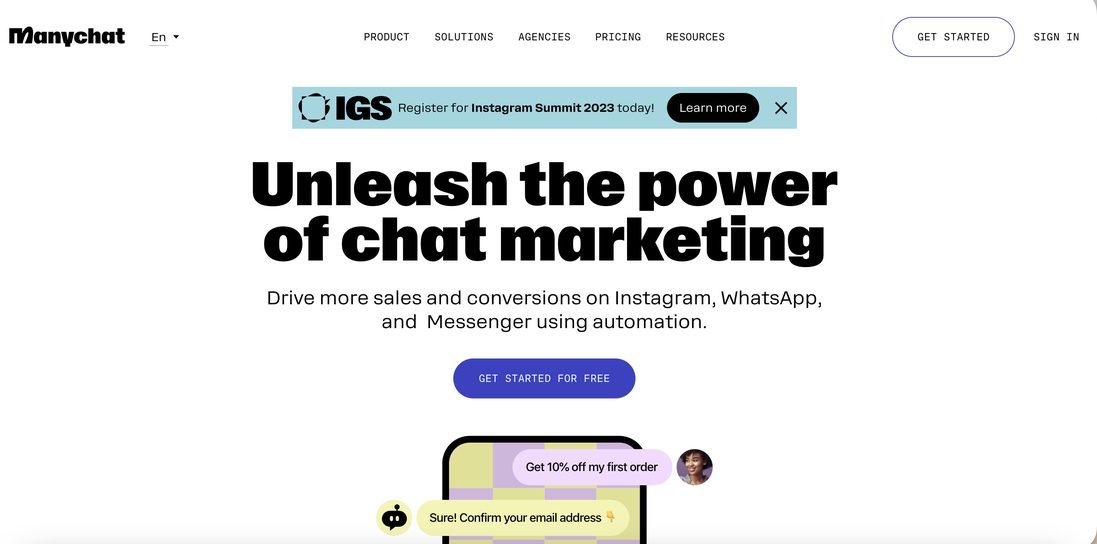
ManyChat is one of the most popular chatbot builders, particularly for businesses that rely heavily on Messenger, Instagram, and WhatsApp.
It’s widely known for its simple drag-and-drop builder and its strong focus on marketing automation, making it a go-to for lead generation and sales campaigns.
Key Features
- Flow Builder – Drag-and-drop interface for building chatbot conversations.
- Audience Segmentation – Advanced targeting to personalize conversations.
- Template Library – Pre-built templates for different industries and use cases.
- Integrations – Works with Shopify, Zapier, and Google Sheets.
Pros
- Extremely easy to use, even for beginners.
- Strong ecommerce integrations for online stores.
- Excellent for marketing campaigns and generating leads.
Cons
- Still very focused on Meta platforms (Messenger, WhatsApp, Instagram).
- Many advanced features require higher-tier pricing.
- Limited flexibility beyond templates, which can restrict deeper customization.
4. MobileMonkey
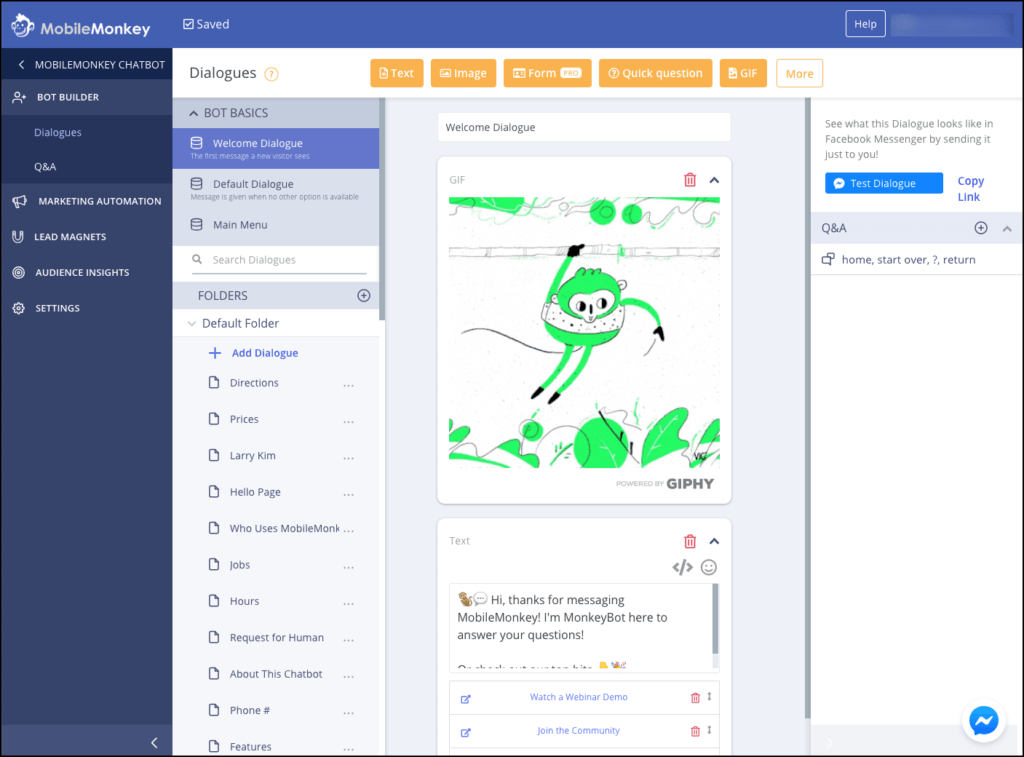
MobileMonkey is known for its omnichannel approach to chat automation. Instead of building separate chatbots for different platforms, it uses its OmniChat technology to let you design one conversation flow that works across Messenger, website chat, SMS, and more.
This makes it especially useful for agencies and sales-focused teams who need to manage outreach across multiple channels without duplicating effort.
Key Features
- OmniChat Funnels – Create a single chatbot flow that runs on Messenger, SMS, and website chat.
- Unified Inbox – Collects all customer conversations in one dashboard for easier follow-ups.
- Sales & Marketing Automation – Comes with templates for lead qualification, follow-ups, and drip campaigns.
- Channel Coverage – Supports Facebook, Instagram, SMS, email, and web chat.
- Integrations – Works with Zapier, CRMs, and marketing stacks to extend its capabilities.
Pros
- One chatbot flow works across multiple platforms, reducing duplication.
- Great for sales-driven teams, with templates focused on lead capture and conversion.
- Unified inbox helps teams keep track of all conversations in one place.
Cons
- AI capabilities are limited compared to more advanced platforms.
- Analytics and customization aren’t as deep as alternatives like OnlySocial or Chatfuel.
- Advanced features and broader use can become costly at higher plan levels.
5. Botsify
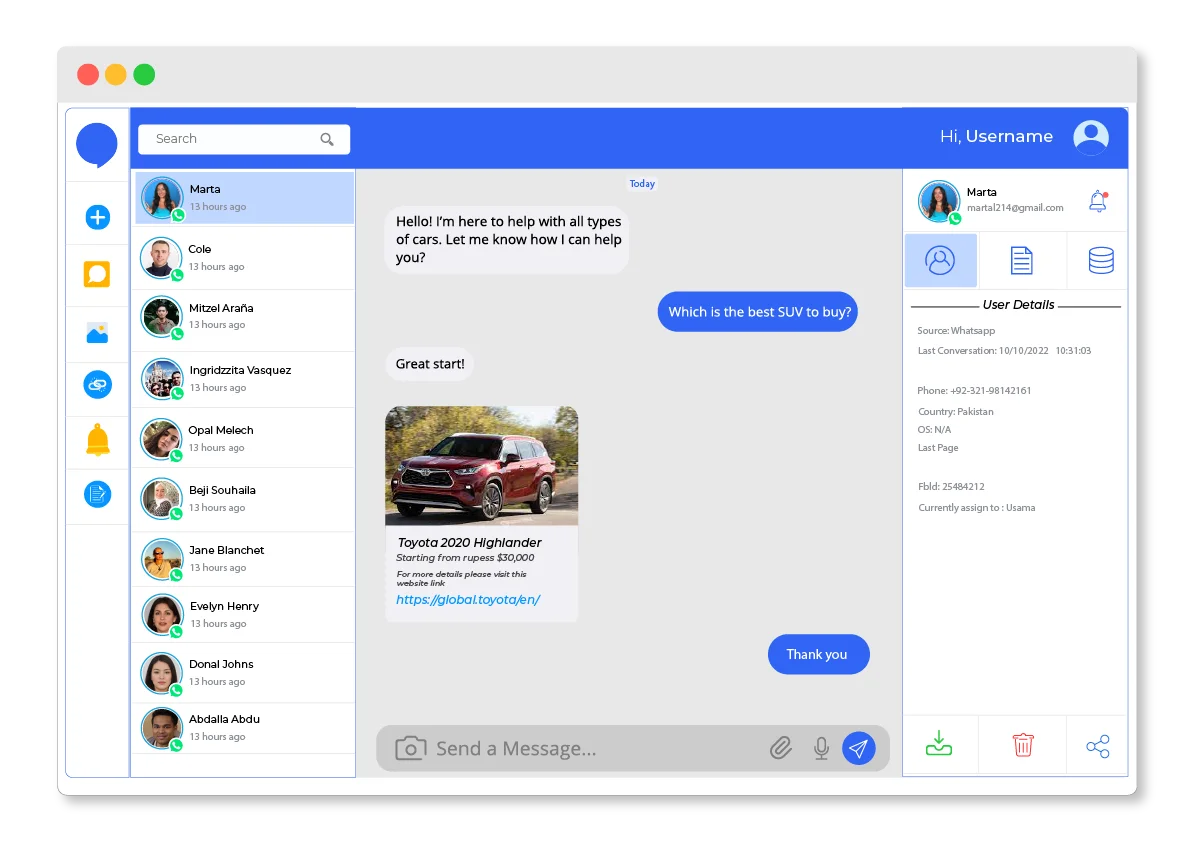
Botsify is a no-code chatbot platform designed to make automation accessible for businesses that want to improve support and lead generation without heavy technical work.
It works across multiple channels like websites, Messenger, and WhatsApp, giving you flexibility in how you reach your customers.
Key Features
- Drag-and-Drop Builder – Build chatbots visually with no coding skills needed.
- AI-Powered NLP – Uses natural language processing to understand customer queries more effectively.
- Third-Party Integrations – Connects with CRM systems and tools like Zapier to extend functionality.
- Analytics & Reporting – Offers insights into conversations and performance so you can refine your flows.
Pros
- Works across multiple channels, not just social platforms.
- Beginner-friendly with a straightforward interface.
- Good onboarding and customer support to help businesses get started.
Cons
- AI features are solid but not as advanced as higher-end competitors.
- Doesn’t support content ingestion like PDFs or videos.
- Pricing can be less attractive for smaller businesses on tight budgets.
6. IBM Watsonx Assistant
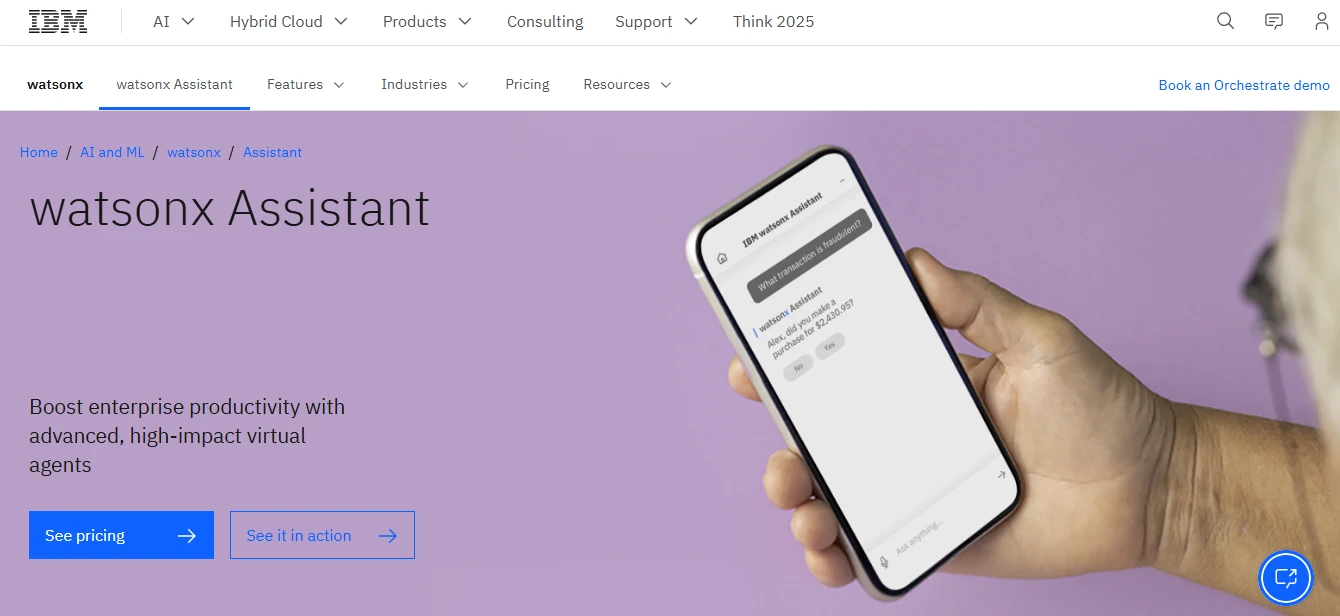
IBM Watsonx Assistant is an enterprise-grade AI chatbot platform built for businesses that need highly advanced, large-scale conversational agents.
With its sophisticated natural language processing and machine learning capabilities, it goes far beyond simple chat flows, making it a strong option for companies that want AI-driven support across multiple channels and languages.
Key Features
- Advanced NLP & Intent Recognition – Understands complex queries with high accuracy, making conversations more natural.
- Multi-Language & Multi-Channel Support – Works across web, mobile apps, voice assistants, and in multiple languages.
- Enterprise Integrations – Connects easily with CRMs, databases, and APIs for seamless workflow automation.
- Customizable Dialogue Management – Offers deep control over context handling and multi-turn conversations.
- Robust Analytics & Monitoring – Provides detailed reports on chatbot performance, accuracy, and resolution rates.
- AI-Powered Scalability – Designed to support very large volumes of users and conversations simultaneously.
Pros
- Extremely powerful in terms of AI and natural language understanding.
- Perfect for complex, enterprise-level use cases that demand advanced automation.
- Highly customizable and adaptable to specific industries.
- Offers strong scalability for organizations with large customer bases.
Cons
- Steep learning curve – requires technical expertise to set up effectively.
- Higher costs, which may not suit small or medium-sized businesses.
- Longer setup and deployment times compared to simpler no-code platforms.
7. SendPulse
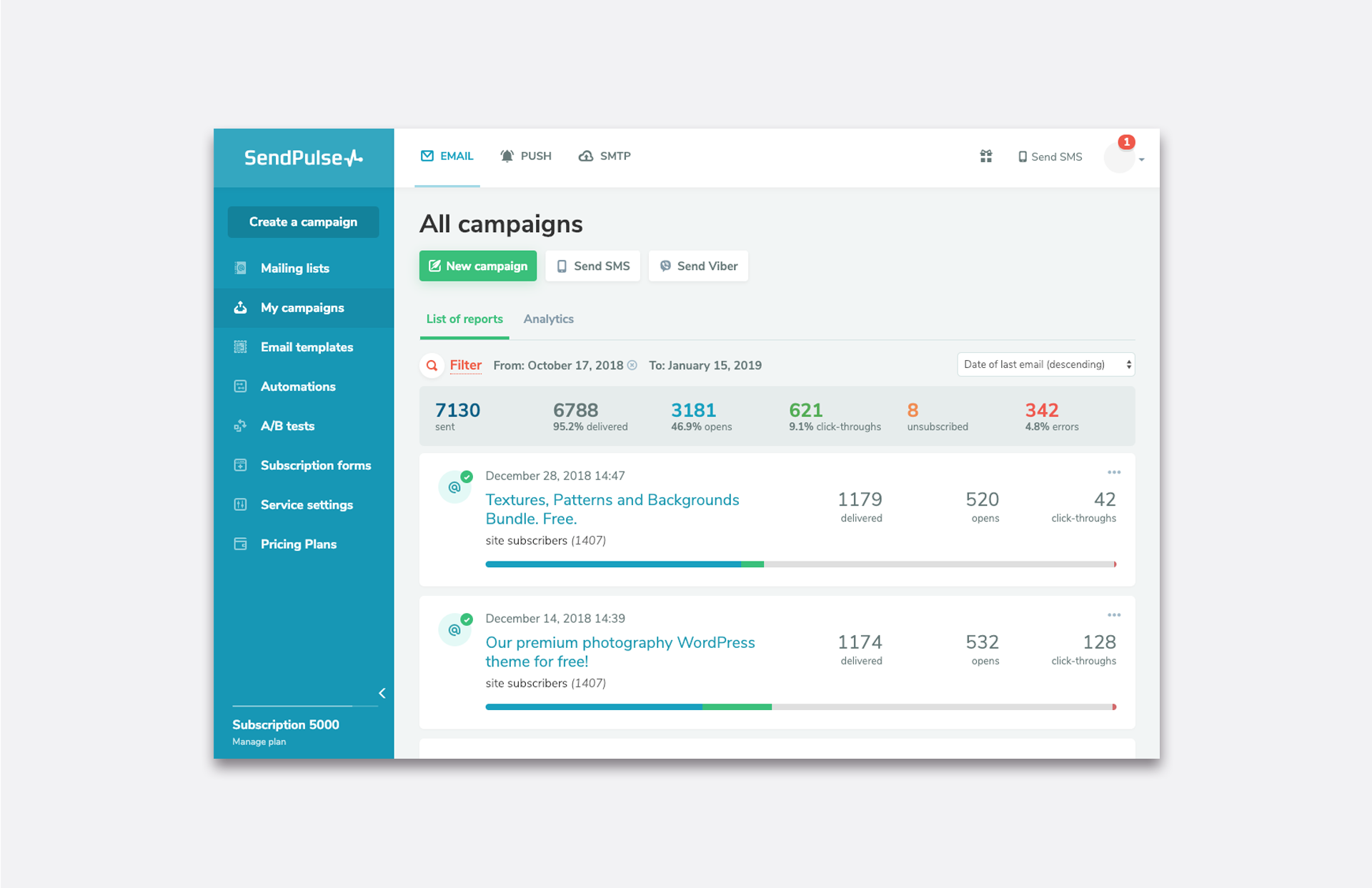
SendPulse is more than just a chatbot tool – it’s a multi-channel marketing automation platform that combines chatbots with email, SMS, and web push notifications.
It’s built for businesses that want to run integrated campaigns across different communication channels while keeping everything in one system.
Key Features
- Multi-Channel Chatbot Support – Build bots for Messenger, Telegram, WhatsApp, and even web-based chat.
- Visual Flow Builder – A simple drag-and-drop editor for designing automation sequences.
- Marketing Integration – Combine chatbots with email, SMS, and push campaigns for broader reach.
- AI Personalization – Supports AI-powered flows to tailor responses to individual users.
- E-commerce Tools – Offers payment options and shop integrations for direct sales through chat.
Pros
- Provides more than just chatbots – it’s a full marketing automation suite.
- Covers a wide range of communication channels.
- Flexible pricing that scales with your business.
Cons
- Chatbot builder can feel less intuitive for beginners.
- Doesn’t allow deep personality or branding customization for bots.
- Some advanced integrations require technical knowledge to set up properly.
8. Landbot
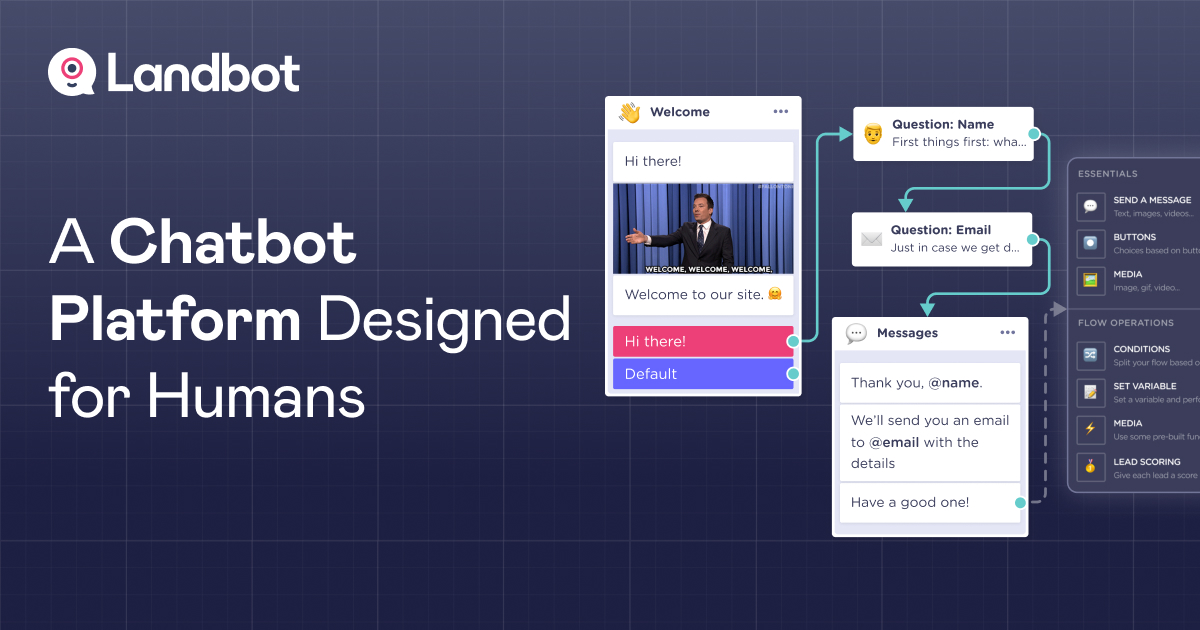
Landbot is a no-code chatbot builder that makes it easy to design conversational experiences with a strong visual focus.
Unlike platforms that stick to simple message-and-reply bots, Landbot allows you to create chat flows that feel more interactive – almost like mini landing pages.
It’s especially popular for website and WhatsApp bots, where businesses want to capture leads or guide users through a more engaging journey.
Key Features
- Drag-and-Drop Visual Builder – Build chatbot flows without coding, using a simple block-based editor.
- Multi-Channel Deployment – Deploy chatbots on websites, WhatsApp, Facebook Messenger, or even embed them into apps.
- Engaging UI Elements – Add buttons, forms, carousels, and media for a richer user experience.
- Integrations – Works with tools like Zapier, Slack, Google Sheets, and CRMs for smoother workflows.
- Analytics – Track user paths and identify drop-off points to improve chatbot performance.
Pros
- Very beginner-friendly; you can create useful bots without technical skills.
- The conversational UI is more engaging than standard text-only bots.
- Strong integrations for marketing and customer data management.
Cons
- AI and NLP capabilities are fairly limited compared to advanced competitors.
- Pricing can increase quickly as chat volume grows.
9. LiveChat
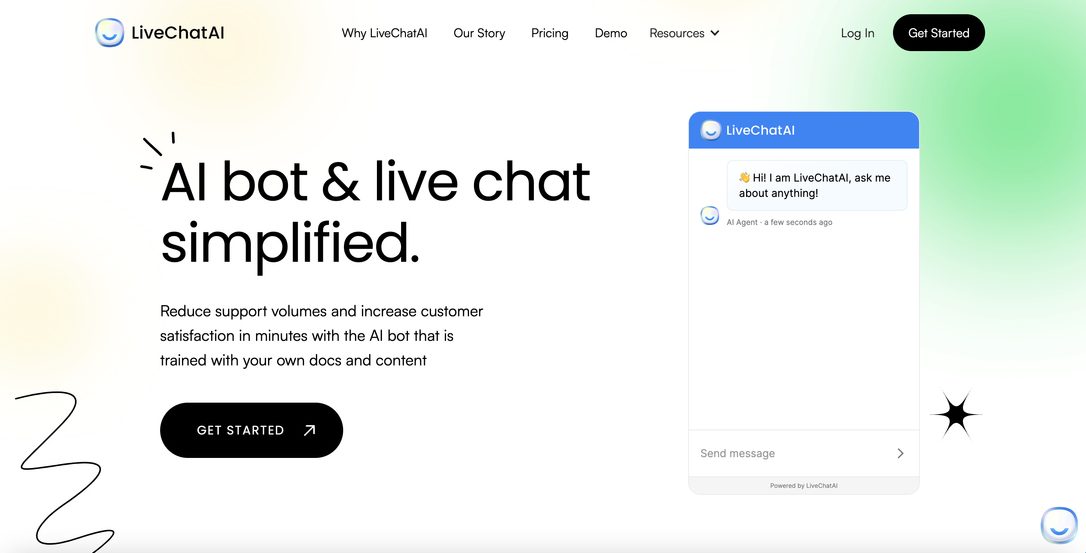
LiveChat is best known as a customer service and engagement platform, but it also includes automation capabilities that make it a valuable Chatfuel alternative.
Instead of focusing purely on bots, it combines human support, chatbot automation, and powerful integrations into one tool, helping businesses deliver faster responses and more personalized service.
Key Features
- Hybrid Chat Support – Combine real human agents with chatbots for seamless customer interactions.
- Multi-Channel Presence – Manage conversations from websites, apps, and social platforms in one place.
- Chatbot Integration – Pairs with AI bots (including third-party tools) to automate FAQs and repetitive tasks.
- Team Collaboration Tools – Features like agent routing, canned responses, and performance tracking help teams stay organised.
- Integrations – Connects with Shopify, HubSpot, WordPress, Salesforce, and more.
- Analytics Dashboard – Tracks chat volume, response times, and customer satisfaction scores.
Pros
- Excellent for businesses that want both live agents and chatbots in one system.
- Strong integrations with ecommerce and CRM tools.
- Provides detailed analytics to monitor team and bot performance.
- Smooth customer experience with quick, reliable support.
Cons
- Chatbot features are not as advanced as platforms like OnlySocial or IBM Watsonx Assistant.
- Can be expensive as you scale up with multiple agents.
- Requires setup and training to make the most of its hybrid approach.
10. Tars
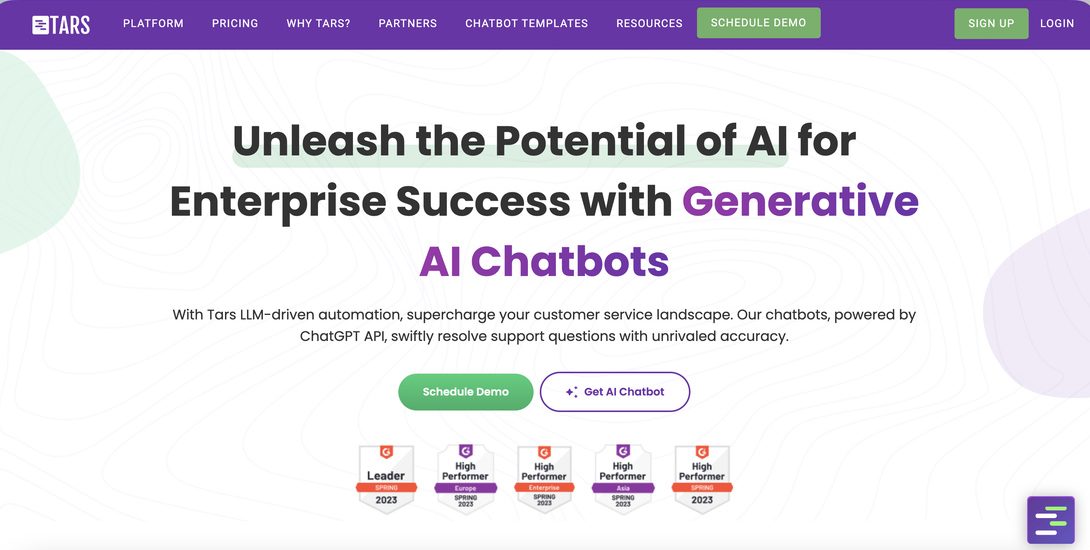
Tars is a chatbot platform built with a strong focus on lead generation and customer service.
It’s best known for its “conversational landing pages,” which turn traditional forms or websites into engaging, interactive chat experiences.
Businesses in industries like finance, healthcare, and education often use Tars to qualify leads, book appointments, and guide users through complex processes.
Key Features
- Conversational Landing Pages – Replace static web forms with chat-based experiences to improve conversion rates.
- No-Code Bot Builder – Simple drag-and-drop editor for building chat flows.
- CRM & Tool Integrations – Connects easily with CRMs, payment gateways, and other business tools.
- Analytics & Reports – Provides insights into user drop-offs, conversions, and campaign effectiveness.
Pros
- Excellent for boosting conversions with interactive landing pages.
- Strong analytics to track lead quality and campaign results.
Cons
- Pricing is higher compared to many other chatbot platforms.
- Less suited for businesses seeking advanced AI-driven conversational bots.
How to Choose the Best Chatfuel Alternative
No doubt about it; there are presently lots of chatbot platforms available out there. Because of that, it can be pretty easy to feel overwhelmed.
But the truth is, the “best” alternative to Chatfuel depends on what matters most for your business. So, let’s take a look at some key points to think about before deciding:
Channels You Need to Cover
Ask yourself where your customers spend their time. If most of your audience is on WhatsApp, look for a tool that supports WhatsApp strongly. If you want bots for your website or newer platforms like Telegram or Discord, you’ll need a solution that goes beyond Chatfuel’s Facebook-first focus.
User-friendliness
Not every business has a dedicated tech team. If you want to build and update chatbots yourself, choose a platform with a drag-and-drop builder that makes creating flows simple.
Automation & AI Depth
Some tools can only handle basic keyword triggers, while others (like OnlySocial or Chatfuel with ChatGPT integration) can carry more natural, AI-driven conversations. If you need your bot to feel human-like and handle complex queries, look for advanced AI capabilities.
Integrations with Your Tech Stack
Your chatbot should connect smoothly with the tools you already use—Shopify, HubSpot, Google Sheets, CRMs, or payment systems. Strong integrations save you time and reduce manual work.
Customer Support
When your chatbot is tied to customer experience, support matters. Look for platforms that offer reliable help through live chat, knowledge bases, or onboarding, so you’re never left stuck when issues arise.
Cost and Scalability
Check how pricing grows as your business expands. Some tools look affordable at the start but become costly as you add more users or conversations. Pick one that fits your budget now but can also scale with you.
What we’re trying to say here is that don’t just pick the most popular tool. Choose the chatbot platform that fits your audience, matches your business goals, and gives you room to grow.
Final Note
Chatfuel has been a popular choice for building chatbots, but it’s no longer the only strong player in the market. There are now plenty of powerful alternatives you can consider when looking for the right balance of automation, scalability, and cost.
The key is to match your needs – whether that’s advanced AI, multi-channel presence, or an all-in-one platform – with the solution that fits your goals best.
With the right Chatfuel alternative, you can create smarter, more engaging customer conversations in 2025 and beyond.
FAQs
What is the best Chatfuel alternative for small businesses?
If you’re a small business looking for affordability and simplicity, tools like SendPulse or Tidio are great choices. They’re easy to set up, budget-friendly, and don’t require technical expertise.
Which Chatfuel alternative is best for advanced AI chatbots?
For businesses that want natural, AI-powered conversations, OnlySocial Salesbot and IBM Watsonx Assistant stand out. They offer context-aware replies and deep learning capabilities, giving you more “human-like” interactions.
Can I find a Chatfuel alternative that supports multiple channels, not just Messenger or WhatsApp?
Yes. Platforms like Landbot and MobileMonkey allow you to create bots for websites, SMS, and other channels, while OnlySocial extends this even further by combining chatbots with full social media management.
What’s the most cost-effective Chatfuel alternative?
OnlySocial is one of the most affordable for the features it offers, starting at $29/month. SendPulse also has a generous free plan, making it a good option if you want to test chatbot automation without spending upfront.
Which Chatfuel alternative is best for e-commerce businesses?
Chatfuel is already strong in e-commerce, but if you’re looking for alternatives, Tidio (with Shopify integrations) and MobileMonkey (with sales automation funnels) are especially good for online stores.
How do I know which Chatfuel alternative is right for my business?
It depends on your goals. If you want simplicity and speed, go for Tidio or ManyChat. If you need AI sophistication, consider OnlySocial or IBM Watsonx.
For multi-channel marketing, SendPulse and Landbot are excellent. Always think about your customer base, the channels you use most, and your budget before choosing.