Social Media Marketing for Small Businesses: A Practical 2026 Guide
If you’re running a small business, social media can feel like both a huge opportunity and a massive time drain. Here’s what you need to get it right.
Social media marketing gives small businesses something that used to be reserved for big brands. That’s direct access to real people, in real time, without needing a huge budget.
It’s where customers discover new brands, ask questions, share opinions, and decide who they trust. In fact, about 51% of global consumers now find new products on social platforms before they ever touch Google.
For small businesses, that makes social media less of a “nice to have” and more of a daily touchpoint with potential customers.
The good news is that you don’t need a large team or expensive tools to get started. Most small businesses begin with nothing more than time, consistency, and a willingness to learn what works. As your confidence grows, you can layer in smarter tools, targeted ads, or creator partnerships to scale your efforts without burning out.
Some brands stay fully organic. Others invest a little to move faster. Both approaches can work.
In this guide, we’ll walk through how small businesses can use social media in a practical, realistic way in 2026. These are clear steps that can help you build visibility, connect with the right audience, and turn social media into something that actually supports your business.
Table of Contents
- 1 Social Media Has Become a Powerful Marketing Tool for Small Businesses
- 2 How to Build a Smart Small Business Social Media Strategy
- 2.1 Step 1: Get Clear on What You Actually Want to Achieve
- 2.2 Step 2: Understand Who You’re Creating Content for (Your Target Audience)
- 2.3 Step 3: Learn from Your Competitors (Without Copying Them)
- 2.4 Step 4: Pick Platforms That Actually Make Sense for Your Business
- 2.5 Step 5: Plan and Schedule Your Content Ahead of Time
- 2.6 Step 6: Look for Smart Collaboration Opportunities
- 2.7 Step 7: Use Analytics to Refine and Improve Your Strategy
- 3 4 Expert Social Media Tips for Small Businesses
- 4 How OnlySocial Helps You Market Your Small Business Better
- 5 Final Thoughts
Social Media Has Become a Powerful Marketing Tool for Small Businesses
Not too long ago, marketing at scale was expensive and out of reach for most small businesses. You needed big budgets, agency support, or traditional ads just to get noticed. Social media changed that.
Today, a small business can build visibility and reach new customers using the same platforms as global brands. Whether it’s Instagram, Facebook, TikTok, LinkedIn, or YouTube, social media gives small businesses a level playing field to show up, be seen, and stay connected with their audience.
Beyond visibility, social media creates something even more valuable: direct relationships.
It allows business owners to listen, respond, and engage in real conversations with customers. You can answer questions, gather feedback, showcase real experiences, and build trust over time.
When done well, social media doesn’t just promote your business; it strengthens your reputation and keeps your brand top of mind.
For small businesses looking to grow without overspending, taking social media seriously in 2026 isn’t optional anymore. It’s one of the most effective and affordable marketing tools available.
How to Build a Smart Small Business Social Media Strategy
Step 1: Get Clear on What You Actually Want to Achieve
Before you post anything, take a step back and ask yourself: what do I want social media to do for my business?
Without a clear goal, it’s easy to post randomly and then feel frustrated when nothing seems to work.
Your goal might be brand awareness, more website visits, or direct sales. It could also be less obvious but just as valuable, like building a loyal audience, staying visible in your niche, spotting trends early, or getting more confident with content creation.
Some small businesses set very specific targets, such as hitting a certain number of sales by a deadline or growing their following to a level they feel proud of.
If you’re unsure what “good growth” looks like, benchmarks can help. Research by Critical Truth found the following average weekly follower growth rates benchmark for Q1 2026:
- Facebook: 14.53%
- TikTok: 3.24%
- Instagram: 1.37%
- LinkedIn: 0.85%
These numbers aren’t rules, but they give you something realistic to work toward instead of chasing vague success.
Step 2: Understand Who You’re Creating Content for (Your Target Audience)
Trying to reach everyone on social media is a fast way to reach no one. In 2026, the idea of “going viral” matters far less than consistently showing up for the right people. The real win is attracting an audience that actually cares about what you sell and is likely to support your business.
Start by looking at who’s already engaging with your content, your competitors, or other brands in your space. Social media analytics and listening tools can show you patterns in age, interests, behavior, and the type of content people respond to most. Once you understand this, your content becomes more focused and far more effective.
A great example is Kelsey, the creator behind Rope Drop Design. Her breakthrough came from sharing how she turned a vintage sleeping bag into a puffer jacket. That specific, niche content connected deeply with her audience, helped her rack up 28 million views, and grow her Instagram following to over 300,000.
More importantly, it became the foundation of her brand’s content strategy. This shows that when you understand your audience, your content starts doing the heavy lifting for you.
View this post on Instagram
Step 3: Learn from Your Competitors (Without Copying Them)
Your small business isn’t operating in a vacuum. Other brands in your space are already posting, testing ideas, and learning what works. Paying attention to them can save you a lot of guesswork.
A simple competitive analysis helps you spot patterns in the type of content people engage with, how often competitors post, and which platforms they prioritize.
For small businesses, this step isn’t just about competition. It’s also about community. Many small brands aren’t fighting for the exact same customers, which makes it easier to support each other.
Leaving thoughtful comments, sharing useful posts, or even following similar businesses can spark real connections. Often, that support comes back around and helps grow your reach in a way paid ads never could.
Step 4: Pick Platforms That Actually Make Sense for Your Business
Once you understand your audience and what others in your niche are doing, it’s time to decide where to focus. Facebook is still widely used by small businesses, with Instagram and LinkedIn close behind. But popularity alone shouldn’t drive your choice.
Some brands thrive on TikTok because of its discovery-focused feed and growing support for small business content. Others do better on LinkedIn because their audience prefers professional insights. The goal isn’t to be everywhere. It’s to show up consistently where your customers already spend time.
@tiktok_small_business @betterbrandhealth ♬ original sound – TikTok For Small Business
Step 5: Plan and Schedule Your Content Ahead of Time
Posting “when you remember” is one of the fastest ways to burn out. Planning your content removes that pressure and keeps your social presence consistent. At this stage, you’re deciding three key things:
- What to post
- When to post
- How often to show up
Content performance varies by platform, but carousels and short-form videos generally perform well across most networks.
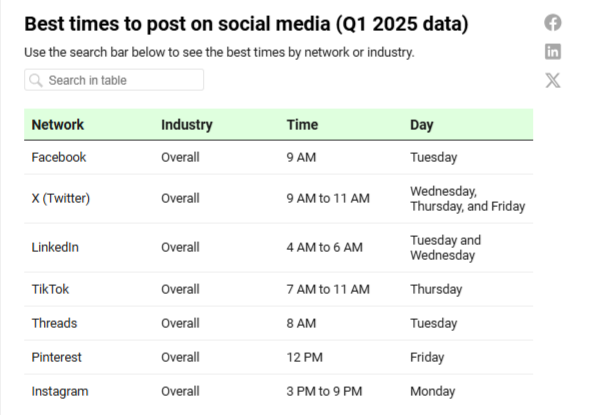
Timing also matters. While overall data shows that noon on Fridays performs well, each platform has its own sweet spots. For example, Facebook often performs best around 9 AM on Tuesdays, LinkedIn early mornings midweek, and Instagram later in the day on Mondays.
You don’t need to follow these times perfectly, but they’re a useful starting point. Once you start tracking your own results, you can fine-tune your schedule based on what actually works for your audience.
Step 6: Look for Smart Collaboration Opportunities
Collaborations aren’t mandatory for small businesses, but they can speed things up when done right. And they don’t always require money. One of the easiest ways to get started is through outbound engagement.
That simply means showing up in the comments of creators or brands you admire. Join the conversation. Add something thoughtful. Be visible without being salesy.
This approach has gained traction for a reason. Research from late 2025 showed that 41% of organizations were already testing outbound engagement as a growth tactic. For small businesses, it’s a low-effort, no-cost way to get noticed by both the creator and their audience. Over time, those small interactions can turn into real relationships.
If you do have some budget, influencer partnerships can work well, especially with micro-influencers who have smaller but highly engaged audiences. They’re often more affordable and feel more authentic. We’ve covered this in detail in our complete guide to influencer marketing for small businesses, if you want to explore that route further.
A good example is Canadian brand Local Laundry, which runs a brand ambassador program that rewards loyal fans with commission for sales they refer through social media.
View this post on Instagram
Step 7: Use Analytics to Refine and Improve Your Strategy
One of the biggest advantages of social media marketing is how much data you can access, often for free. Every major platform offers native analytics that show how your content is performing. Ignoring this data means you’re guessing instead of learning.
Analytics help you test ideas, confirm what works, and understand what your audience actually enjoys. You can see which posts drive engagement, which ones lead to clicks or sales, and which formats fall flat. Over time, patterns start to emerge, and those patterns should guide your decisions.
As your business grows, you might choose to invest in more advanced analytics tools to save time and dig deeper. Either way, reviewing your data regularly helps you make smarter choices.
It also shows you where adding a small budget could amplify results, and where adjustments are needed when something doesn’t perform as expected.
Social media gets easier when you let the numbers inform your next move.
4 Expert Social Media Tips for Small Businesses
1. Be Open and Honest with Your Audience
One thing many small businesses get wrong on social media is only showing the polished moments. In reality, people connect far more with honesty than perfection. Emily Cook from Mala the Brand points out that their audience responds best when they share the full picture – not just wins, but setbacks too.
One of Mala’s most impactful posts was a vulnerable video where founder Melody Chen openly talked about missing a sales target. Instead of backlash, the brand received an outpouring of support. That single post sparked conversations, boosted engagement, and even led to local radio interviews and press coverage.
The takeaway here is that transparency builds trust. When people see the real humans behind a brand, they’re more likely to stick around and root for you.
@heyitsmelodyyyy Hoping the algorithm finds my people ❤️🔥 i need your help to get thru this season! If ur seeing this my candle baby @Mala the Brand is doing up to 60% and bogo 50% until monday nov 27 midnight! (Link in mala’s bio above) I’d rly appreciate a share w your friends if candles arent ur thing 🥲❤️🔥 #smallbusiness #vancouverbctiktok #smallbiz #smallbhsinesscheck #smallbusinessowner #smallbizsupport #supportsmallbusiness #supportsmallbusinesses #vancouvershopping #vancouverbusinesswomen #vancouverbusiness ♬ Aesthetic – Tollan Kim
2. Don’t Be Afraid to Be Funny
You don’t need to be a comedian, but showing a sense of humor can go a long way. Emily Cook credits part of her social success to leaning into memes and even poking fun at herself when it makes sense. That light, relatable tone helps content feel more like entertainment and less like advertising.
This approach is catching on. Recent reports show that 43% of brands experimented with a new tone or personality on social media over the past year. Small businesses have a real advantage here because they can move quickly and try things without layers of approval.
A well-timed joke or self-aware post can make your brand memorable and easier to connect with – and sometimes, being “the funny one” is exactly what helps you stand out.
3. Choose Trends with Intention, Not Pressure
Not every trend deserves your time, and jumping on everything that’s popular can water down your message fast. Emily Cook puts it best: trends need meaning. Audiences can spot when a brand is posting something just because “everyone else is doing it.”
That usually leads to low engagement and confusion about what your brand actually stands for.
Instead of chasing mass virality, look for trends that make sense for your audience. What formats, sounds, or conversations are people in your niche already engaging with? Sometimes the biggest wins come from small, relevant trends that resonate deeply with the right group of people.
Even playful or lighthearted trend posts should still support your broader goals, whether that’s visibility, connection, or brand personality.
4. Stay Consistent, Even When Growth Feels Slow
One of the hardest parts of social media for small businesses is sticking with it when results aren’t instant. It’s easy to feel discouraged when a post flops or growth stalls for a few weeks. But consistency is often what separates brands that quietly succeed from those that give up too early.
Showing up regularly helps your audience recognize you, trust you, and remember you. It also gives social platforms more signals about who your content is for.
You don’t need to post every day, but you do need a rhythm you can realistically maintain. Small, steady progress adds up over time. Many successful small brands didn’t “blow up” overnight – they simply kept showing up long enough for the right people to notice.
How OnlySocial Helps You Market Your Small Business Better
As your small business grows, time becomes your most limited resource. Juggling content creation, posting, etc., can quickly become overwhelming. That’s where a tool like OnlySocial fits in. It’s built to support small businesses at every stage, whether you’re handling social media on your own or starting to work with a small team
Plan, Create, and Schedule Content in One Place
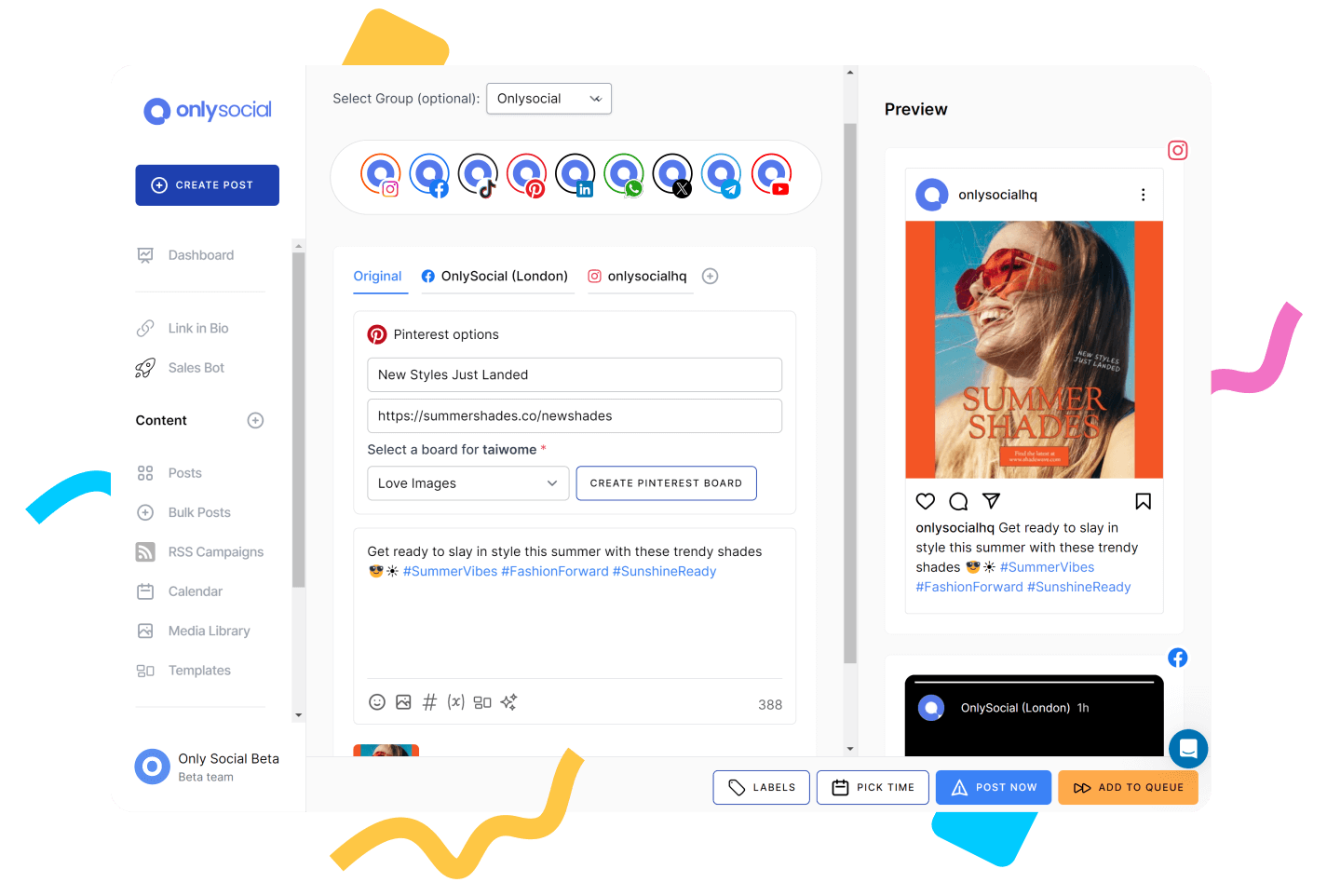
OnlySocial helps you stay organized by letting you create and schedule content for all your social media accounts from one dashboard. You can plan posts days or weeks in advance and publish them at data-backed times that match how your audience actually behaves. This means less stress, better consistency, and more visibility without needing to be online all day.
Create Better Content Faster
OnlySocial’s content composer is designed to save time without sacrificing quality. You get built-in editing tools, access to stock images, and smart hashtag suggestions based on your caption and visuals.
On top of that, AI-powered content support helps you generate post ideas or draft captions when inspiration runs low. Instead of staring at a blank screen, you can focus on refining and posting content that fits your brand.
See Your Entire Content Plan at a Glance
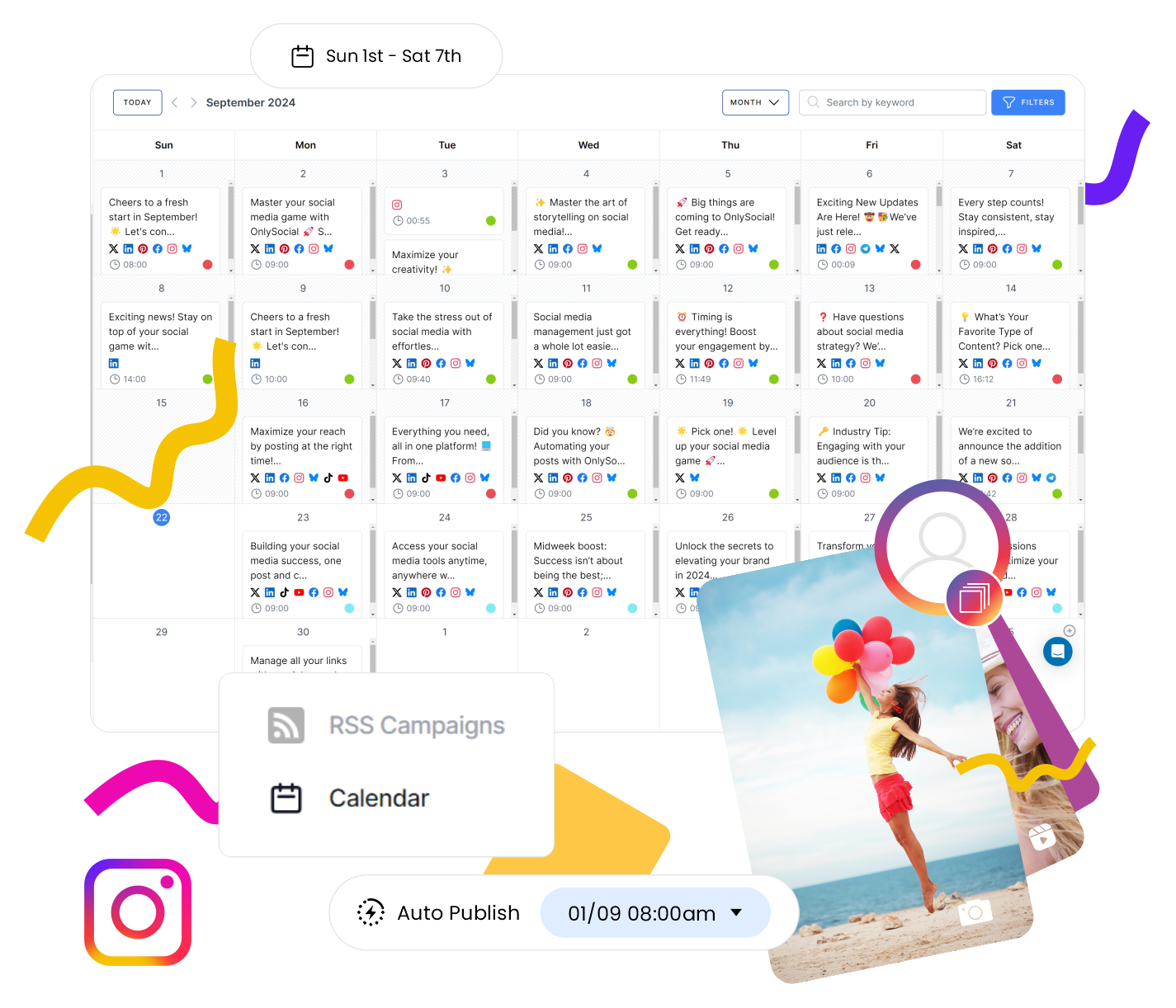
Once your posts are scheduled, everything appears in a single, easy-to-read content calendar. This gives you a clear overview of what’s going out across all platforms. It’s especially helpful for spotting gaps, avoiding repetitive content, and keeping your messaging balanced. For small businesses, having this level of clarity makes planning feel manageable rather than overwhelming.
Use Analytics to Focus on What Works
OnlySocial brings your performance data together across platforms, making it easier to see what’s driving results. You can track engagement, reach, and growth in one place and identify patterns over time.
This helps you double down on content that performs well and stop wasting time on strategies that don’t. You can also benchmark your performance against similar businesses, giving you a more realistic view of your progress.
Manage All DMs and Comments from One Inbox
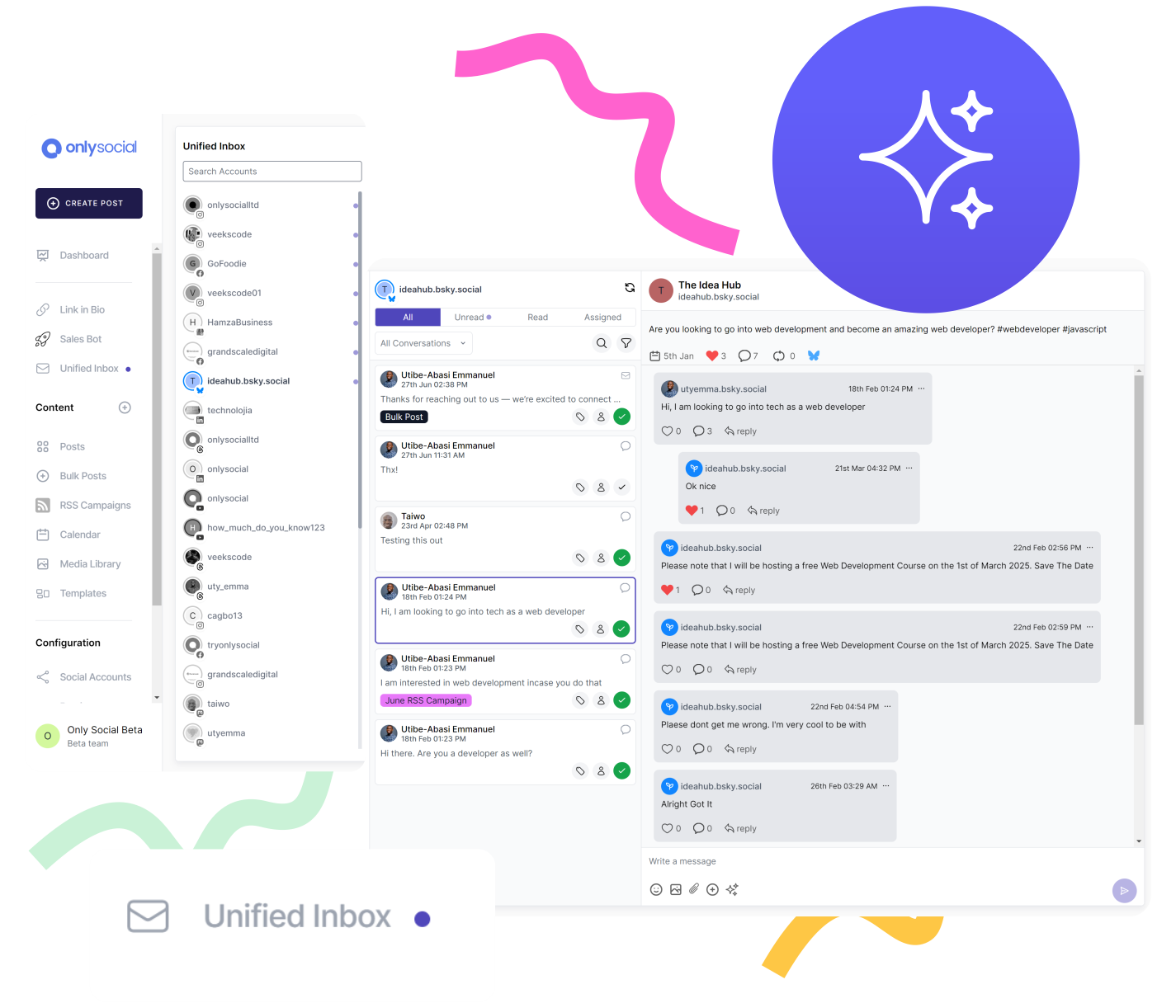
Engagement is just as important as posting. OnlySocial’s unified inbox lets you handle all your DMs, comments, and reviews from different platforms in one place. You can reply faster, automate responses based on keywords, and assign messages to team members as your business grows.
Turning off individual app notifications and managing everything centrally helps you stay responsive without feeling constantly interrupted.
Final Thoughts
Social media marketing doesn’t have to feel overwhelming for small businesses. When approached with a clear strategy, realistic goals, and the right tools, it becomes one of the most powerful ways to build visibility, trust, and long-term growth.
The key is consistency, understanding your audience, and making decisions based on what actually works, not what looks flashy in someone else’s feed.
As 2026 unfolds, small businesses that treat social media as a conversation rather than a billboard will stand out. You don’t need to be everywhere or do everything at once. Start with strong foundations, stay flexible as platforms evolve, and use tools like OnlySocial to save time and stay organized.
With the right approach, social media can support your business in a way that feels sustainable, human, and genuinely rewarding.