Social Media Client Collaboration Made Easy with OnlySocial
The way agencies and clients work together has changed a lot in recent years. With social media moving so fast, smooth collaboration has become a thing of great necessity.
Yet, it’s not always easy. Miscommunication, unclear expectations, distrust, and feedback delays can turn even simple projects into messy ones.
But the good news is that these hurdles aren’t permanent. With the right approach and the right tools, agencies can create a clear, stress-free process that keeps everyone on the same page.
That’s what this article is about. We’ll look at why client collaboration matters so much in social media management and how you can make it easier, faster, and far more effective.
Table of Contents
- 1 But What is Social Media Client Collaboration?
- 2 Why Is Collaboration Important?
- 3 Important Elements That Make Client Collaboration Work
- 4 10 Smart Ways to Build Strong Client Collaboration
- 4.1 1. Keep Communication Clear
- 4.2 2. Define Goals and Roles Early
- 4.3 3. Build Trust Through Openness
- 4.4 4. Use the Right Collaboration Tools
- 4.5 5. Make Feedback and Iteration Part of the Process
- 4.6 6. Build a Positive Culture Around Collaboration
- 4.7 7. Keep Accountability Clear
- 4.8 8. Tackle Problems Early
- 4.9 9. Align on Metrics and Success Indicators
- 4.10 10. Stay Flexible and Adapt Together
- 5 Final Note
- 6 FAQs
But What is Social Media Client Collaboration?
At its simplest, client collaboration is about two sides working together toward the same goal. On one side, you have the client who needs expertise. On the other, the agency that brings skills, tools, and experience to make those goals happen.
Both sides rely on each other, and when it works well, it feels less like outsourcing and more like teamwork.
Client Collaboration
When a business partners with an agency for social media, it’s not just about handing over the keys and waiting for results. It’s a partnership.
The business sets the goals, such as growing engagement, building brand awareness, or driving sales, and the agency brings the know-how to deliver.
Sometimes this lasts for a single campaign. Other times, it evolves into a long-term relationship where the agency becomes almost an extension of the in-house team.
Take Airbnb as an example. Their referral program was a huge success not only because of clever incentives but also because of how they worked with creative and tech partners behind the scenes. That collaboration gave the program the polish and reach it needed to break through in multiple markets worldwide.
Agency Collaboration
Sometimes, collaboration goes a step further – agency with agency. This is when multiple teams join forces, combining different strengths to take on a bigger challenge.
One agency might bring branding expertise while another covers paid media or influencer outreach. Together, they can deliver results that a single agency might struggle to achieve on its own.
A good example of this was when Pepsi partnered with Peeps to release their marshmallow-flavored cola. It was a quirky idea, but the collaboration worked because both brands brought something unique to the table.

In social media terms, that’s like pairing up two agencies with different superpowers to create something that grabs attention and sticks.
Why Is Collaboration Important?
Collaboration usually happens for a reason. If a company has everything it needs in-house, chances are it won’t look outside. But when there’s a gap in skills, tools, or time, that’s where collaboration steps in.
It allows businesses to tap into expertise they don’t already have, while agencies get the chance to apply their knowledge where it’s needed most.
In many cases, collaboration isn’t about replacing teams, but about supporting them. For example, a small marketing department might handle daily posting but bring in an agency to create a big campaign or manage paid ads. The in-house team stays focused on their strengths, while the agency fills the gaps.
It’s also a smarter move financially. Building a full-time team to cover every possible need can be costly, especially when projects are seasonal or short-term. Agencies offer flexibility without the overhead of hiring, training, and equipping new staff.
There’s another benefit that’s often overlooked. And that is better engagement and less burnout. Studies have shown that people feel more connected and motivated when projects involve collaboration.
In fact, Forbes once reported that teams working in collaborative environments had a 64% higher retention rate and reported lower stress levels. In other words, collaboration doesn’t just get the job done; it helps keep people happy while doing it.
Important Elements That Make Client Collaboration Work
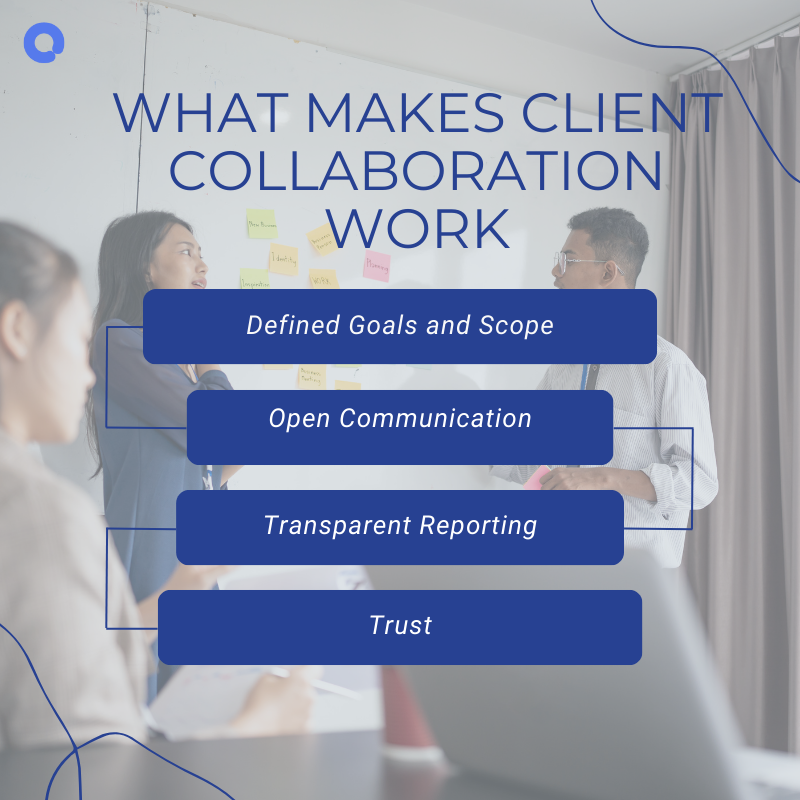
Successful collaboration isn’t just about signing a contract and waiting for results. It’s about creating the right conditions so both sides can thrive and move toward the same goal. A few key elements make all the difference:
Defined Goals and Scope
Every project needs a clear starting point. Both client and agency should know exactly what’s expected, what success looks like, and where the boundaries are. The client usually sets the direction, but agencies can refine the scope with their expertise to make it realistic and effective.
Open Communication
Even with contracts and briefs, nothing replaces regular conversations. Check-ins, updates, and feedback sessions ensure everyone is aligned and no surprises creep in. This keeps both sides confident about the progress being made.
Transparent Reporting
Progress reports aren’t just paperwork; they’re checkpoints. They highlight wins, but they also surface challenges early enough to fix them. When agencies share updates openly, it helps clients see if things are moving on track or need a course correction.
Trust
Micromanagement can sink collaboration fast. Trusting the agency’s skill and judgment is vital. For instance, if a client wants to build momentum on social media, they need to let the agency apply their knowledge of social media algorithms, timing, and content strategy. When trust is present, clients step back, agencies step up, and results follow.
10 Smart Ways to Build Strong Client Collaboration
Not every collaboration looks the same. What works for one agency-client relationship might need tweaking for another. But there are a few proven strategies that lay the foundation for smoother partnerships.
1. Keep Communication Clear
Good collaboration starts with good conversations. It’s not just about sending updates – it’s about making sure everyone understands what’s being said.
Set up routine check-ins, use dedicated project channels, and make sure each person knows who to report to. All these can make a huge difference. Tools like project boards or client management software can also keep everything in one place so nothing slips through the cracks.
2. Define Goals and Roles Early
Without clear goals, projects can wander off track. From day one, both the agency and client should know what success looks like, who’s responsible for what, and when things are due.
However, goals should be realistic and measurable, not vague promises. And as projects evolve, goals might shift – that’s normal. The key is keeping everyone updated so expectations stay aligned.
3. Build Trust Through Openness
Trust is the glue that holds any collaboration together. Agencies build it by delivering on promises, and clients strengthen it by giving them the space to do their job.
Transparency matters here, too. Sharing progress reports, challenges, and even setbacks keeps everyone grounded in reality.
When trust breaks down, collaboration falls apart fast. A well-known example was the fallout between Home Depot and the Richards Group after a scandal damaged the agency’s credibility. It shows how fragile trust can be and why it needs to be nurtured continuously.
4. Use the Right Collaboration Tools
Great collaboration isn’t possible without the right tools. Emails and chats are useful, but they’re not enough when it comes to managing tasks, sharing files, and tracking projects.
That’s why many teams turn to platforms like Trello or Asana to keep workflows organized and deadlines clear.
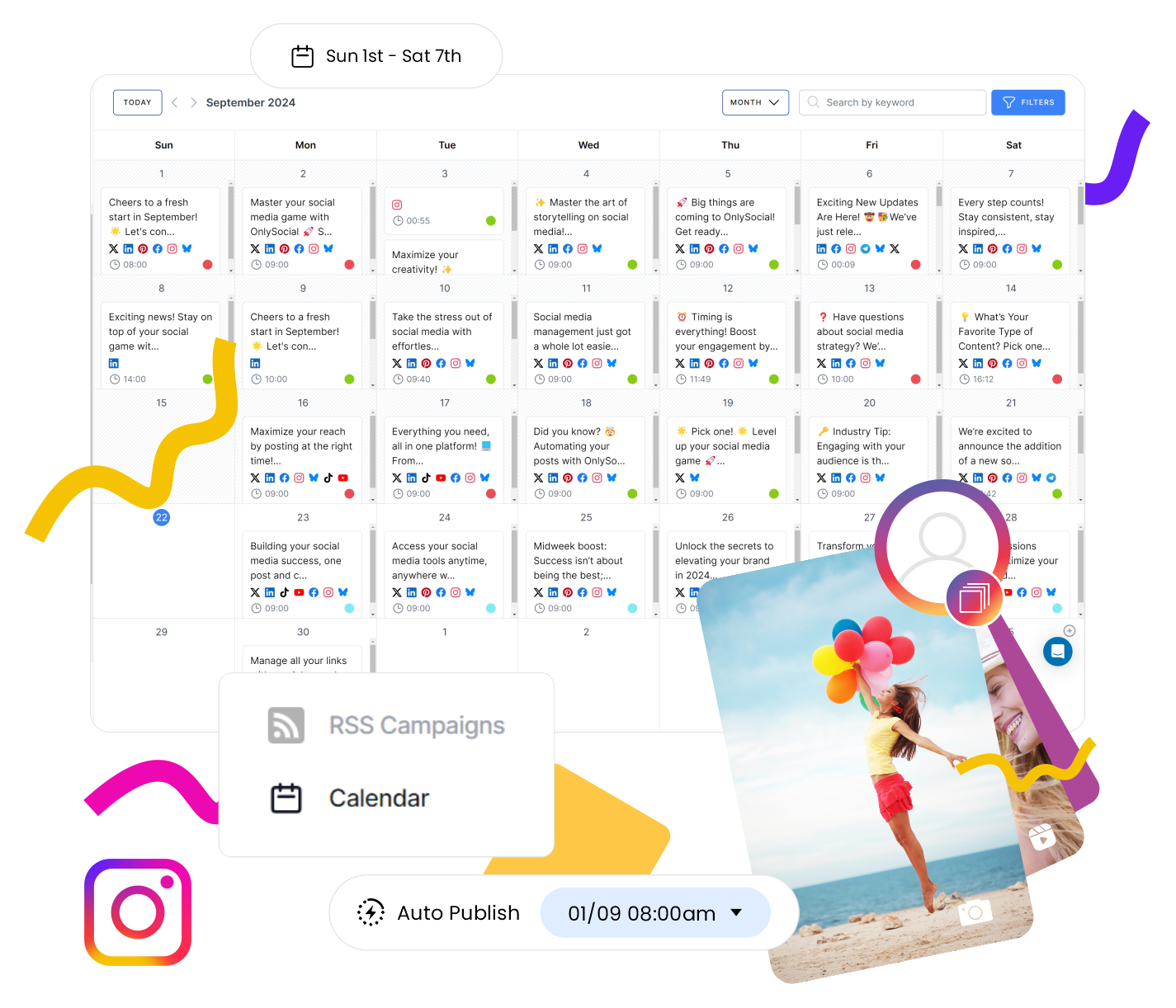
But when it comes to social media management, you need more than a generic project board. You may need a tool like OnlySocial. The platform is built with agencies in mind, making it easy to bring clients and team members together without the usual headaches.
With OnlySocial, you can:
- Onboard team members and assign roles so everyone knows exactly what they’re responsible for.
- Collaborate on Drafts in real-time, which means ideas can be shared, improved, and approved faster.
- Use the content calendar to plan posts ahead of time and keep strategies visible for both clients and teams.
- Streamline approvals so content gets signed off without endless back-and-forth emails.
- Share analytics securely to keep clients updated on performance without handing over unnecessary access.
- Customize with white-label options so agencies can present everything under their own brand.
The tool simply provides a single space where agencies and clients can plan, create, review, and measure success – all while staying aligned. This makes teamwork smoother, cuts down on wasted time, and ensures projects move forward without friction.
5. Make Feedback and Iteration Part of the Process
Feedback is what keeps projects moving in the right direction. It shows what’s working, what needs a tweak, and what should be changed altogether. In client-agency relationships, feedback should never feel one-sided. Both sides need to feel comfortable giving it – and receiving it.
Iteration naturally follows. This is about refining ideas and improving the output based on that feedback. A good example comes from Xiaomi and Leica’s collaboration. Their partnership went through multiple software updates and even hardware refinements for the Xiaomi 13 Ultra.
That constant cycle of feedback and adjustment turned out a better product and proved just how powerful iteration can be.
For agencies managing social media, a tool like OnlySocial makes this loop easier. Clients can review drafts, share thoughts, and request edits directly on the platform, cutting down on endless email threads. Agencies, in turn, can implement those changes quickly and keep campaigns moving without unnecessary delays.
6. Build a Positive Culture Around Collaboration
A successful collaboration isn’t just about tools or processes but about people. When teams feel valued, heard, and respected, they naturally do better work. A positive culture encourages creativity, keeps motivation high, and helps everyone feel like they’re part of something bigger.
This kind of culture doesn’t happen by accident. It’s about setting the right tone early, creating safe spaces for sharing ideas, celebrating wins, and handling conflicts constructively. When collaboration feels supportive, agencies and clients stay aligned longer and work more effectively.
Look at the failed partnership between Gap and Ye (formerly Kanye West). The collaboration broke down partly because of cultural misalignment and a lack of mutual trust. It’s a reminder that even high-profile partnerships can collapse without the right environment.
7. Keep Accountability Clear
No collaboration works without accountability. Everyone involved needs to know their role and deliver on it. That means setting expectations early, assigning tasks properly, and tracking progress so responsibilities don’t blur or overlap.
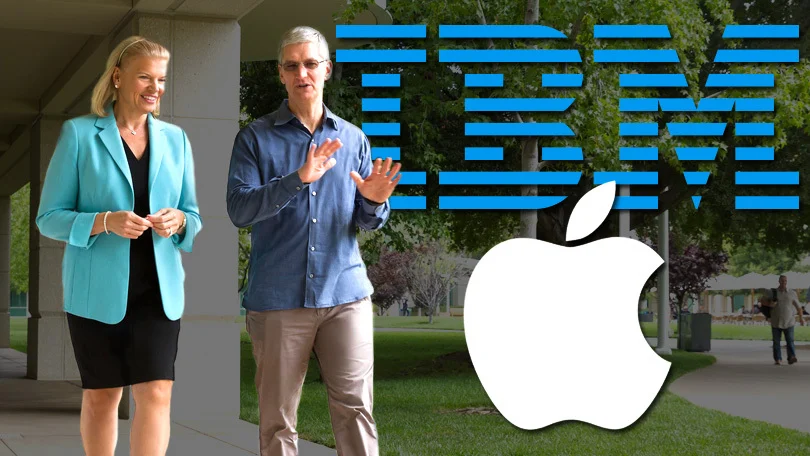
One strong example was the Apple and IBM partnership back in 2014. Apple brought sleek design and user-friendly devices, while IBM added analytics and enterprise expertise. Both knew exactly what they were responsible for, and together they delivered powerful business solutions that neither could have pulled off alone.
8. Tackle Problems Early
Every project hits bumps in the road. The difference between success and failure often comes down to how quickly those bumps are addressed. Leaving issues unresolved only makes them grow. A culture of open dialogue and problem-solving helps nip challenges in the bud before they derail the bigger picture.
In social media management, one of the most common roadblocks is approval delays. Waiting days for a post to be signed off can throw an entire content calendar off balance.
By streamlining approvals – something OnlySocial was designed to do – agencies can eliminate bottlenecks, keep campaigns on schedule, and maintain client trust.
9. Align on Metrics and Success Indicators
Collaboration is much smoother when everyone knows how success will be measured. Without shared metrics, agencies and clients can end up celebrating different outcomes – or worse, arguing over what “good results” even mean.
From the start, both sides should agree on KPIs that matter, whether that’s engagement rates, conversions, follower growth, or ROI. Having those numbers in black and white makes it easier to track progress and adjust strategies along the way.
OnlySocial supports this by providing easy-to-share analytics dashboards. Instead of pulling numbers from multiple platforms and formatting endless reports, agencies can give clients secure access to the performance data that matters most. This keeps everyone on the same page and reduces misunderstandings about results.
10. Stay Flexible and Adapt Together
Markets change. Algorithms change. Client needs change. That means collaborations can’t be rigid. Flexibility is what keeps a partnership strong when the unexpected happens. Agencies should be ready to pivot strategies, and clients should be open to new approaches when the old ones stop working.
Think about how quickly brands had to adapt their messaging during the early months of the pandemic. Those who worked closely with their agencies and adjusted quickly stayed relevant, while those who stuck to outdated plans risked looking tone-deaf.
Final Note
Strong collaboration is the backbone of any successful client-agency relationship. From clear communication and trust to accountability and flexibility, each element helps keep projects moving smoothly and results flowing.
But having the right system to bring it all together makes a world of difference. A tool like OnlySocial gives agencies and clients a shared space to plan, create, approve, and measure social media campaigns without the usual roadblocks.
With streamlined workflows, real-time collaboration, and easy reporting, it takes the stress out of teamwork and lets both sides focus on what matters, which is growing the brand.
If you’re ready to make client collaboration easier, smarter, and more effective, OnlySocial is built for you.
FAQs
Why do I need client collaboration?
Collaboration ensures that everyone works toward the same goal. For agencies, it means they fully understand the client’s needs. For clients, it provides confidence that their projects are being handled with care. Good collaboration reduces confusion, speeds up decision-making, and usually leads to better results.
Who is responsible for defining goals in a client-agency partnership?
Typically, the client sets the overall business goals since they know what they want to achieve. The agency then helps refine those goals into actionable steps and strategies. It’s a shared process where the client provides the vision, and the agency offers the roadmap.
What kind of tools make client and agency collaboration easier?
Project management tools like Trello or Asana keep tasks organized, while file-sharing platforms like Google Drive or Dropbox ensure resources are accessible to everyone.
For social media specifically, tools like OnlySocial take collaboration a step further with shared content calendars, approval workflows, draft collaboration, and real-time analytics sharing – all in one place.
There isn’t a one-size-fits-all answer. Some projects may need weekly updates, while others might only require monthly reports. The key is consistency.
Reports should be regular enough to keep clients informed but not so frequent that they become overwhelming. Many agencies agree with clients at the start on the best reporting schedule.