9 Influencer Marketing KPIs That Show If Your Campaign Is Working
Influencer marketing has become a serious marketing channel. In fact, brands are projected to spend $47.8 billion on influencer marketing advertising by 2027. With that level of investment, running campaigns without clear performance metrics simply isn’t an option.
But here’s the challenge: likes and comments alone don’t tell the full story. To understand if your campaign is actually delivering results, you need to track the right numbers.
In this guide, we’ll walk through nine influencer marketing KPIs that show whether your campaign is truly working. These metrics will help you measure performance, refine your strategy, and make smarter decisions for future collaborations.
Table of Contents
What Is an Influencer Marketing KPI?
An influencer marketing KPI (Key Performance Indicator) is a measurable metric that shows how well your influencer campaign is performing. In simple terms, it’s the number or signal that tells you whether your campaign is moving in the right direction.
For example, if your goal is brand awareness, you might track reach or impressions. If your goal is sales, you’ll likely focus on conversions and revenue generated from influencer content.
The point is that KPIs help you move beyond guessing and actually measure the impact of your campaign.
Tracking the right KPIs also helps you refine your strategy over time. You can identify which influencers drive engagement, which content formats perform best, and which campaigns generate the strongest return on investment.
But here’s the important part: not all KPIs matter for every campaign.
Before choosing what to track, you need to define your campaign goal. Most influencer campaigns fall into one of three stages of the marketing funnel:
- TOFU (Top of Funnel) – Focused on awareness and reach. Metrics like impressions, views, and engagement are most relevant here.
- MOFU (Middle of Funnel) – Focused on nurturing interest. Metrics such as clicks, email sign-ups, or downloads start to matter more.
- BOFU (Bottom of Funnel) – Focused on conversions and revenue. This is where you track purchases, trials, demos, or direct sales from influencer traffic.
Once your goal is clear, choosing the right KPIs becomes much easier. In the next section, we’ll walk through nine influencer marketing KPIs that clearly show whether your campaign is working or not.
9 Influencer Marketing KPIs Brands Should Track
1. Brand Awareness
Brand awareness is one of the most common reasons companies invest in influencer marketing, so it naturally becomes one of the first KPIs to measure.
At this stage, the goal isn’t necessarily immediate sales. It’s visibility. You want your brand to appear in front of new audiences and get on the radar of potential customers. Influencers help amplify that reach by introducing your products or services to followers who may not have discovered you otherwise.
The main metrics used to track brand awareness include reach, impressions, and video views. These numbers show how many people have been exposed to your campaign content.
If these metrics are steadily increasing during a campaign, it’s a good sign that your influencer partnership is expanding your brand’s visibility and putting your message in front of the right audience.
2. Engagement
Getting your content seen is important, but getting people to interact with it is even better.
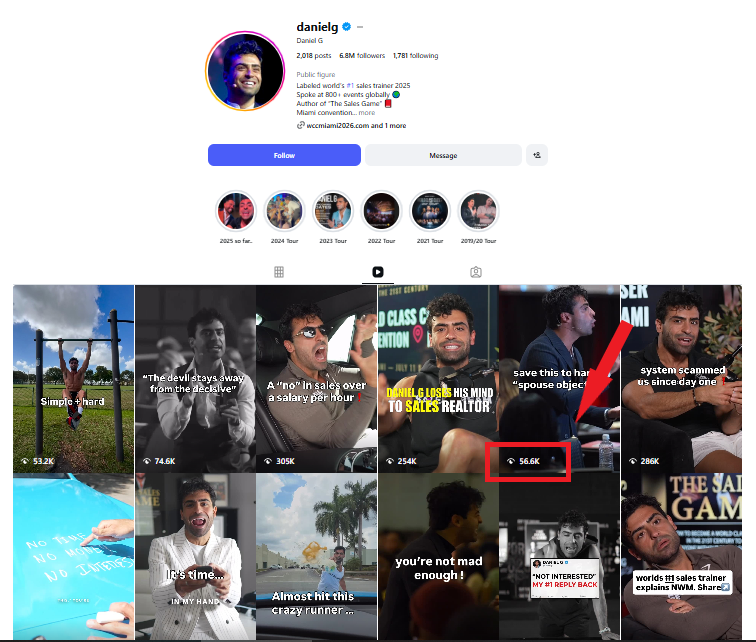
Engagement measures how actively audiences respond to influencer content that features your brand. It includes actions like likes, comments, shares, saves, and brand mentions – the types of interactions that show people are paying attention and finding the content valuable or interesting.
High engagement usually signals that the influencer’s audience trusts them and finds the sponsored content authentic. This is a strong indicator that your message is resonating with the right people.
When engagement is strong, it also increases the chances of your campaign spreading organically, as social platforms tend to push highly engaged content to larger audiences.

3. Conversions
While awareness and engagement are valuable, many brands ultimately want their influencer campaigns to drive conversions.
A conversion could mean different things depending on your campaign goal. It might be a purchase, a product trial, an app download, or a newsletter sign-up. Whatever the goal, tracking conversions helps you understand whether your campaign is actually generating results that impact your bottom line.
Measuring this KPI requires the right tracking setup. Brands often provide influencers with unique promo codes, affiliate links, or UTM tracking links before the campaign begins. These tools allow you to track clicks, sign-ups, or purchases that come directly from each influencer.
By monitoring conversions, you can clearly see which influencers, posts, or campaigns are delivering real value for your brand.
4. Click-Through Rate (CTR)
Click-through rate, commonly called CTR, measures how many people click on a link after seeing influencer content promoting your brand.
This KPI helps you understand whether your campaign is successfully moving people from awareness to consideration. In other words, are viewers interested enough to learn more about what you offer?
A strong call to action (CTA) plays a big role here. When influencers clearly invite their audience to explore a product, sign up for a service, or visit a page, clicks tend to increase.
You can calculate CTR using this simple formula:
CTR = (Clicks ÷ Impressions) × 100
The higher your CTR, the stronger the signal that your influencer content is capturing attention and motivating people to take the next step.
5. Audience Growth
Audience growth is another important KPI that shows whether your influencer campaign is helping your brand build a long-term community.
While reach and impressions tell you how many people saw your content, audience growth focuses on how many people decided to stay connected with your brand afterward. This could include new social media followers, email subscribers, or community members gained during or shortly after the campaign.
Even if someone doesn’t immediately make a purchase, following your account or joining your email list still creates a valuable opportunity. They’ve shown interest in your brand, which means they can potentially become customers later on.
6. Traffic
Another KPI worth tracking is website traffic generated from influencer campaigns.
Traffic shows how many people visited your website after interacting with influencer content. It’s a useful signal that your campaign is successfully bringing potential customers into your ecosystem.
More traffic means more opportunities for engagement, conversions, and brand exploration.
It can also reveal areas for improvement. For example, if influencer campaigns are driving significant traffic but conversions remain low, it might indicate that your landing page, offer, or user experience needs optimization.
By monitoring traffic alongside other KPIs, you gain a clearer picture of how influencer partnerships are contributing to your broader marketing funnel.
7. Earned Media Value (EMV)
Earned Media Value (EMV) helps you estimate how much your influencer campaign’s organic exposure is worth in monetary terms.
Think about all the impressions, mentions, shares, and conversations generated by your campaign. Instead of paying for that exposure through traditional advertising, it’s being created organically through influencer content and audience engagement.
EMV assigns a financial value to that visibility. This makes it easier to understand the broader impact of your influencer marketing efforts beyond direct sales.
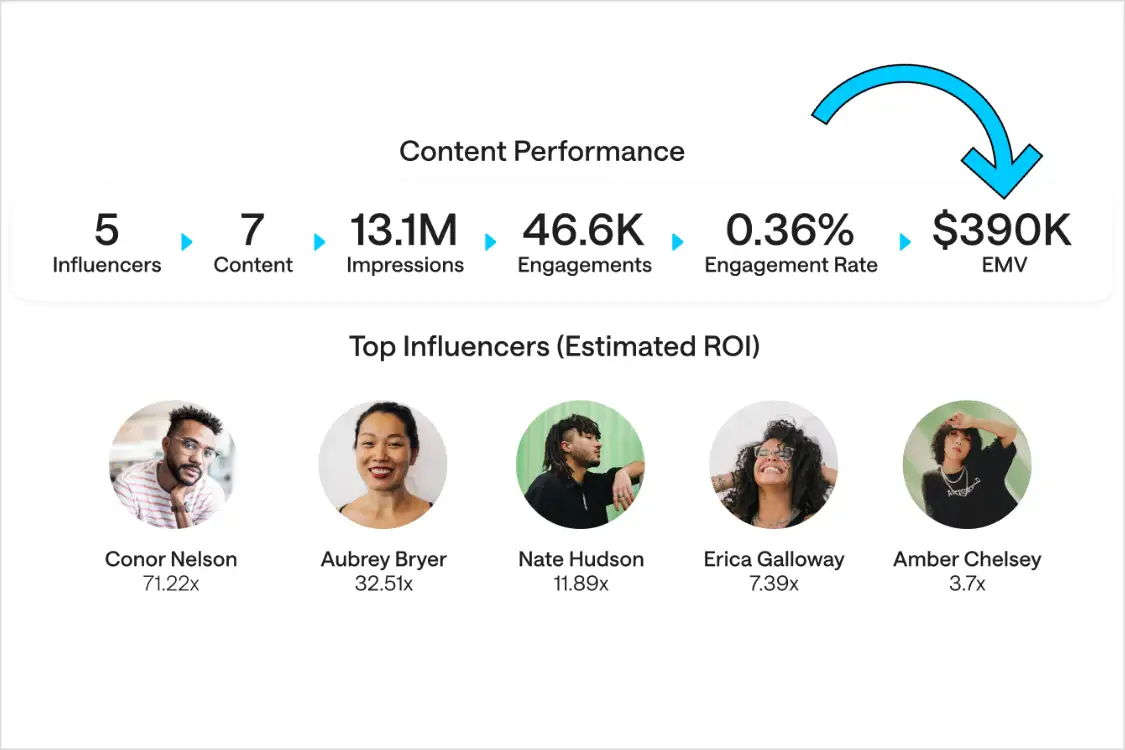
For brands running awareness-focused campaigns, EMV can be especially useful because it shows the true reach and exposure your campaign achieved.
8. Return on Investment (ROI)
Return on Investment, or ROI, is often considered the most important KPI in influencer marketing.
At its core, ROI measures whether your campaign generated more value than it cost to run. If the revenue produced by your influencer campaign exceeds the total cost of the campaign, you’ve achieved a positive ROI.
Campaign costs may include:
- Influencer fees
- Content production expenses
- Paid promotion or ad spend
- Campaign management costs
The basic formula looks like this:
ROI = (Revenue – Campaign Cost) ÷ Campaign Cost × 100
While some brands calculate ROI manually, many now rely on influencer marketing tools and analytics platforms to track it more efficiently across campaigns.
9. Brand Sentiment
Brand sentiment measures how people feel about your brand after seeing influencer content.
While reach and engagement show how many people interacted with your campaign, sentiment reveals whether those reactions are positive, neutral, or negative.
You can evaluate brand sentiment by looking at:
- Comments on influencer posts
- Direct messages or community discussions
- Brand mentions across social media
- Customer feedback following the campaign
Understanding sentiment helps you see how audiences truly perceive your brand. If a campaign generates positive discussions and excitement, it’s a strong sign that your influencer partnership is building trust.
Monitoring sentiment also helps you identify potential concerns early and refine your influencer strategy for future campaigns.
How to Track Influencer Marketing KPIs
Knowing which KPIs to monitor is one thing. Actually tracking them consistently is another.
The good news is that measuring influencer marketing performance doesn’t have to be complicated. Depending on your campaign goals and the tools you use, there are several practical ways to keep track of your results.
Here are three common approaches brands use.
Track KPIs Manually with a Custom Document
One of the simplest ways to monitor influencer campaign performance is by using a custom spreadsheet or document.
Many teams start with tools like Google Sheets or Excel to track metrics such as impressions, engagement, clicks, and conversions from each influencer partnership. You can create columns for different KPIs and update them regularly as your campaign progresses.
For example, your document might include:
- Influencer name
- Platform used
- Reach or impressions
- Engagement metrics (likes, comments, shares)
- Clicks generated
- Conversions or sales
This approach works well for smaller campaigns or brands that collaborate with only a handful of influencers. It also gives you full control over how your data is organized.
However, as your campaigns grow and involve more creators or platforms, manual tracking can become time-consuming.
Use Sales or Affiliate Tracking Software
If your main goal is to generate sales or leads, using dedicated tracking tools can make your life much easier.
Many brands provide influencers with unique referral links, affiliate links, or promo codes. These allow you to track exactly how much traffic, revenue, or conversions each influencer generates.
Some e-commerce platforms already offer built-in analytics that show where purchases are coming from. Affiliate platforms can also help you track performance automatically across multiple campaigns.
This approach makes it easier to connect influencer activity directly to business outcomes, especially when your campaign focuses on conversions rather than just awareness.
Use Social Media Analytics Platforms
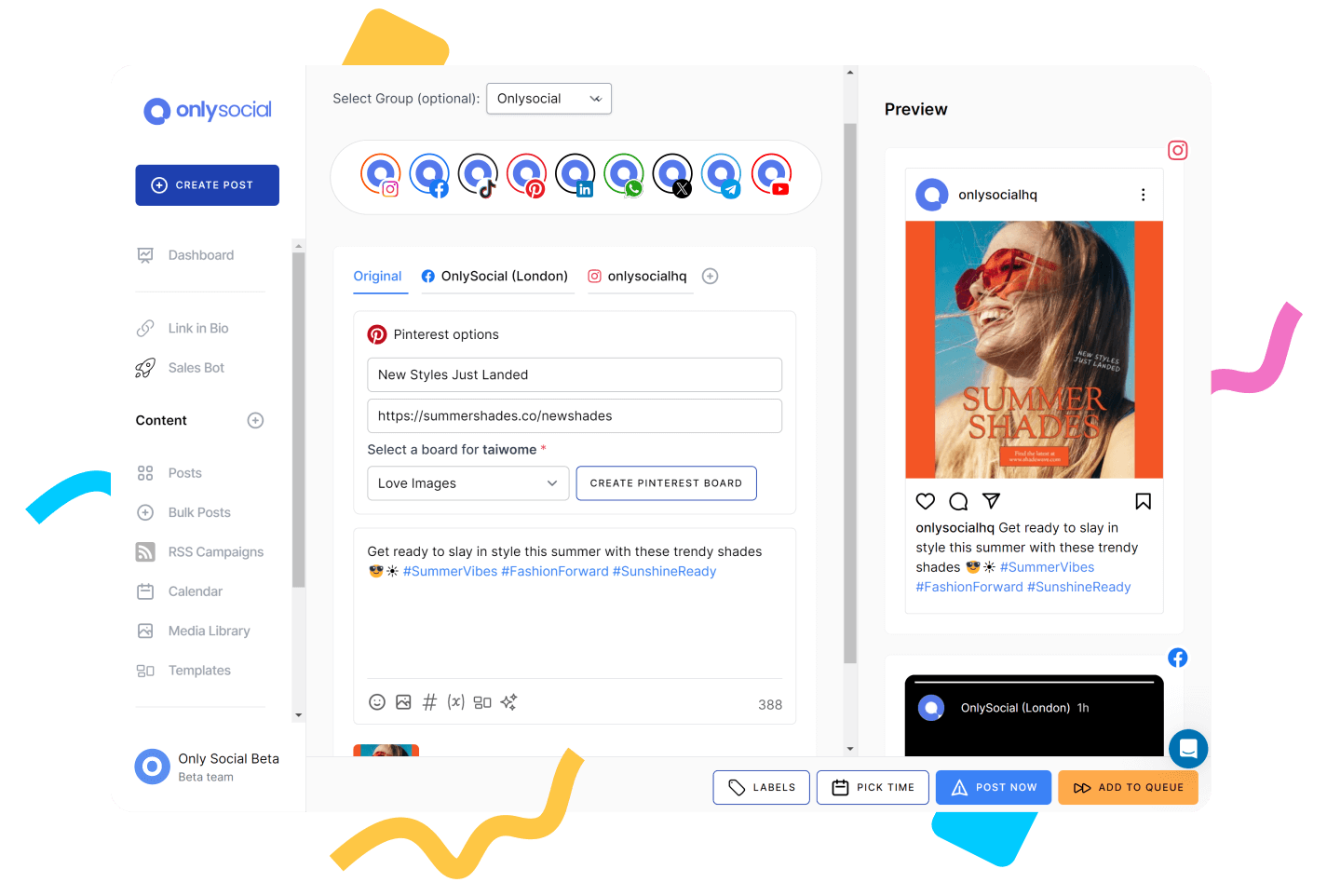
Another efficient way to track influencer marketing KPIs is by using a social media management platform with built-in analytics.
Platforms like OnlySocial make it easier to monitor campaign performance across multiple channels in one place. Instead of collecting data manually from different social networks, analytics dashboards can help you see engagement trends, audience growth, reach, and traffic generated from your content.
This becomes particularly helpful when you’re running campaigns across several platforms at once. You can quickly identify which posts are performing well, which influencers are driving the most engagement, and where adjustments may be needed.
In short, analytics tools simplify the tracking process and give you a clearer view of how your influencer marketing efforts are performing over time.