Are Hashtags Still Relevant [A 2026 Update]
Two months ago, Instagram made a shocking announcement about hashtag use that got many creators concerned. Posts and Reels are now limited to just five hashtags.
That’s it. For a platform that once rewarded creators for stuffing captions with 20-30 tags, this is a clear sign that things are not how they used to be again. The old hashtag strategy is officially outdated.
For years, marketers treated hashtags like lottery tickets. The more you used, the higher your chances of reaching new people. And for a while, that worked. Hashtags helped platforms quickly categorize your content and decide where to place it.
But platforms aren’t that basic anymore.
Instagram now reads your captions. It scans on-screen text. It understands audio. It tracks watch time, saves, shares, and comment behavior. In other words, it doesn’t rely on hashtags the way it used to.
So what does that mean? Have hashtags become useless?
Not quite. They’ve just changed roles. They now support your content instead of driving it. And if you’re still treating hashtags like it’s 2018, you’re likely overestimating their impact.
In this guide, we’ll break down what’s actually happening across platforms, whether hashtags still matter, and how to use them strategically under the new rules.
Table of Contents
Instagram’s New Hashtag Reset: What It Really Means
Instagram didn’t randomly wake up and pick five hashtags. According to reports from Social Media Today, the platform tested hashtag limits for over a year before settling on that number. So, it wasn’t cosmetic; it was strategic.
The goal is to cut down spam, reduce bot manipulation, and shift the focus back to content quality instead of caption clutter.
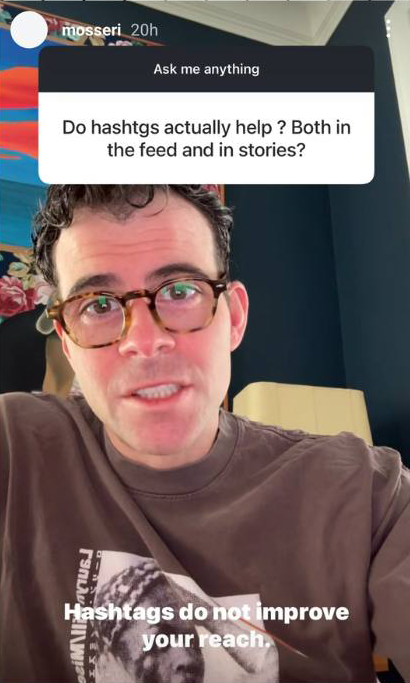
For years, creators believed more hashtags meant more reach. But Instagram’s leadership has been saying the opposite for a while now. Adam Mosseri has repeatedly clarified that hashtags do not directly boost reach. They act as signals. They help the system understand what your post is about.
That’s it.
They’re context markers, not growth hacks.
In practical terms, this means your caption, on-screen text, video content, and audience interaction matter far more than how many tags you include. The algorithm now understands content in layers. It doesn’t need 25 hashtags to figure out your niche.
The answer is yes, but they’re no longer the growth lever they once were.
In 2026, hashtags act as secondary signals. They reinforce what your content is already saying. If your caption, visuals, audio, and engagement are strong, hashtags support that. If your content is weak, hashtags won’t save it.
Here’s how that plays out across major platforms.
On Instagram, the “30-hashtag dump” is officially dead.
With the new five-hashtag cap, every tag has to earn its place. Generic tags like #marketing or #love don’t do much anymore. They’re too broad. Too crowded. Too easy to ignore.
Instead, focus on niche-specific or location-based hashtags your ideal audience would actually search for. Think intent, not volume.
If you’re a fitness coach in London, #LondonPersonalTrainer is more useful than #fitness.
On Facebook, hashtags matter even less. They work best when tied to a specific event, campaign, or public conversation. One or two at most. Beyond that, your post starts to look cluttered. And clutter lowers engagement.
LinkedIn is one of the few platforms where hashtags still help with content organization and discoverability.
Users follow specific hashtags, and the platform groups posts accordingly. But even here, specificity wins.
Three to five focused hashtags perform better than broad industry labels. For example, #Leadership is fine. But something like #SaaSLeadership or #B2BMarketingStrategy narrows your reach to the right audience.
YouTube
On YouTube, hashtags function as secondary SEO tools. They help group your video with related content, especially in suggested feeds. For long-form videos, include 3-5 hashtags in your description that align with your main keywords.
For Shorts, they matter slightly more. The Shorts algorithm uses hashtags as additional context to determine which viewer loop your video fits into.
Still, your title, description, and watch retention matter more.
TikTok
Hashtags on TikTok help with SEO. But they’re rarely the reason something goes viral.
The algorithm pays closer attention to your hook, watch time, audio, and on-screen text. It listens and reads more than it scans hashtags.
That said, 3-5 strategic tags can help signal which “community” you belong to. Think #BookTok, #FinTok, #TechTips. These tags place you within a specific interest loop.
Use them to reinforce your keywords. Not to compensate for weak content.
A Simple Hashtag Framework That Makes Sense in 2026
With fewer hashtag slots available, guessing isn’t a strategy anymore. If you only have five tags, each one needs a job. Instead of trying to “reach everyone,” think about how the platform should categorize your content.
Here’s a simple framework you can follow.
1 Brand Tag
This is your anchor. Use your company name, personal brand name, or a unique campaign tag. It helps group your content in search results and builds consistency over time.
For example, a brand called GrowthLab might use #GrowthLabTips. Over time, anyone clicking that tag sees a full library of related content.

2 Industry Tags
These tell the platform what world you operate in. Avoid overly broad tags like #marketing or #business. They’re crowded and vague.
Instead, go narrower for something like #HigherEdMarketing, #SaaSLeadership, or #FitnessForBusyProfessionals.
Specific tags attract specific people. And specific people convert better.
1 Topic Tag
This defines the exact problem or subject of your post.
Think about what the content is truly about. If your post discusses donor retention strategies, use #DonorRetention. If it’s about productivity systems, use #TimeManagementTips.
This helps the algorithm categorize your content more accurately. It also helps users searching for that exact topic find you.
1 Audience or Location Tag
If your work is local, use a city or region tag – #LondonRealtor, #NYCFitnessCoach.
If your audience is national or global, describe who you’re speaking to. #MarketingDirectors, #StartupFounders, #NonprofitLeaders.
This tag tells the platform who the content is for.
Caption vs. Comment: Does Placement Still Matter?
This debate has been around for years. Should hashtags go in the caption? Or should you hide them in the first comment?
Looking at things now in 2026, the answer seems to be much clearer. You just have to put them in the caption.
Instagram’s official Creators account has said this before, and more recent data analysis supports it. Posts with hashtags placed directly in the caption tend to perform better than those that add them later in a comment.
Here’s why it matters.
Instagram captions are now indexable. That means when you publish a post, the system scans your caption, your alt text, and your hashtags together as one data package. It processes everything instantly and uses that information to categorize your content.
If you add hashtags in the first comment later, they’re treated as a separate event. The system doesn’t bundle them in the same way.
From a technical SEO standpoint, placing hashtags in the caption gives your content a cleaner, stronger signal right from the moment you hit publish.
But that doesn’t mean your caption has to look messy. You can keep it clean by placing your hashtags at the very end of your text.
Add a little white space so your main message stands out. Let readers focus on the content first. The hashtags can sit quietly underneath, doing their job without distracting from your message.
Shifting Your Focus to Social SEO

If you’re still spending hours building 20-hashtag lists, you’re solving yesterday’s problem. The smarter play in 2026 is Social SEO.
Platforms now prioritize keywords, context, and engagement patterns over stacked hashtags. That means your energy is better spent making your content searchable and understandable, rather than just “tagged.”
Here’s how to shift your approach.
1. Write Captions for Search, Not Just Style
Hooks still matter. Creativity still matters. But clarity matters more.
Your caption should clearly state what the post is about, using the exact phrases your audience would type into a search bar. If you’re a real estate agent in Manchester, say “Manchester property market update” early in the caption. Don’t hide it behind clever wordplay.
The first two lines carry weight, so make them count.
Platforms scan those lines heavily when categorizing content. If your topic isn’t obvious, the algorithm has to guess. And guessing rarely works in your favor.
2. Use On-Screen Text as a Signal
This is for video content. Platforms now scan text overlays just like they scan captions. If you post a video without context, the system relies only on behavior signals. But when you add clear text overlays, you remove the ambiguity.
Instead of just posting a gym clip, add text like “Beginner Back Workout for Busy Professionals.” Now the algorithm knows exactly where to place it.
Clear text improves discoverability. It also improves viewer retention because people instantly know what they’re watching.
3. Focus on Early Engagement Momentum
Reach today isn’t just about visibility. It’s about velocity.
The faster your post gets engagement after going live, the stronger the signal it sends. Shares, saves, comments, and meaningful interactions in the first hour tell the platform your content is worth amplifying.
Encourage your team or community to interact early – not artificially, but strategically. That early push can determine whether your post stays small or scales.
4. Stay Within Your Topical Lane
Algorithms learn patterns. If you’re constantly jumping between unrelated topics, the platform struggles to understand who your audience is.
But if you consistently stay within your niche, even when you vary formats, the AI becomes confident about where to distribute your content.
A construction company can post site tours, team highlights, safety tips, or project breakdowns. All of it still lives in the same industry orbit.
The clearer your thematic consistency, the less you need hashtags to explain yourself.
Final Thoughts
So, are hashtags still relevant in 2026?
Yes. But they’re no longer the engine of growth. They’ve moved from being the main driver of reach to a supporting signal. The real leverage now comes from clear keywords, strong hooks, on-screen text, and fast engagement. Hashtags still help categorize your content, but they can’t rescue weak messaging or poor retention.
So, this year, focus on clarity and consistency, and let hashtags do their quiet job in the background.
Frequently Asked Questions
It depends on the platform. On Instagram, you’re limited to five, and that’s more than enough. On LinkedIn and TikTok, three to five well-chosen hashtags tend to perform best. Remember, quality always beats quantity.
Not directly. Hashtags help platforms understand what your content is about, but they don’t guarantee distribution. Reach is now driven more by content quality, watch time, saves, shares, and early engagement.
In most cases, no.
Broad hashtags like #marketing or #fitness are crowded and vague. More specific tags like #EmailMarketingTips or #BeginnerStrengthTraining send clearer signals and attract a more relevant audience.
They help, but they aren’t the deciding factor.
On video platforms, the algorithm listens to audio, reads on-screen text, and measures retention. Hashtags reinforce keywords, but your hook and watch time carry more weight.