Top Oktopost Alternatives to Consider for Your Brand in 2026
If you’re in the B2B space, chances are that you’re already familiar with Oktopost. It’s one tool that has built a solid reputation in that corner, especially among brands whose main battlefield is LinkedIn. But social media in 2026 is no longer just about one channel.
More brands now juggle LinkedIn, Instagram, Facebook, TikTok, Pinterest, and even Google Business Profile. And that’s where Oktopost can start to feel restrictive. Limited platform coverage, unclear pricing, and workflows that aren’t exactly intuitive make many teams look elsewhere.
If you’re exploring tools that go beyond B2B social selling and offer broader flexibility, this guide walks you through the top Oktopost alternatives worth considering this year.
Table of Contents
- 1 Why People Seek Oktopost Alternatives
- 2 Best Oktopost Alternatives for Social Media Management 2026
- 3 1. OnlySocial ($29/Month)
- 4 2. Social Champ ($26/Month)
- 5 3. Sprout Social ($199/Month)
- 6 4. Sprinklr (Custom Pricing)
- 7 5. Hootsuite ($99/Month)
- 8 6. Agorapulse ($79/Month)
- 9 7. Sendible ($29/Month)
- 10 8. Loomly ($65/Month)
- 11 9. Zoho Social ($15/Month)
- 12 10. SocialPilot ($30/Month)
- 13 11. Later ($16.67/Month)
- 14 12. Metricool ($18/Month)
- 15 13. Buffer ($6/Month)
- 16 How to Choose the Best Oktopost Alternative
- 17 Final Thoughts
- 18 FAQs
Why People Seek Oktopost Alternatives
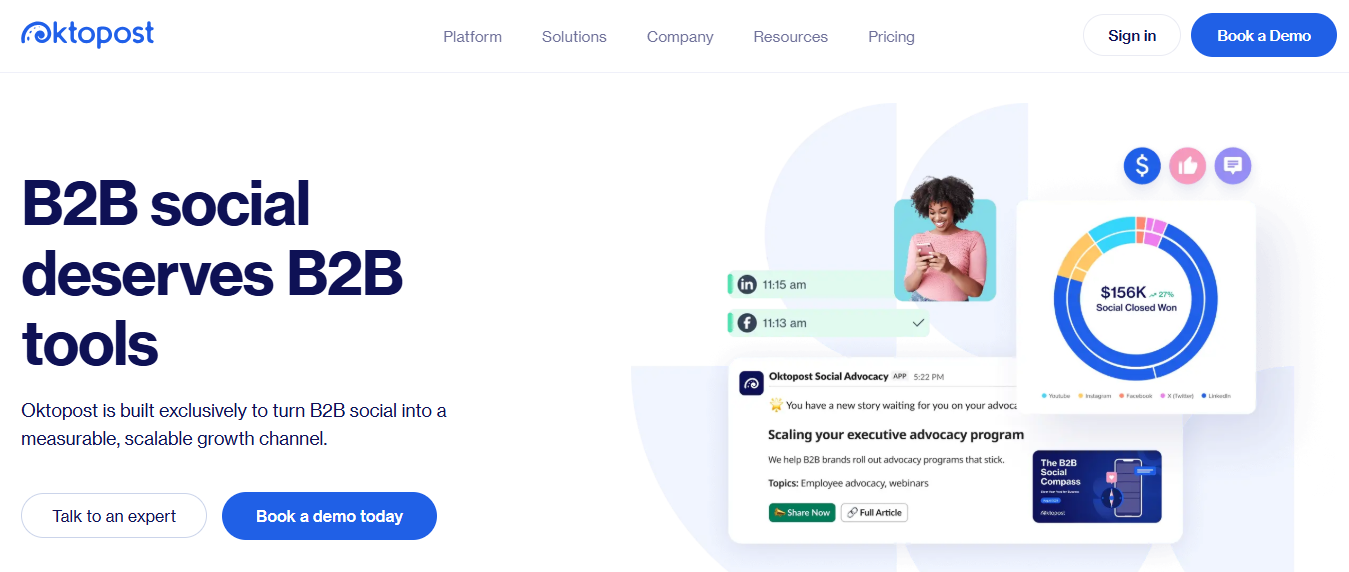
Oktopost has its strengths. If you’re deep into B2B marketing and LinkedIn campaigns, it can be a powerful tool. But social media strategies rarely stay the same. As brands expand channels, experiment with new content formats, or shift from pure B2B into broader marketing, cracks can start to show.
Here’s why many teams begin exploring alternatives.
Limited Multi-Channel Support
Oktopost is heavily built around LinkedIn and traditional B2B channels like Facebook and X. That works well if your entire strategy revolves around social selling.
But what happens when your audience also lives on Instagram, TikTok, Pinterest, or Google Business Profile?
Oktopost doesn’t fully support the broader mix many brands now require. And it doesn’t integrate with platforms like WhatsApp Business either. For agencies handling diverse clients or brands running both B2B and B2C campaigns, that limitation can quickly become frustrating.
Modern social strategies are multi-platform by default. Tools need to reflect that.
Pricing That Feels Locked Behind a Door
One of the biggest frustrations? You can’t just visit the website and see the pricing. Oktopost requires you to request a quote. That usually signals enterprise-level pricing.
For startups, small teams, and even mid-sized agencies trying to plan budgets, that lack of transparency makes comparison difficult. Most marketers prefer tools with clear tiers, visible limits, and predictable costs.
When pricing feels hidden, people naturally start looking elsewhere.
Built for Enterprise – Not Always for Growth
Oktopost is clearly designed for larger B2B teams. That’s not necessarily a flaw. But it does mean the tool can feel rigid for smaller businesses.
If you’re still growing, you may not need enterprise-grade reporting layers or complex setups from day one. You might prefer something lighter. Something flexible. Something that scales as you scale.
Many modern alternatives offer that balance. They support small teams now, but still have room for expansion later.
Best Oktopost Alternatives for Social Media Management 2026
1. OnlySocial ($29/Month)
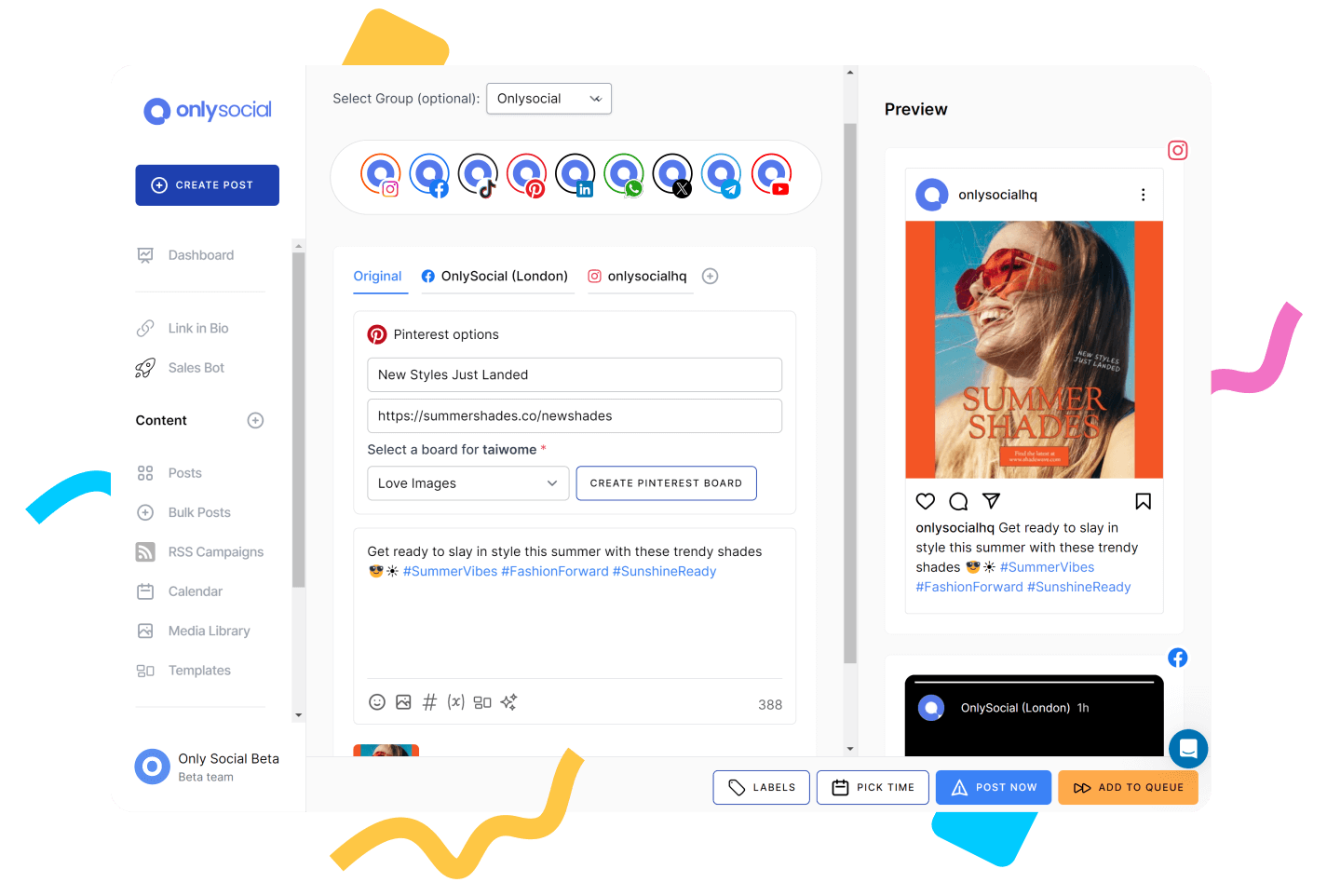
OnlySocial is one of the most flexible Oktopost alternatives available right now. While Oktopost focuses heavily on B2B and LinkedIn-driven strategies, OnlySocial takes a broader, more modern approach to social media management.
The first thing you will like about the tool is how adaptable it feels. It’s built for agencies, growing brands, and multi-location businesses that need more than just LinkedIn performance tracking. It supports a wide mix of platforms, offers AI-powered tools, and doesn’t hide its pricing behind a sales call.
If Oktopost feels enterprise-heavy and narrowly focused, OnlySocial feels scalable and multi-channel ready. Below are some key features that make it stand out.
Key Features
Multi-Platform Publishing
OnlySocial lets you schedule and publish content across 15+ platforms, including Facebook, Instagram, LinkedIn, TikTok, Pinterest, YouTube, Google Business Profile, Threads, Mastodon, Bluesky, and more.
This immediately solves one of Oktopost’s biggest limitations: restricted platform coverage. If your brand spans B2B and B2C audiences, this flexibility matters.
Bulk Scheduling & Automation
You can upload hundreds of posts at once using bulk scheduling. Evergreen queues also allow you to recycle top-performing content automatically. Compared to Oktopost’s more structured enterprise workflows, OnlySocial feels faster and more flexible for content-heavy teams.
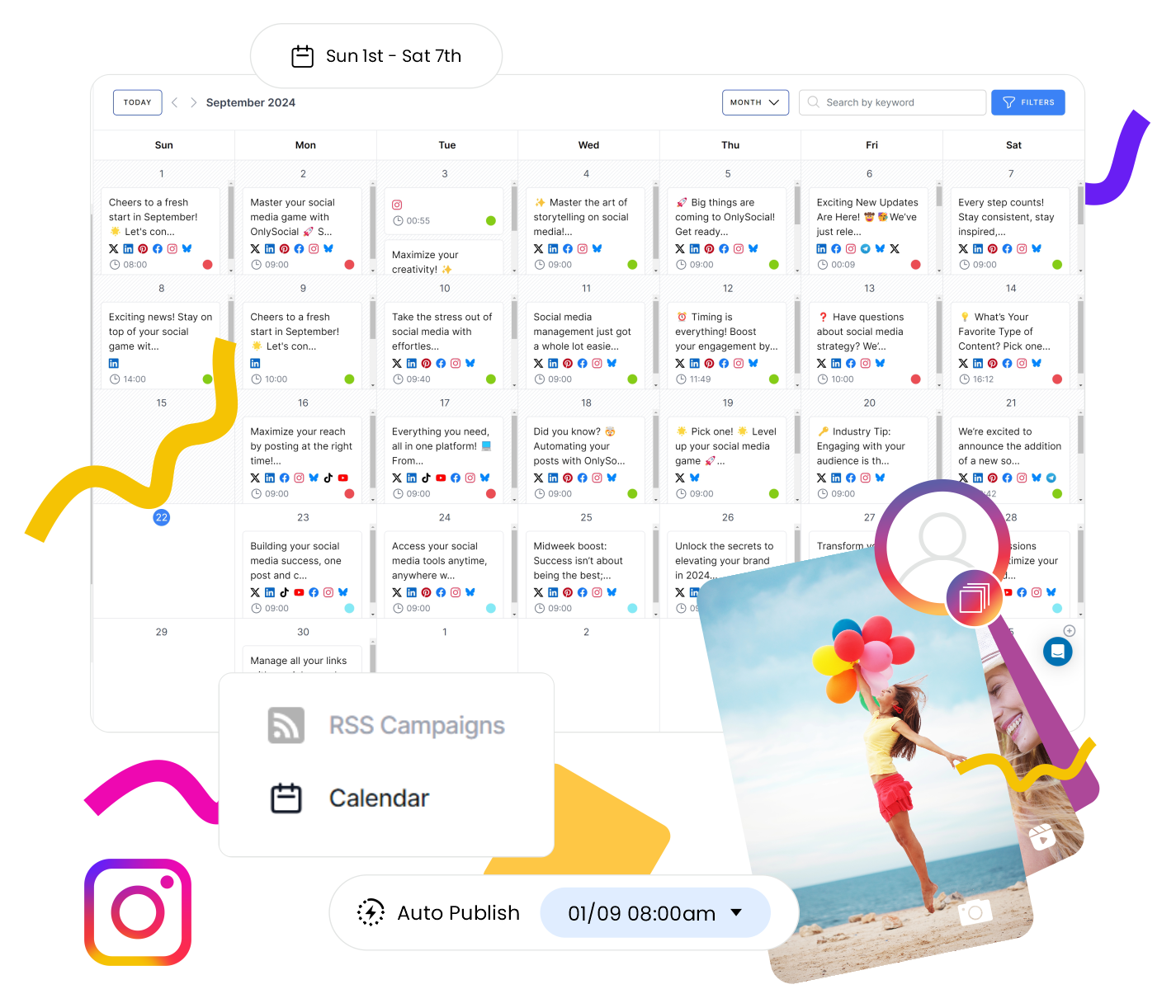
AI-Powered Content Creation
Built-in AI tools help generate captions, content ideas, hashtags, and even quality and relevant visuals. Oktopost focuses more on analytics and attribution. OnlySocial balances analytics with content creation support, which saves time for lean marketing teams.
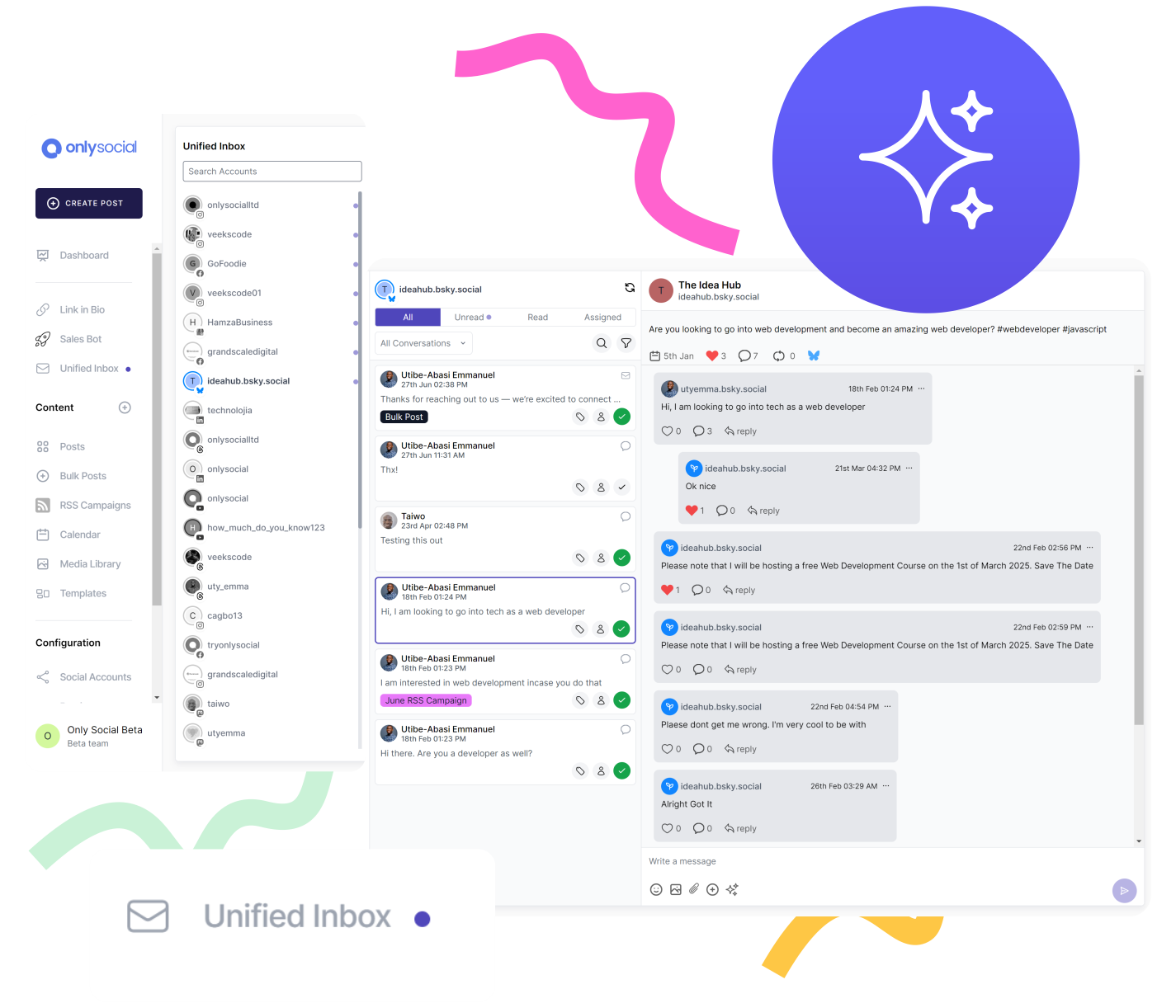
Unified Social Inbox
All comments, messages, and interactions come into one dashboard. That includes WhatsApp Business. This is a major advantage if engagement and responsiveness matter to your brand.
Approval Workflows & Team Collaboration
Assign roles, set approval flows, and manage client reviews easily. It’s structured but not rigid, ideal for agencies that don’t want enterprise complexity slowing them down.
Analytics & Reporting
You can track performance across platforms and generate customizable reports. While Oktopost is strong in B2B attribution, OnlySocial delivers solid cross-platform insights without overcomplicating the dashboard.
White-Label Dashboard
Agencies can fully brand the platform under their own domain and identity – something many Oktopost users look for when scaling services.
Pros
- Supports broader platform coverage
- Saves time with automation and post-recycling, more than most Oktopost competitors can say.
- Transparent pricing
- Unified inbox improves response time and streamlines team collaboration tools.
- More flexible for mixed B2B and B2C strategies
- Easier scaling for smaller and mid-sized teams
- Strong support team with fast response times and proactive solutions.
Oktopost may still win on deep LinkedIn attribution tracking. But for overall flexibility and modern workflows, OnlySocial feels more future-proof.
Cons
- Free trial only; no forever-free plan
- Strong analytics, though not as deep as enterprise tools like Sprout Social
Pricing
OnlySocial offers clear, transparent pricing:
- Freelancer – $29/month (15 social accounts)
- Entrepreneur – $49/month (45 accounts, 3 users)
- Professional – $99/month (Unlimited social accounts, 10 users)
If you’re moving away from Oktopost because you want broader reach, clearer pricing, and less rigid workflows, OnlySocial is a very strong starting point.
2. Social Champ ($26/Month)
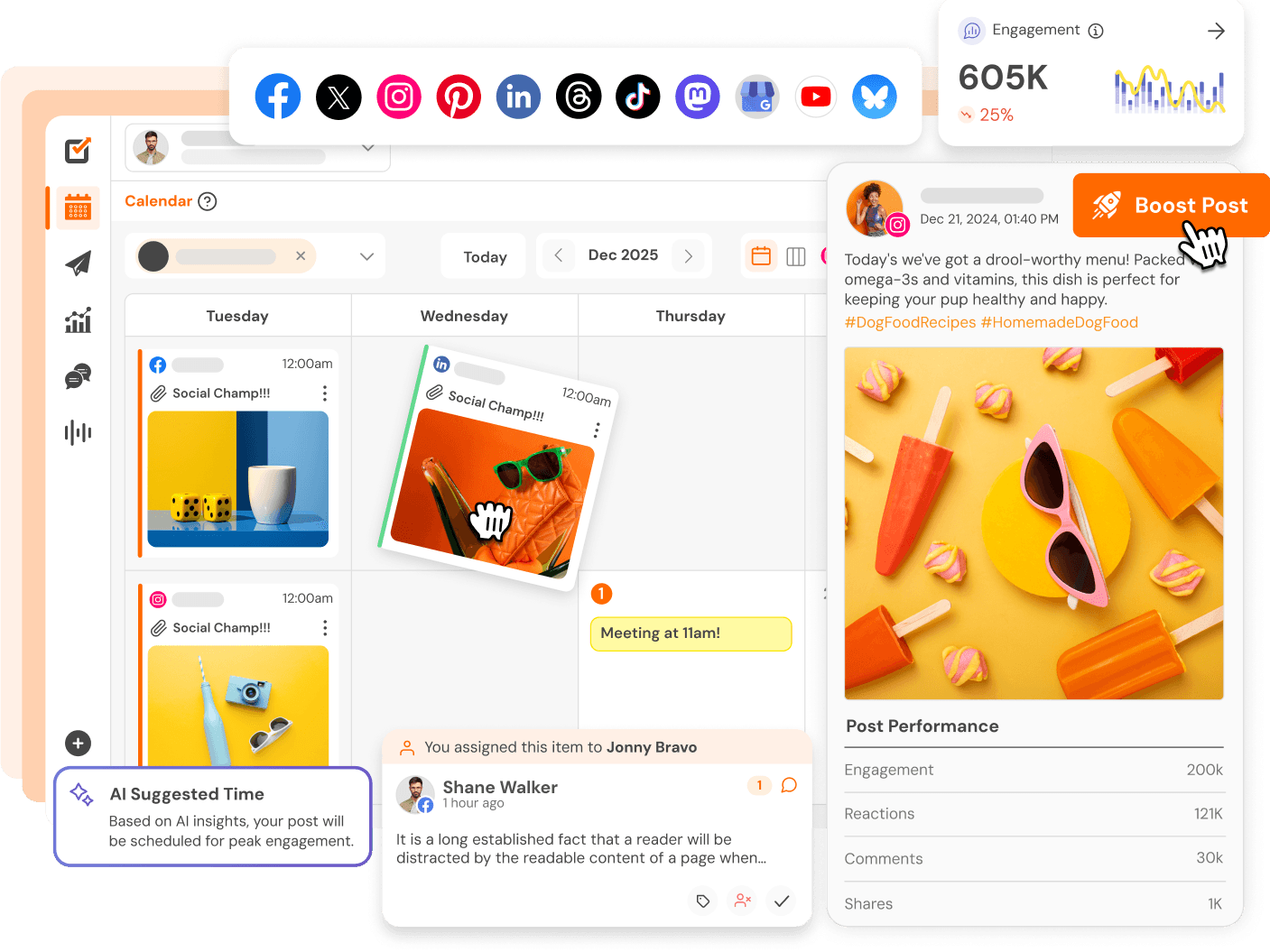
Social Champ is a practical Oktopost alternative for teams that want solid scheduling and automation without enterprise complexity. When we tested it, Social Champ felt straightforward and budget-friendly. It doesn’t try to be overly corporate. Instead, it focuses on helping you publish consistently across multiple platforms.
For people who think Oktopost is too B2B-heavy or too rigid for their workflow, Social Champ feels lighter and easier to scale.
Key Features
- Schedule and publish across Instagram, Facebook, LinkedIn, X (Twitter), TikTok, Pinterest, YouTube, Google Business Profile, and more
- Bulk upload and automated scheduling
- Content recycling for evergreen posts
- AI-powered caption generator
- Unified social inbox to manage engagement
- Basic analytics and reporting tools
- Team collaboration with role-based access
Compared to Oktopost, Social Champ offers broader platform coverage and built-in AI tools. It may not go as deep into B2B attribution tracking, but it supports more modern multi-channel strategies.
Pricing
- Starter – starts around $26/month
- Higher plans unlock more accounts, automation, and team members
- Free trial available
Pros
- Affordable entry pricing
- Wide platform support
- Simple and clean interface
- Strong automation for evergreen content
- Built-in AI tools
Cons
- Analytics not as advanced as enterprise tools
- Fewer deep B2B attribution features compared to Oktopost
3. Sprout Social ($199/Month)
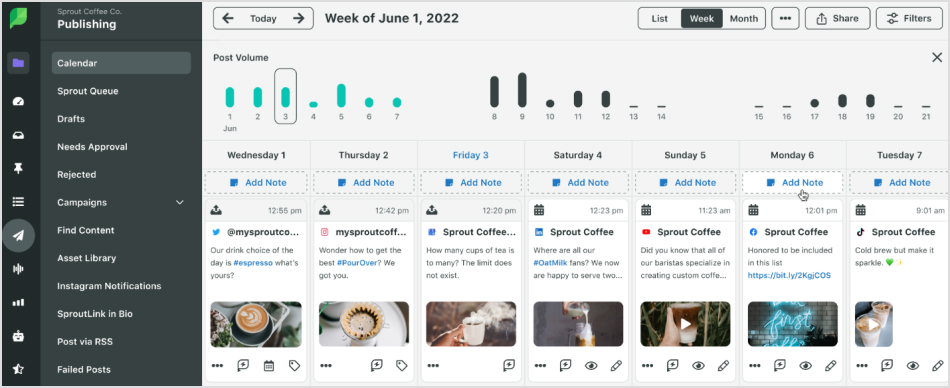
Sprout Social is a powerful alternative to Oktopost, especially for brands that want deeper analytics, stronger engagement tools, and multi-channel support beyond B2B.
No doubt, Sprout feels more enterprise-grade, but in a polished, modern way. While Oktopost leans heavily into LinkedIn and B2B attribution, Sprout Social expands into broader social intelligence, listening, and cross-platform engagement.
Key Features
- Publish and schedule across Instagram, Facebook, LinkedIn, X (Twitter), TikTok, Pinterest, and YouTube
- Unified Smart Inbox to manage DMs, comments, and mentions
- Advanced analytics with competitor tracking
- Social listening to monitor brand mentions and industry trends
- Custom report builder for client-ready presentations
- Automation rules for managing engagement
- Team collaboration with approvals and user roles
Compared to Oktopost, Sprout offers broader platform coverage and stronger listening tools. However, Oktopost may still appeal to teams that prioritize very specific B2B lead attribution.
Pricing
Sprout Social is premium-priced. It’s not aimed at small teams. But for larger brands and agencies, it offers depth that justifies the cost.
- Plans start at $199/month per user
- Higher tiers unlock deeper analytics and listening features
Pros
- Strong analytics and reporting
- Excellent unified inbox
- Advanced social listening
- Modern interface
- Built for collaboration
Cons
- Expensive, especially per user
- May be too advanced for small teams
- Pricing scales quickly as your team grows
If you’re moving away from Oktopost because you want stronger multi-platform analytics and engagement tools, Sprout Social is a serious upgrade, especially for large brands and agencies.
4. Sprinklr (Custom Pricing)
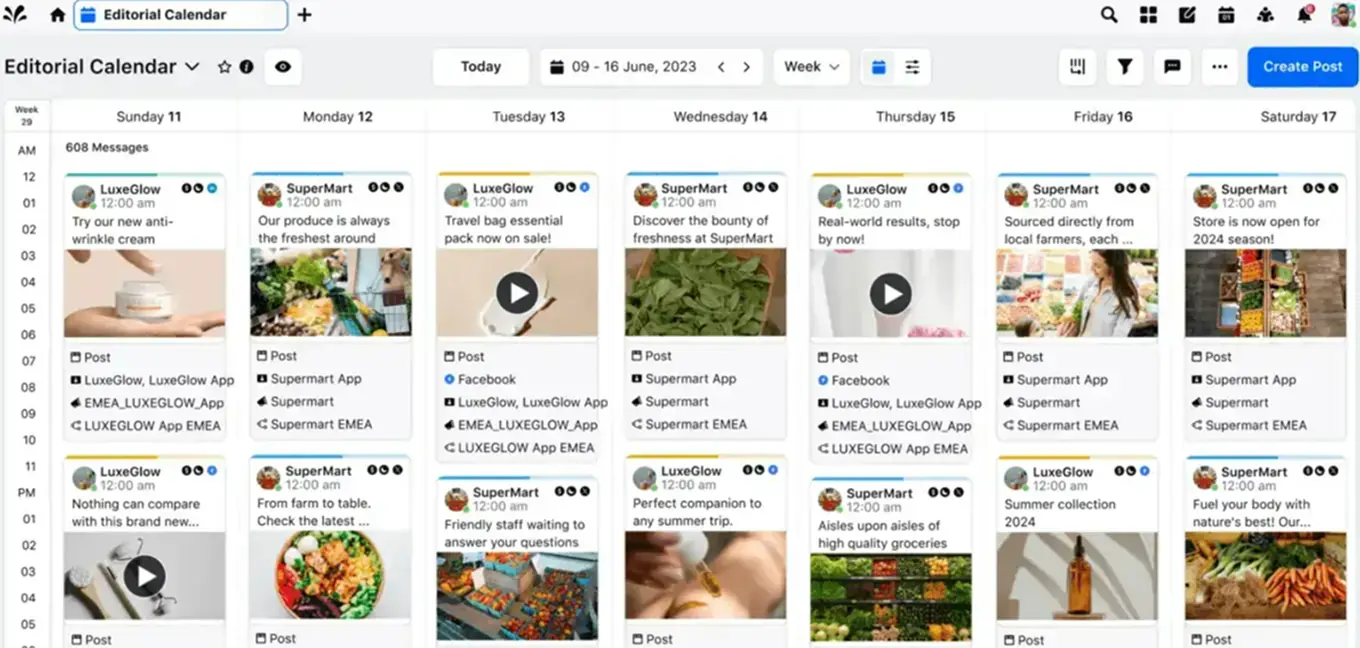
Sprinklr isn’t just a social media tool. It’s a full customer experience platform that includes social publishing, listening, advertising, customer service, and analytics – all in one ecosystem.
The tool is clearly built for global brands that operate at scale. Sprinklr covers marketing, care, research, and even paid media management under one roof. This is not a lightweight tool. It’s a command center.
Key Features
- Publish and manage content across dozens of social platforms
- Enterprise-level social listening and sentiment analysis
- Unified customer care inbox across channels
- Advanced analytics and AI-powered insights
- Paid media management and ad optimization
- Workflow automation for large teams
- Deep CRM and enterprise integrations
Compared to Oktopost, Sprinklr offers far broader functionality. While Oktopost focuses mainly on B2B marketing performance, Sprinklr covers the full customer journey – from awareness to support.
Pricing
Sprinklr Social follows a custom pricing model. You’ll need to contact the vendor for a quote, typical of Oktopost competitors that serve the enterprise segment. Expect pricing to depend on the number of users, profiles, brands, and selected modules.
Pros
- Extremely powerful and scalable
- Deep AI and listening capabilities
- Covers marketing, advertising, and customer service
- Strong global brand support
- Enterprise-level security and integrations
Cons
- Expensive and enterprise-focused
- Complex onboarding
- Overkill for small or mid-sized teams
5. Hootsuite ($99/Month)
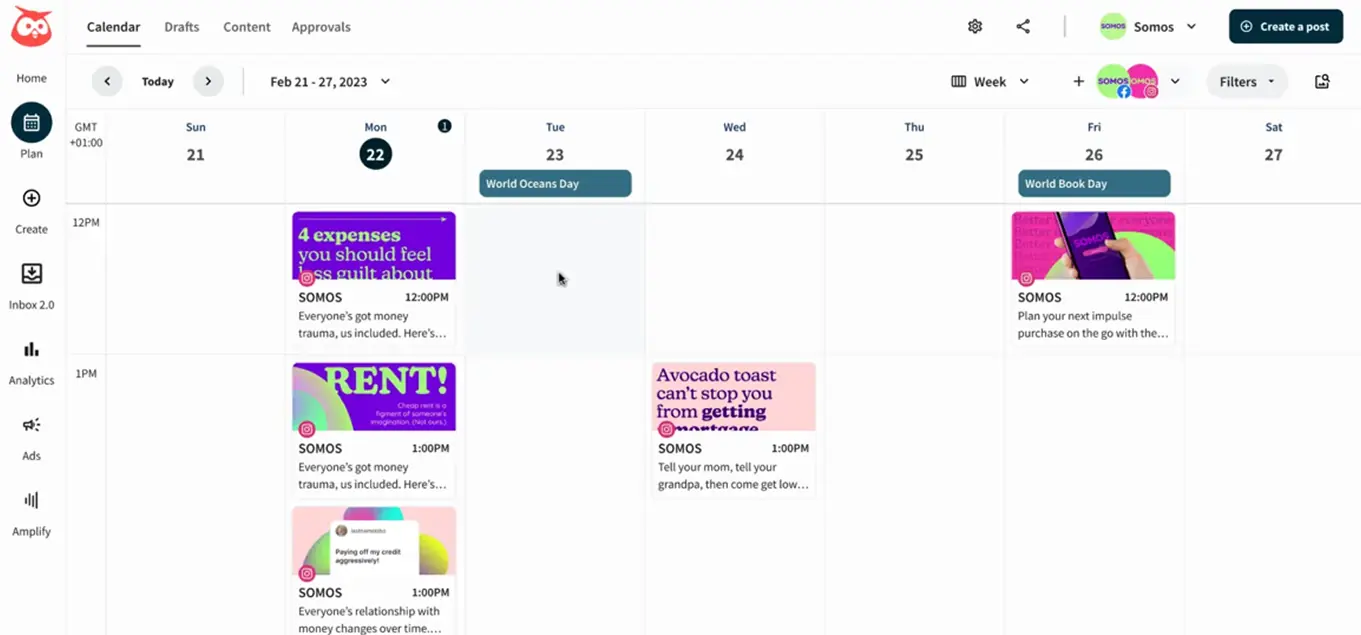
Hootsuite is one of the most established social media management tools on the market. Unlike Oktopost, which leans heavily into B2B and LinkedIn-focused marketing, Hootsuite supports a broader range of platforms and use cases.
When we tested it, Hootsuite felt structured and mature. It’s not flashy, but it’s dependable. It handles publishing, engagement, analytics, and even paid campaigns – all from one dashboard.
Key Features
- Schedule and publish across Instagram, Facebook, LinkedIn, X (Twitter), TikTok, Pinterest, and YouTube
- Streams dashboard to monitor multiple feeds, mentions, and conversations
- Unified inbox for managing messages and comments
- AI-powered caption and content suggestions
- Advanced analytics with custom report builder
- Social listening capabilities
- Team collaboration with approval workflows
- Ad campaign management tools
Compared to Oktopost, Hootsuite supports more platforms and broader marketing workflows. Oktopost may still win for specific B2B attribution tracking, but Hootsuite is more flexible across industries.
Pricing
- Professional – starts around $99/month per user
- Higher-tier plans unlock more profiles, users, and analytics
- Custom enterprise plans available
Pros
- Broad platform coverage
- Strong engagement monitoring
- Reliable reporting tools
- Suitable for agencies and mid-sized teams
- Established brand with long track record
Cons
- Per-user pricing can become expensive
- Interface can feel busy
- Advanced features require higher-tier plans
6. Agorapulse ($79/Month)
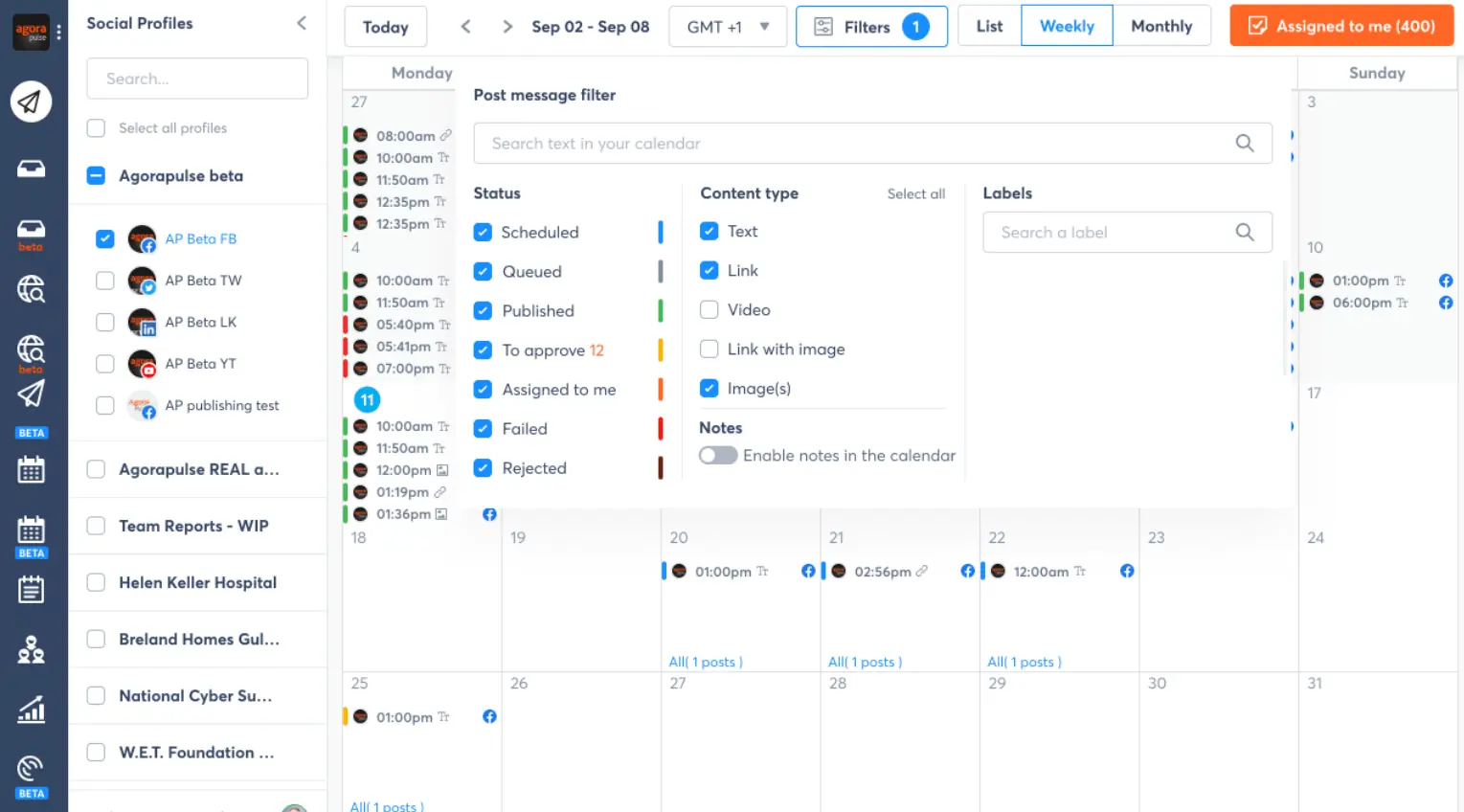
Agorapulse is a strong alternative for brands that care about engagement just as much as publishing. Compared to Oktopost, Agorapulse takes a broader approach. It balances scheduling, engagement, reporting, and listening across multiple platforms.
When we tested it, the unified inbox stood out immediately. Everything flows into one place. No jumping between tabs. No missed comments. If Oktopost feels too LinkedIn-focused, Agorapulse feels more multi-channel and conversation-driven.
Key Features
- Schedule and publish across Instagram, Facebook, LinkedIn, X (Twitter), TikTok, YouTube, and Google Business Profile
- Unified inbox for comments, DMs, and mentions
- Advanced reporting with client-ready PDF reports
- Social listening to monitor brand mentions and competitor activity
- Automated moderation rules to filter spam
- Team collaboration with approval workflows
- ROI tracking with Google Analytics integration
Pricing
- Standard – starts around $79/month per user
- Professional – around $149/month per user
- Advanced – around $199/month per user
- Custom enterprise plans available
Pricing is visible and tier-based, which makes budgeting easier compared to Oktopost’s custom quotes.
Pros
- Excellent unified inbox
- Strong reporting tools
- Good balance of scheduling and listening
- Ideal for agencies and multi-account teams
- Clear pricing structure
Cons
- Per-user pricing can increase costs
- Advanced listening requires higher plans
- May be more than small teams need
7. Sendible ($29/Month)
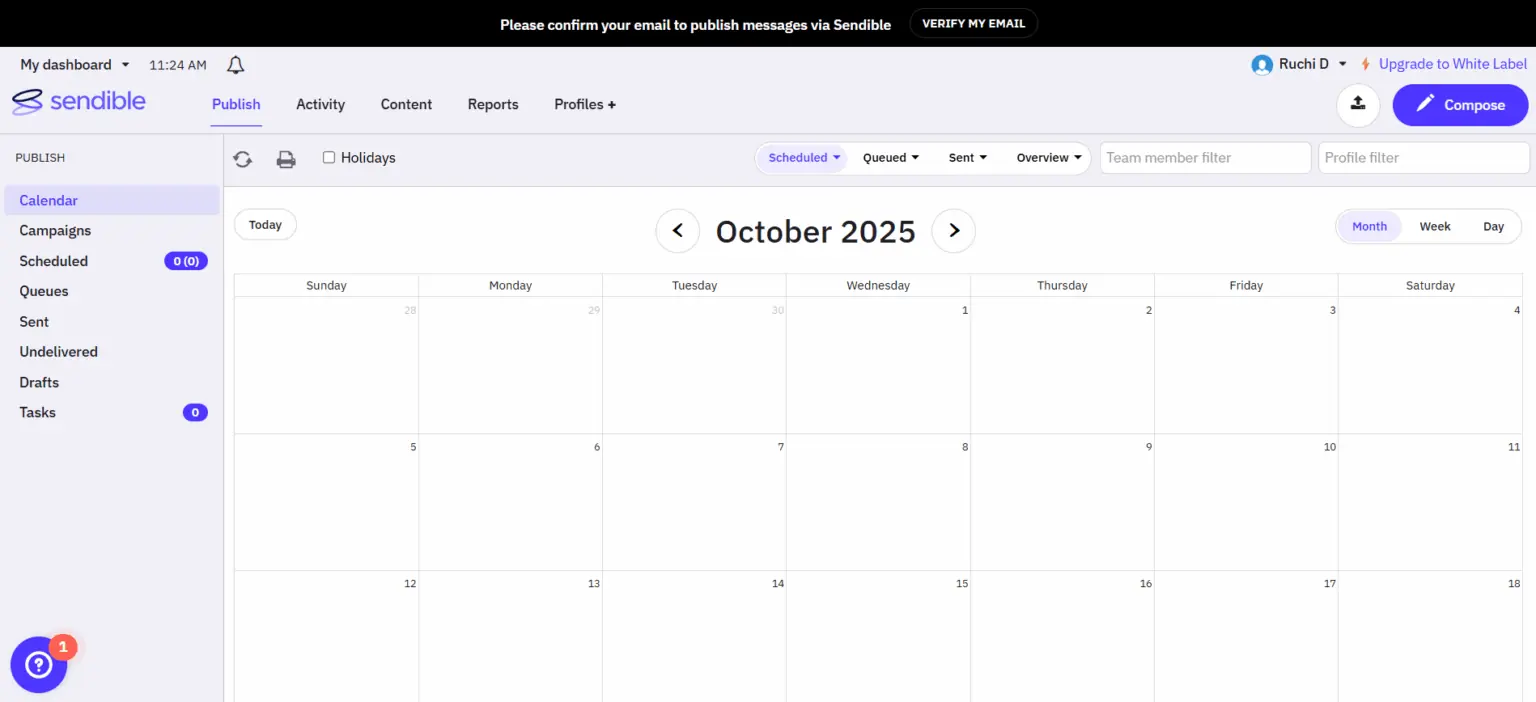
Sendible is built with agencies in mind. While Oktopost leans heavily toward B2B social selling and LinkedIn analytics, Sendible focuses on making multi-client management easier and more flexible. It doesn’t overcomplicate things, but it gives agencies the tools they actually need: automation, reporting, white-labeling, and smooth onboarding.
Key Features
- Schedule and publish across Instagram, Facebook, LinkedIn, X (Twitter), TikTok, YouTube, Pinterest, and Google Business Profile
- Smart Queues to automate evergreen content
- Priority Inbox to manage messages and comments in one place
- Client Connect feature to onboard clients without password sharing
- White-label dashboard for agencies
- Customizable analytics and branded reports
- Team collaboration with role-based approvals
Compared to Oktopost, Sendible offers broader platform coverage and stronger white-label flexibility. Oktopost may still go deeper on B2B campaign attribution, but Sendible is better suited for agencies handling diverse clients.
Pricing
- Creator – starts at $29/month
- Traction – around $89/month
- Scale – around $199/month
- Advanced – around $299/month
- Enterprise pricing available
Pros
- Strong automation tools
- White-label capability
- Excellent for agencies
- Broader platform support
- Clear pricing structure
Cons
- Interface can feel slightly busy at first
- Higher plans can get expensive
- Not as focused on deep B2B attribution
8. Loomly ($65/Month)
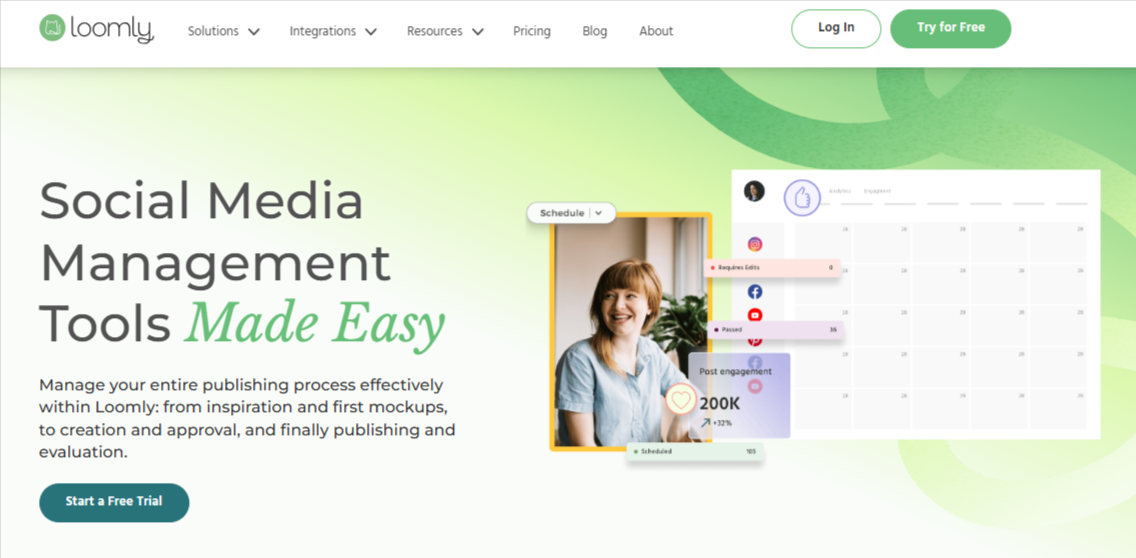
Loomly is a clean, workflow-focused alternative to Oktopost. It’s particularly strong when it comes to content planning, approvals, and structured collaboration. Loomly’s visual calendar was a major highlight. It’s intuitive. You can see everything at a glance.
For teams that prioritize organized content planning over heavy B2B analytics, it feels lighter and easier to manage than Oktopost.
Key Features
- Visual content calendar for planning and scheduling
- Post ideas and optimization tips
- Approval and feedback workflows
- Content library to store and reuse assets
- Analytics and performance tracking
- Multi-channel publishing across major social platforms
Pricing
- Free – $0/month (1 user, 3 accounts, limited posts)
- Starter – around $65/month
- Beyond – around $332/month
- Enterprise – custom pricing
Pros
- Excellent content planning tools
- Clean and intuitive interface
- Strong approval workflows
- Free plan available
- Good for small teams and agencies
Cons
- Not as strong in B2B attribution analytics
- Higher tiers can become expensive
9. Zoho Social ($15/Month)
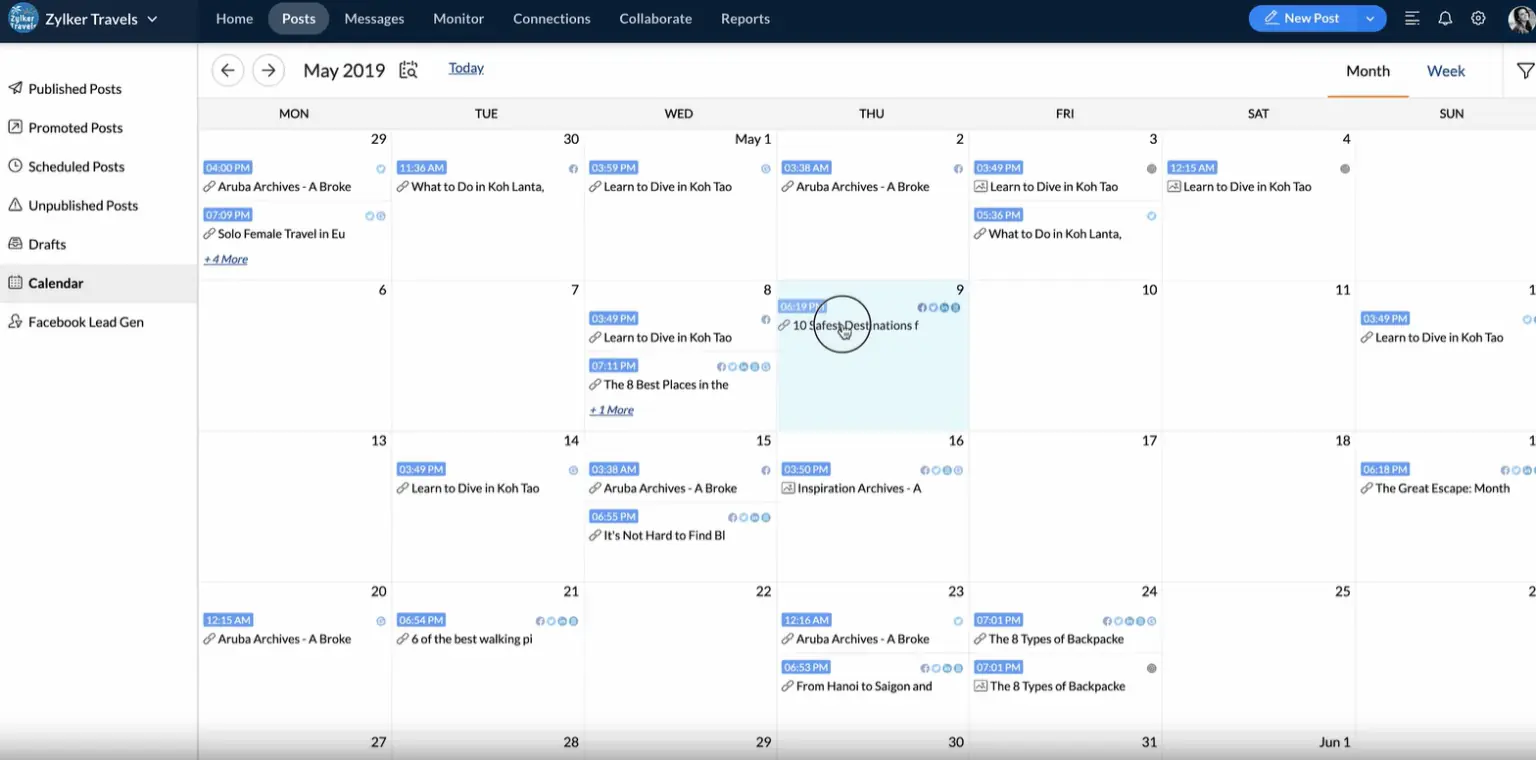
Zoho Social is a structured and business-focused alternative to Oktopost. Compared to Oktopost, Zoho Social feels more versatile and accessible across industries.
When we tested it, the biggest advantage was integration. If you already use Zoho CRM or other Zoho tools, everything connects smoothly. It feels cohesive rather than isolated. If Oktopost feels too enterprise-heavy or narrowly focused, Zoho Social offers a more balanced approach.
Key Features
- Schedule and publish posts across Instagram, Facebook, LinkedIn, X (Twitter), TikTok, Pinterest, and Google Business Profile
- Smart scheduling suggestions based on engagement patterns
- Unified inbox for comments and messages
- Built-in social listening for brand mentions and keywords
- Advanced analytics and custom report builder
- CRM integration within the Zoho ecosystem
- Team collaboration with roles and approval workflows
Compared to Oktopost, Zoho Social provides broader platform coverage and more transparent pricing. Oktopost may still win on deep B2B attribution metrics, but Zoho Social is more flexible for mixed strategies.
Pricing
- Standard – starts around $15/month
- Professional – starts around $40/month
- Premium and agency plans available
- Enterprise pricing available
Pros
- Affordable entry pricing
- Strong CRM integration
- Good analytics and reporting
- Broader platform coverage
- Suitable for small to mid-sized teams
Cons
- Best experience within Zoho ecosystem
- Advanced features require higher tiers
- Interface can feel slightly corporate
10. SocialPilot ($30/Month)
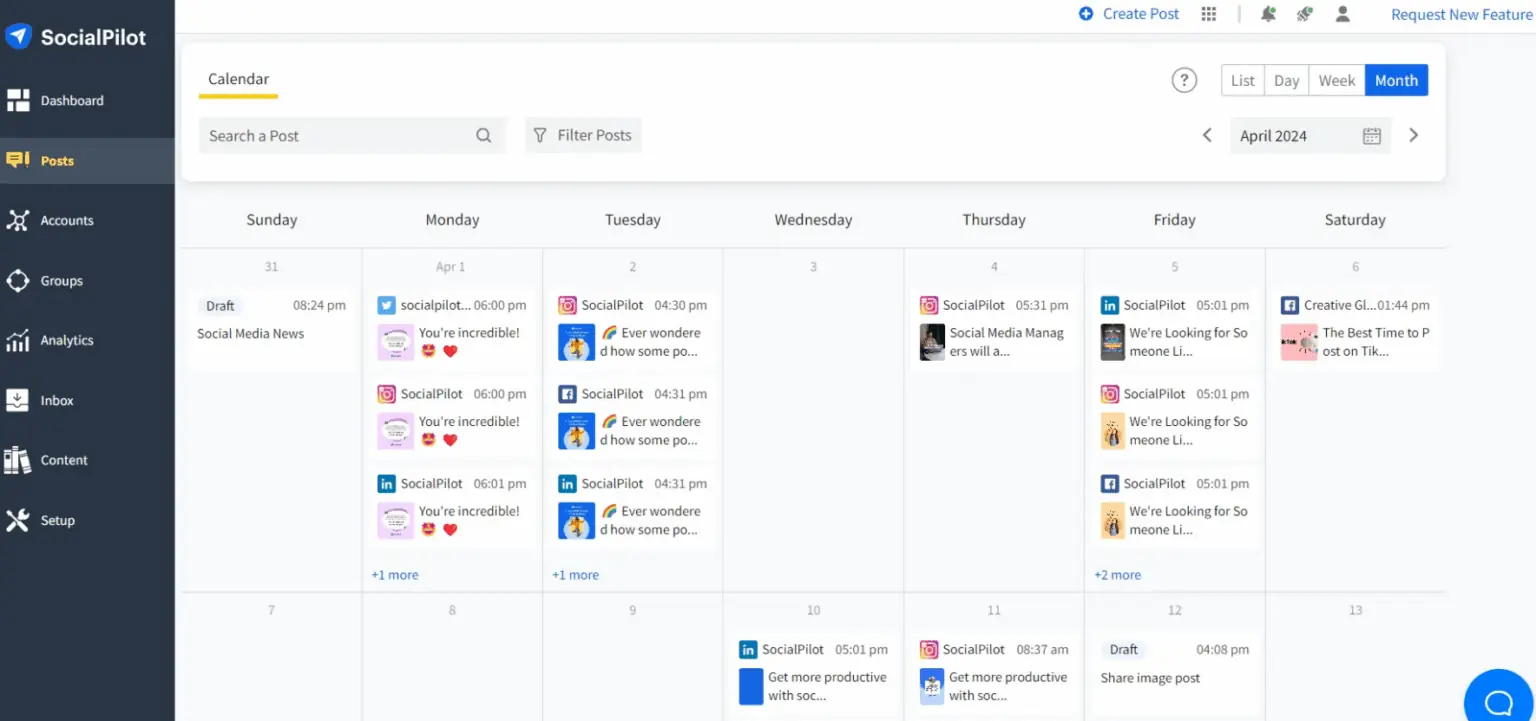
SocialPilot is a strong Oktopost alternative for agencies and growing brands that need multi-platform support without enterprise pricing. SocialPilot is one tool that feels really balanced. It combines scheduling, automation, collaboration, and white-label options at a price that’s accessible to smaller teams. If you think Oktopost feels rigid and expensive, SocialPilot feels scalable and transparent.
Key Features
- Publish across Instagram, Facebook, LinkedIn, TikTok, Pinterest, X (Twitter), YouTube, and Google Business Profile
- Bulk scheduling via CSV upload
- AI assistant for caption writing and content ideas
- Unified social inbox for engagement management
- Client approval workflows
- White-label dashboard for agencies
- RSS automation for content publishing
- Customizable reporting
Pricing
- Essentials – around $30/month
- Standard – around $50/month
- Premium – around $100/month
- Ultimate – around $200/month
Pricing scales by users and accounts, but remains transparent and predictable.
Pros
- Strong value for agencies
- White-label options available
- Broad platform support
- AI tools included
- Clear and scalable pricing
Cons
- Advanced analytics limited to higher plans
- Interface is functional but not flashy
11. Later ($16.67/Month)
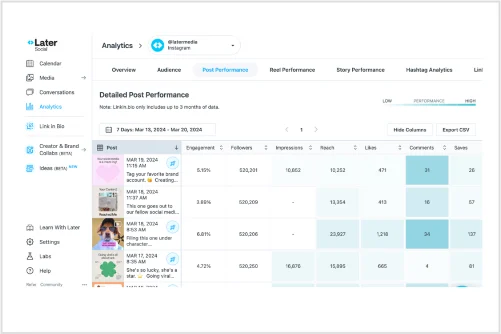
Later started as an Instagram-first scheduler, but it has grown into a broader social media planning tool. Later leans heavily into visual content planning and creator-friendly workflows.
With the visual calendar, you can drag, drop, preview, and rearrange posts easily. It feels built for brands that care about aesthetics just as much as analytics.
Key Features
- Schedule posts across Instagram, Facebook, TikTok, Pinterest, and X (Twitter)
- Visual drag-and-drop content calendar
- AI-powered caption generator
- Link in Bio feature for traffic optimization
- Basic analytics to track engagement and growth
- Team collaboration with approval tools
- Media library for storing content assets
Pricing
- Plans start at around $16.67/month
- Higher tiers unlock advanced analytics and team features
Pros
- Excellent visual planning tools
- Beginner-friendly interface
- Affordable entry pricing
- Strong for Instagram-focused brands
- Built-in Link in Bio tool
Cons
- Limited deep analytics
- Less focused on B2B lead tracking
- Advanced features locked behind higher tiers
12. Metricool ($18/Month)
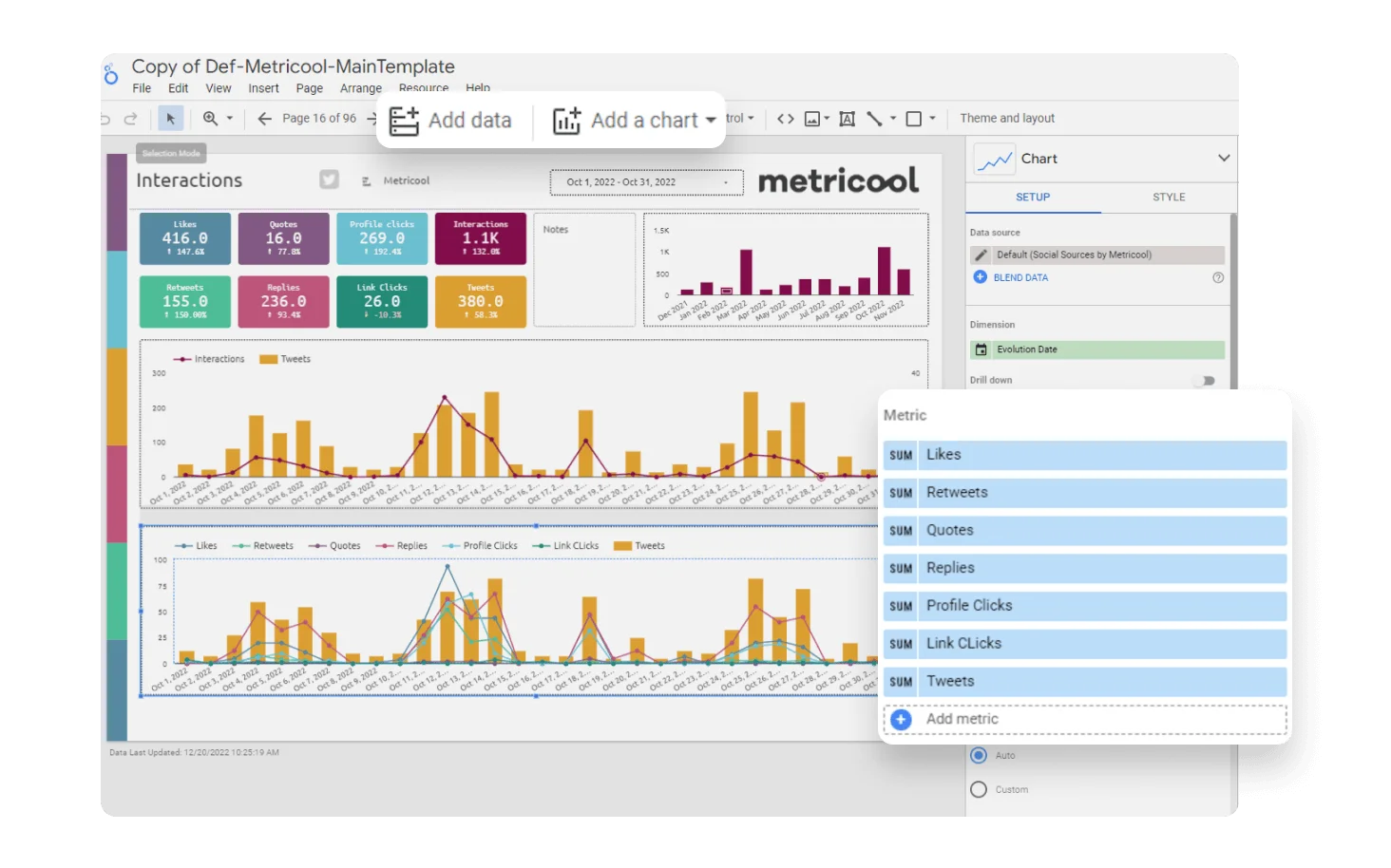
Metricool combines scheduling and analytics in one dashboard. Unlike Oktopost, which centers heavily around B2B social selling, Metricool focuses on cross-platform performance tracking and data visibility.
When we tested it, the analytics stood out. You can track engagement, growth, ads performance, and even competitor metrics from one place. It feels data-driven but not overly complex.
Key Features
- Drag-and-drop scheduling calendar
- Multi-platform publishing across Instagram, Facebook, LinkedIn, TikTok, Pinterest, and more
- In-depth analytics and performance tracking
- Branded report generation for clients
- Inbox tool for managing comments and messages
- SmartLinks feature to optimize bio traffic
- Hashtag tracking tools
Pricing
- Free plan available
- Paid plans start around $18/month
- Higher tiers unlock more brands, analytics, and reporting features
Pros
- Strong analytics dashboard
- Affordable pricing tiers
- Free plan available
- Good balance of scheduling and reporting
- Suitable for agencies and growing teams
Cons
- Twitter (X) often requires add-ons depending on plan
- Collaboration features less robust than some competitors
If you’re moving away from Oktopost because you want broader data visibility and transparent pricing, Metricool is a practical alternative.
13. Buffer ($6/Month)
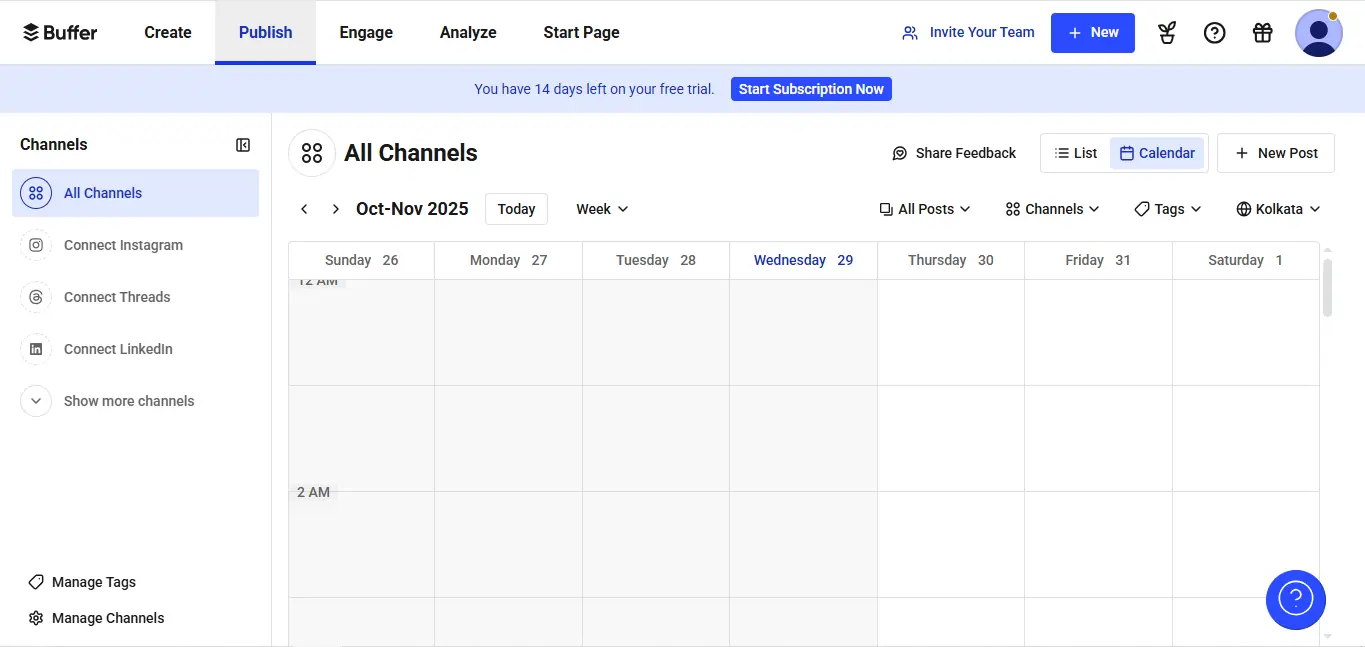
Buffer is one of the simplest and most accessible Oktopost alternatives on the market. While Oktopost is built heavily around B2B analytics and LinkedIn performance, Buffer focuses on clean scheduling, easy collaboration, and straightforward reporting.
Compared to Oktopost, Buffer feels light. You can log in, schedule content, check analytics, and move on with your day. There’s no enterprise complexity unless you actually need it.
Key Features
- Schedule and publish across Instagram, Facebook, LinkedIn, X (Twitter), TikTok, and Pinterest
- Simple drag-and-drop content calendar
- AI assistant for caption generation
- Engagement tools to manage comments and replies
- Basic analytics to track post performance
- Team collaboration with approvals and shared access
- Free plan available for individuals
Pricing
- Free plan available
- Paid plans start at $6/month per channel
Pricing scales by channel, which keeps entry costs low but can increase if you manage many accounts.
Pros
- Extremely easy to use
- Affordable entry pricing
- Free plan available
- Clean interface
- Good for freelancers and small teams
Cons
- Limited advanced analytics
- Not designed for enterprise attribution tracking
- Per-channel pricing can add up
How to Choose the Best Oktopost Alternative
There are plenty of tools on this list. Some are built for enterprise teams. Others are perfect for freelancers. A few sit comfortably in between.
So how do you actually choose the right one? It starts with clarity.
Know your priorities first
Before you compare features or pricing, step back and ask: Why are you leaving Oktopost?
Is it the limited platform coverage? The hidden pricing? The B2B-heavy focus? The complexity?
If LinkedIn attribution is your number one focus, you’ll need a tool that still handles analytics well. If you want broader multi-channel publishing, then platform support becomes your top filter.
When you’re clear about what matters most, you avoid getting distracted by features you’ll never use.
Consider the platforms you actually use
This sounds obvious. But it’s where many teams make mistakes. Oktopost works best for LinkedIn-heavy B2B strategies. But what if you’re active on:
- TikTok
- Google Business Profile
- YouTube
- WhatsApp Business
Not all tools support all platforms equally. And some charge extra for certain integrations. Make sure your alternative supports every channel you post on, direct publishing (not just reminders), and any newer platforms you plan to grow into. Your tool should expand your reach, not limit it.
Think about content volume and workflow
Are you posting 10 times a week or 100? Do you work solo, or do you manage a team with approvals?
Some platforms are built for high-volume automation with bulk uploads and evergreen queues. Others focus more on structured workflows and client approvals.
So, ask yourself:
- How many posts do we schedule monthly?
- Do we need bulk scheduling?
- Do we need approval workflows?
- Do we manage multiple brands?
If you’re scaling, your workflow will become more complex. Choose a tool that can handle that growth without becoming chaotic.
Evaluate scalability and cost
Pricing isn’t just about the starting number. Look at:
- Cost per user
- Cost per social profile
- Cost of advanced analytics
- Cost of automation features
Some tools look affordable upfront but scale quickly as you add users or accounts.
Oktopost hides pricing behind a sales call. Many alternatives are transparent. That transparency makes long-term planning easier. The best choice is the one that grows with you without forcing constant plan upgrades.
Final Thoughts
Oktopost still works well for certain B2B teams, especially those heavily focused on LinkedIn and social selling. But social media in 2026 isn’t limited to one channel or one type of strategy. Brands now need broader platform coverage, clearer pricing, smarter automation, and workflows that don’t slow them down.
If Oktopost no longer fits your direction, there are plenty of capable alternatives out there. The right choice comes down to your priorities, your budget, and how your team actually works. Pick a platform that supports where your brand is going – not just where it started.
FAQs
How do I choose the best Oktopost alternative for my business?
Start with your priorities. If you mainly care about LinkedIn analytics and B2B attribution, you’ll need a tool that still offers strong reporting. If your strategy is multi-channel, then platform support becomes more important.
Also consider your team size, content volume, and budget. Some tools are built for enterprise teams. Others are better suited for growing brands and agencies.
Is there a free alternative to Oktopost?
Yes, there are several tools that offer free plans. Platforms like Buffer and Metricool provide free tiers with limited scheduling and analytics features. Loomly also offers a free plan with restrictions on posts and users.
While free plans are useful for testing, growing teams usually need a paid plan to unlock automation, collaboration, and advanced reporting.
What is the best Oktopost alternative for B2B brands?
If you’re focused on B2B marketing, look for tools with strong LinkedIn support, detailed analytics, and reporting features.
Sprout Social and Hootsuite offer robust analytics and listening tools that work well for B2B teams. OnlySocial also supports LinkedIn publishing while offering broader platform coverage if you want to expand beyond LinkedIn.
Which Oktopost alternative is best for agencies?
Agencies usually need multi-account management, approval workflows, and white-label options. OnlySocial, Sendible, and SocialPilot are strong options for agencies because they support multiple profiles, team collaboration, and scalable pricing. If white-labeling matters, make sure the tool explicitly supports it.
Does OnlySocial support LinkedIn marketing?
Yes, OnlySocial supports LinkedIn publishing and scheduling. You can create, schedule, and manage LinkedIn posts directly from the dashboard, alongside other platforms like Instagram, Facebook, TikTok, and more.
This makes it suitable for both B2B and multi-channel strategies, especially if you want LinkedIn marketing without being locked into a LinkedIn-only ecosystem.