Top 11 Sked Social Alternatives for Effective Social Management in 2026

Sked Social does a solid job. It helps you schedule content, stay organized, and keep your social presence running without chaos.
But over time, even good tools can start to feel limiting. Maybe the features no longer match how your team works. Maybe the pricing feels steep for what you actually use. Or maybe you just want more flexibility as your strategy grows.
In this guide, we’ve rounded up 11 Sked Social alternatives you can consider in 2026 for effective social management. If Sked Social feels close, but not quite right anymore, this list will help you see what else is out there.
Table of Contents
- 1 Why Consider Sked Social Alternatives?
- 2 Top Sked Social Alternatives to Consider for Your Brand
- 2.1 1. OnlySocial ($29/Month)
- 2.2 2. Planoly ($16/Month)
- 2.3 3. Planable ($39/Month)
- 2.4 4. Hootsuite ($99/Month)
- 2.5 5. Later ($25/Month)
- 2.6 6. Agorapulse ($99/Month)
- 2.7 7. Buffer ($6/Month)
- 2.8 8. SocialPilot ($30/Month)
- 2.9 9. CoSchedule ($29/Month)
- 2.10 10. Sprout Social ($199/Month)
- 2.11 11. Metricool ($18/Month)
- 3 Choosing the Right Sked Social Alternative for Your Needs
- 4 Final Note
- 5 FAQs
Why Consider Sked Social Alternatives?
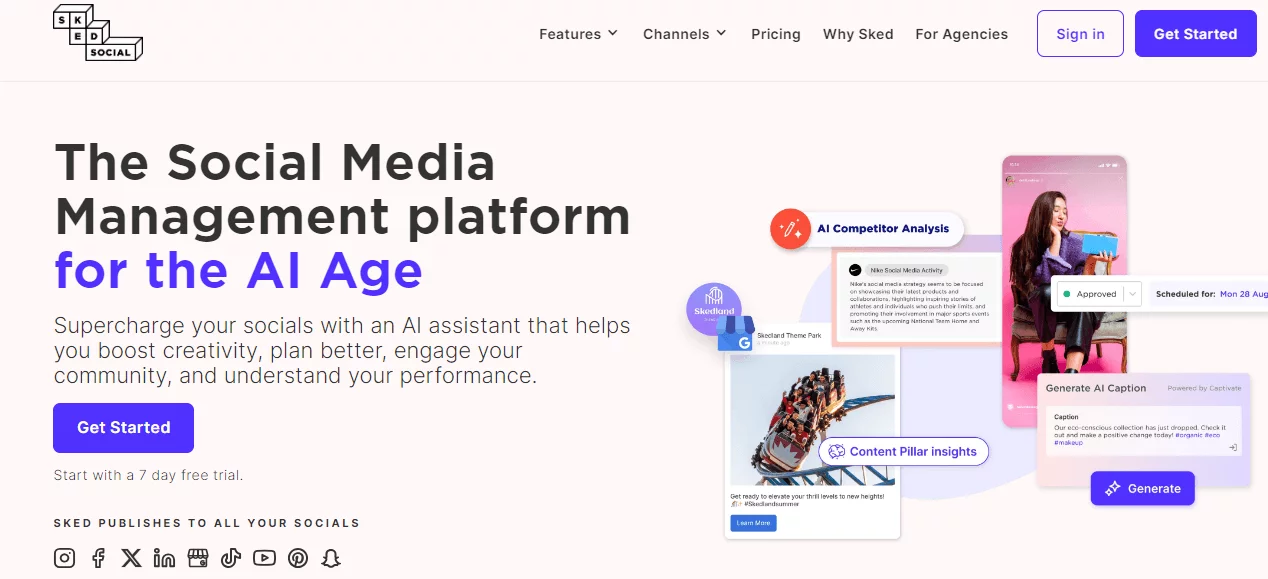
Sked Social works well for basic scheduling, but over time, a few cracks start to show. Many users begin looking elsewhere, not because the tool is bad, but because it stops fitting how they work as their needs evolve.
One of the biggest frustrations users mention is sync and scheduling reliability. Delays or glitches when posts are meant to go live can throw off carefully planned campaigns. When timing matters, even small hiccups feel costly.
Also, the tool offers a starting price of $59 per month for just three social profiles. This can quickly feel expensive, especially for freelancers or small teams testing the waters. Several competing tools offer similar scheduling and analytics features at a much lower entry point.
Pricing jumps are another sticking point. Moving from Sked Social’s Launch plan to the Grow plan requires a steep increase, and the jump to the Accelerate plan puts it out of reach for most solo marketers and early-stage businesses. For users who only need core features, this structure feels restrictive.
On top of that, some users have raised concerns about customer support responsiveness and the lack of deeper analytics, making it harder to clearly track performance or justify the cost.
Together, these factors explain why many teams start exploring Sked Social alternatives that offer more flexibility and better value.
Top Sked Social Alternatives to Consider for Your Brand
1. OnlySocial ($29/Month)
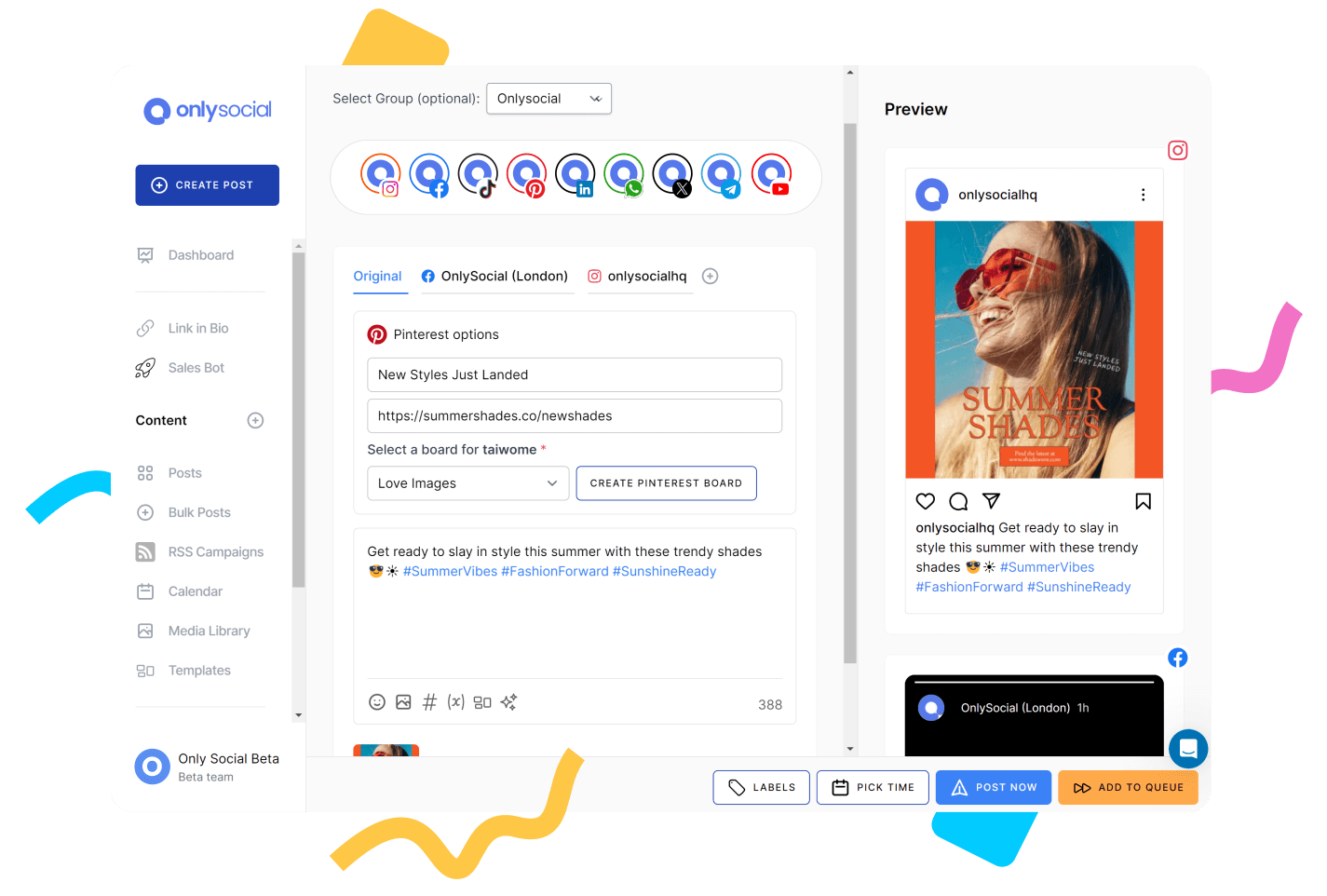
OnlySocial is a strong Sked Social alternative for brands and social media managers who want more flexibility without paying premium prices.
It’s built to handle everyday scheduling just as well as more advanced automation, making it suitable for freelancers, growing businesses, and agencies managing multiple accounts.
Where Sked Social can feel restrictive as your needs expand, OnlySocial feels more accommodating. It’s designed to grow with you, not push you into higher pricing tiers too early.
Key Features
- Multi-platform scheduling across 15+ networks: Schedule posts to Instagram, Facebook, TikTok, LinkedIn, Pinterest, X, Google Business Profile, Threads, Mastodon, Bluesky, and more from one dashboard.
- Bulk scheduling: Upload and schedule hundreds of posts at once using CSV files, ideal for campaigns and content batching.
- AI-powered content creation: Generate captions, hashtags, post ideas, and even visuals to speed up content preparation.
- Unified social inbox: Manage comments, DMs, and mentions in one place, helping teams stay responsive without switching platforms.
- Team collaboration and approvals: Assign roles, manage approvals, and keep everyone aligned without endless back-and-forth.
- Analytics and automated reporting: Track engagement and performance across platforms, with downloadable and white-label reports.
- White-label options for agencies: Rebrand the dashboard with your own logo and domain when managing clients.
Our Experience with OnlySocial
What immediately stood out was how much control we had without complexity. Scheduling posts across multiple platforms felt smoother than Sked Social, especially when working with bulk uploads and smart queues. Once schedules were set, content flowed consistently with minimal intervention.
The unified inbox also made a noticeable difference. Instead of checking platforms individually, everything landed in one place, which made engagement faster and more organized. This is something Sked Social users often miss once conversations start piling up.
We also appreciated the pricing structure. There are no sudden jumps that force you into plans you don’t need. For teams that want reliable automation, collaboration, and analytics without stretching budgets, OnlySocial feels like a more balanced long-term option.
Pricing
OnlySocial offers straightforward pricing:
- Freelancer – $29/month (15 social accounts)
- Entrepreneur – $49/month (40 social accounts)
- Professional – $99/month (unlimited social accounts)
Compared to Sked Social’s $59/month entry plan for just three profiles, OnlySocial delivers far more value at a lower starting price. For many users, that alone makes it one of the most practical Sked Social alternatives in 2026.
2. Planoly ($16/Month)
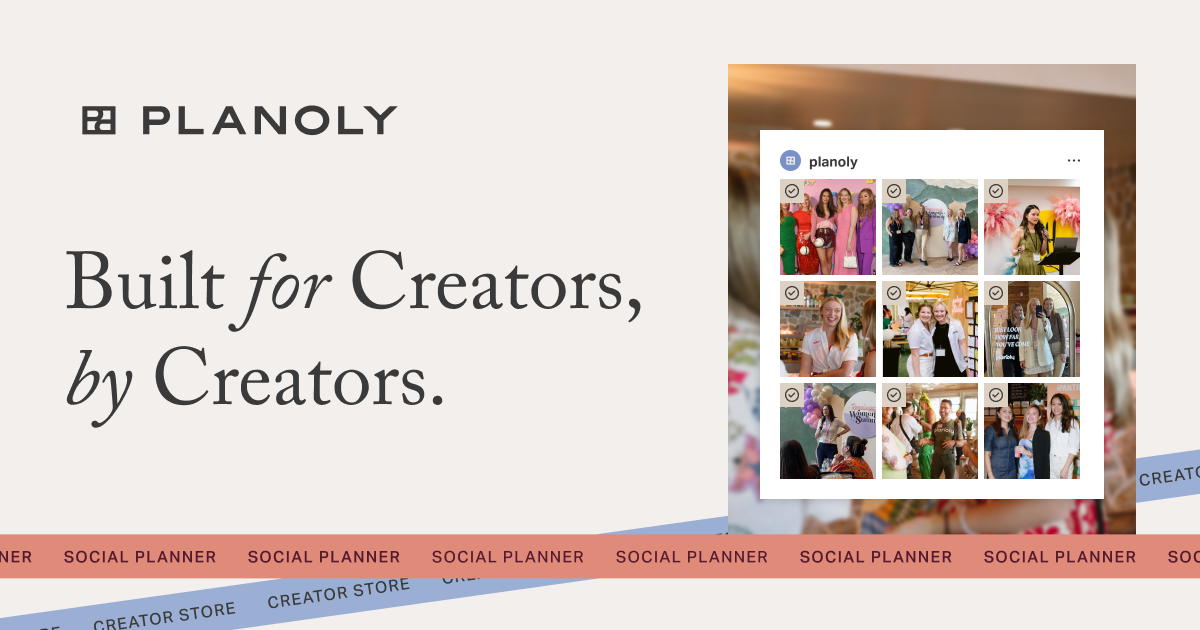
Planoly is a familiar name for creators and brands that care a lot about how their feed looks before anything goes live. It started as an Instagram-first planner and has grown into a visual social media management tool that supports more platforms and basic automation.
Compared to Sked Social, Planoly appeals most to creators, influencers, and ecommerce brands that prioritize aesthetics and visual storytelling.
Key Features
- Visual drag-and-drop planner: Preview your grid before publishing and rearrange posts easily to maintain a consistent look and feel.
- Multi-platform scheduling: Schedule posts for Instagram, TikTok, Pinterest, Facebook, LinkedIn, and X, with platform-specific customization.
- Hashtag management: Save hashtag groups and reuse them across posts to speed up publishing and keep captions consistent.
- Content calendar and auto-posting: Plan content weeks ahead with a clear calendar view and automatic publishing.
- Link-in-bio tools: Create shoppable links and landing pages connected to posts, useful for ecommerce and creators driving traffic.
- Basic analytics and insights: Track engagement, follower growth, and post performance to understand what resonates with your audience.
Our Experience with Planoly
Planoly feels calm and intuitive compared to Sked Social. The visual planner is the standout feature. Being able to see how posts sit together before scheduling makes a real difference for Instagram and Pinterest-heavy strategies.
We also liked how quick it was to organize content. Uploading visuals, arranging them on the grid, and scheduling posts felt natural, even for someone new to the tool. There’s very little friction in the setup.
That said, Planoly isn’t built for deep automation or large teams. Analytics are fairly surface-level, and collaboration features are limited. But for creators and small brands focused on visual consistency rather than advanced workflows, it does exactly what it promises.
Pricing
Planoly offers a free plan with limited features, which makes it easy to try. Paid plans typically start around $16-$19/month, depending on the platform and features you need.
Compared to Sked Social’s $59/month starting plan, Planoly is significantly more affordable. While it doesn’t offer the same level of automation or analytics, it provides strong value for users who mainly need visual planning and reliable scheduling.
3. Planable ($39/Month)
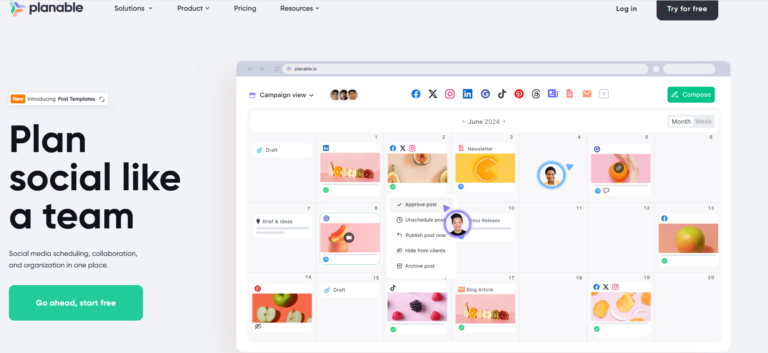
Planable is built around one simple idea: make collaboration on social media content painless. Instead of jumping between emails, docs, and chats, everything happens in one shared space. As a Sked Social alternative, Planable works best for teams and agencies that care more about reviews, approvals, and clarity than complex automation.
If Sked Social feels too focused on publishing and not enough on teamwork, Planable shifts the spotlight to how content is created before it goes live.
Key Features
- Live content previews: See posts exactly as they’ll appear on each platform, including captions, images, and formatting, before publishing.
- Real-time collaboration: Team members can comment, suggest edits, and make changes directly on posts without switching tools.
- Approval workflows: Set clear approval stages so content gets reviewed before it’s scheduled or published.
- Multi-platform support: Plan and schedule content for Instagram, Facebook, LinkedIn, X, TikTok, and more.
- Shared content calendar: View all planned posts in one calendar to track what’s ready, what’s pending, and what’s approved.
- Client access without complexity: Share content with clients for feedback using simple access links instead of full logins.
Our Experience with Planable
Planable immediately feels organized. Compared to Sked Social, it gives you much more confidence before posts go out. Seeing posts in their final format helps catch mistakes early, especially when working across multiple platforms.
Collaboration is where Planable really shines. Feedback stays tied to each post, which avoids confusion and repeated edits. For teams juggling multiple voices or brand approvals, this makes planning far less stressful.
Automation and analytics are not Planable’s strongest areas, but that’s not its goal. It’s designed to make content approval smooth and transparent. For teams where mistakes are costly and approvals matter, that focus makes a lot of sense.
Pricing
Planable offers a free plan with limited features. The basic plans starts at $39 per user per month. Compared to Sked Social’s higher entry price, Planable is more accessible for teams that want strong collaboration without paying for automation features they may not use.
4. Hootsuite ($99/Month)
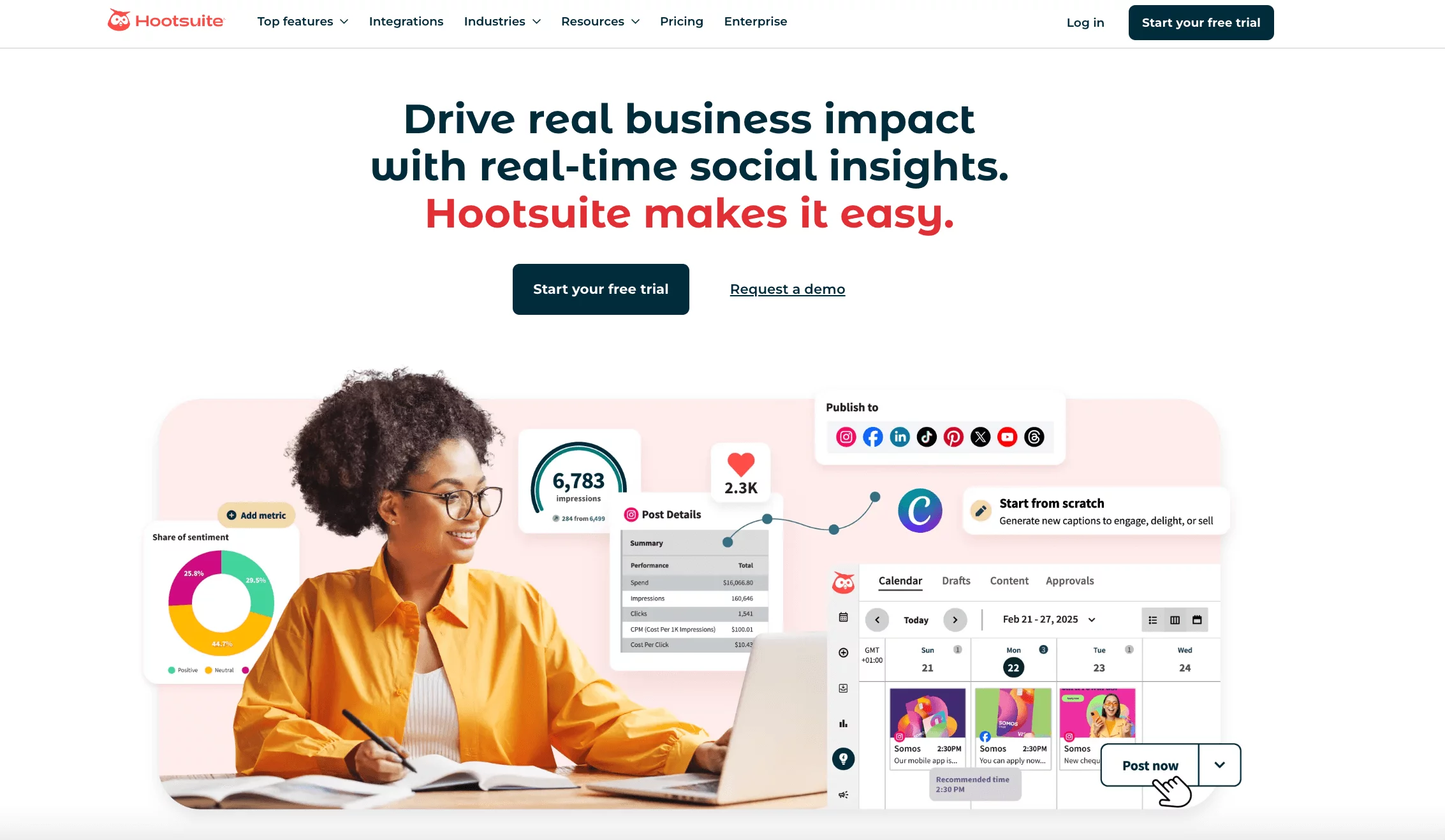
Hootsuite is one of the longest-standing names in social media management. It’s often the first tool teams encounter when they move beyond native scheduling. As a Sked Social alternative, Hootsuite makes sense for brands that want an all-in-one dashboard covering publishing, monitoring, engagement, and reporting in one place.
While Sked Social leans more into scheduling, Hootsuite positions itself as a broader control center for social activity.
Key Features
- Multi-platform scheduling: Schedule posts across major platforms like Instagram, Facebook, LinkedIn, X, TikTok, Pinterest, and more from a single dashboard.
- Auto-scheduling recommendations: Suggests optimal posting times based on audience engagement patterns.
- Unified inbox and streams: Monitor mentions, comments, keywords, and messages across networks in real time.
- Analytics and reporting: Track performance, engagement, and growth with customizable reports.
- Social listening tools: Monitor brand mentions, trends, and sentiment, with deeper listening available on higher plans.
- Team collaboration features: Assign roles, manage permissions, and prevent duplicate replies with collision detection.
Our Experience with Hootsuite
Hootsuite feels powerful straight away. Compared to Sked Social, there’s more happening on screen, which can be a good thing or a challenge depending on your experience level. Once configured, the streams make it easy to stay on top of conversations without constantly switching platforms.
We also found the inbox and monitoring tools useful for active brands. Instead of focusing only on posting, Hootsuite encourages engagement and response management, which is something Sked Social users often need as they scale.
That said, the platform can feel heavy. There’s a learning curve, and many advanced features live behind higher-priced plans. It’s very capable, but you need to invest time (and budget) to get the most out of it.
Pricing
Hootsuite’s pricing typically starts around $99/month, with higher tiers available depending on users, features, and analytics needs.
Compared to Sked Social’s $59/month starting plan, Hootsuite is more expensive. The trade-off is broader functionality beyond scheduling. For teams that want publishing, engagement, monitoring, and reporting in one tool, the higher cost may be justified.
5. Later ($25/Month)
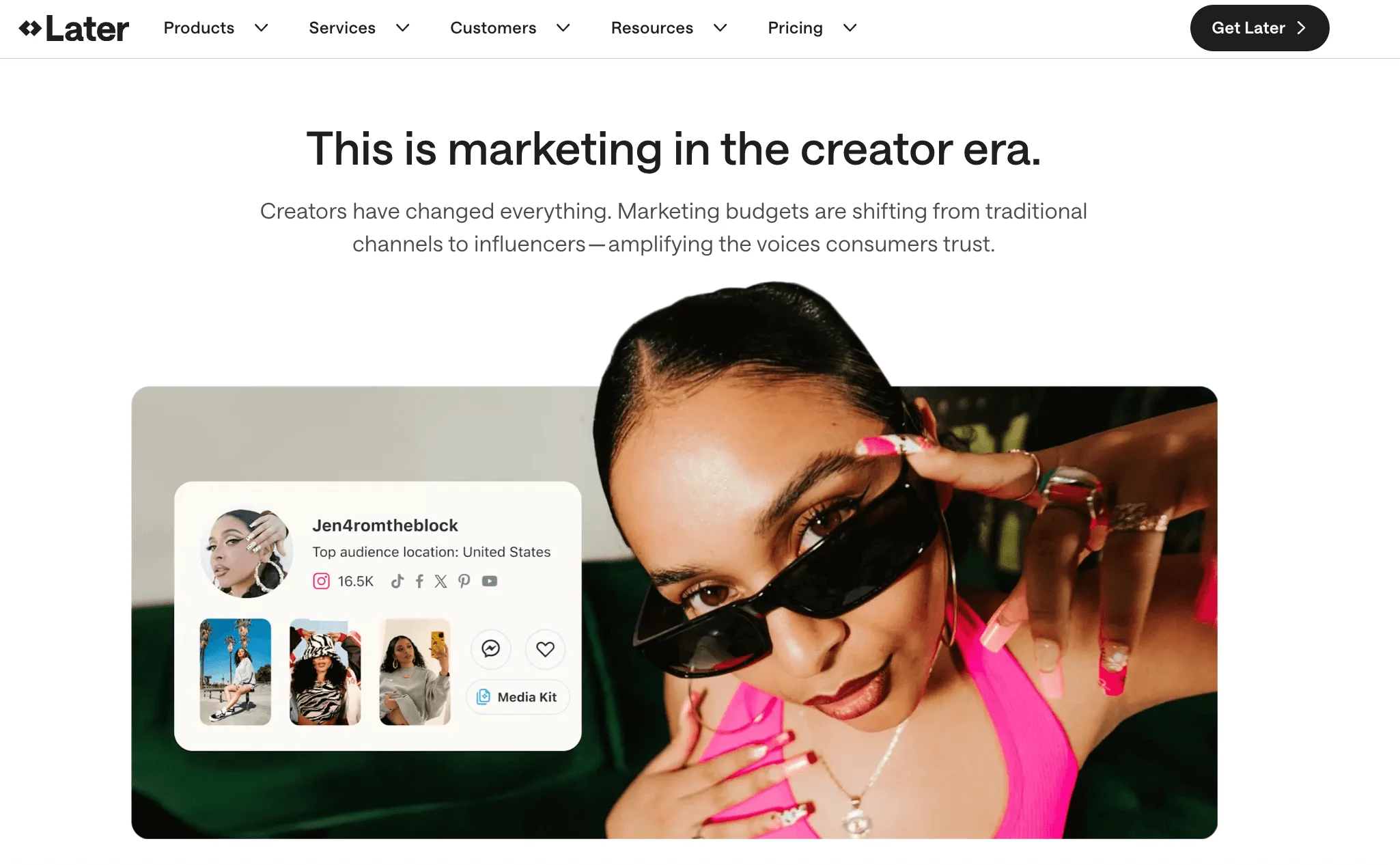
Later is a strong choice for brands that plan visually and think in campaigns rather than isolated posts. It’s especially popular with Instagram-first teams, creators, and ecommerce brands. Compared to tools like Sked Social, Later shifts the focus from heavy automation to intentional planning and visual consistency.
For people that think Sked Social is beginning to feel too rigid or expensive for a visual-led strategy, Later offers a calmer and more creative way to plan content.
Key Features
- Visual content calendar: Drag and drop posts to see how your feed will look before anything goes live.
- Multi-platform scheduling: Schedule content for Instagram, TikTok, Pinterest, Facebook, LinkedIn, and X with platform-specific adjustments.
- Media library: Store, organize, and reuse photos and videos to keep branding consistent.
- Hashtag tools: Save hashtag groups and get suggestions to speed up caption writing.
- Link-in-bio and shoppable pages: Turn posts into traffic and sales drivers with custom landing pages.
- Basic analytics and insights: Track engagement, follower growth, and post performance.
Our Experience with Later
Later feels intuitive from the first use. Compared to Sked Social, it puts far more emphasis on how content looks and flows visually. Planning an Instagram grid or Pinterest schedule feels natural and well thought out.
The media library also makes a difference. Uploading content once and reusing it across campaigns saved time and reduced repetition. This is particularly useful for brands working with large volumes of visual content.
Later isn’t built for deep automation or complex workflows, but that’s part of its charm. For teams focused on aesthetics, consistency, and planning ahead, it offers a refreshing alternative to Sked Social’s more structured approach.
Pricing
Later offers a free plan with limited features. Paid plans generally start around $25/month, scaling based on profiles and advanced features.
Later is more affordable than Sked Social, and it’s better suited for visual-first users who don’t need advanced automation or heavy analytics.
6. Agorapulse ($99/Month)
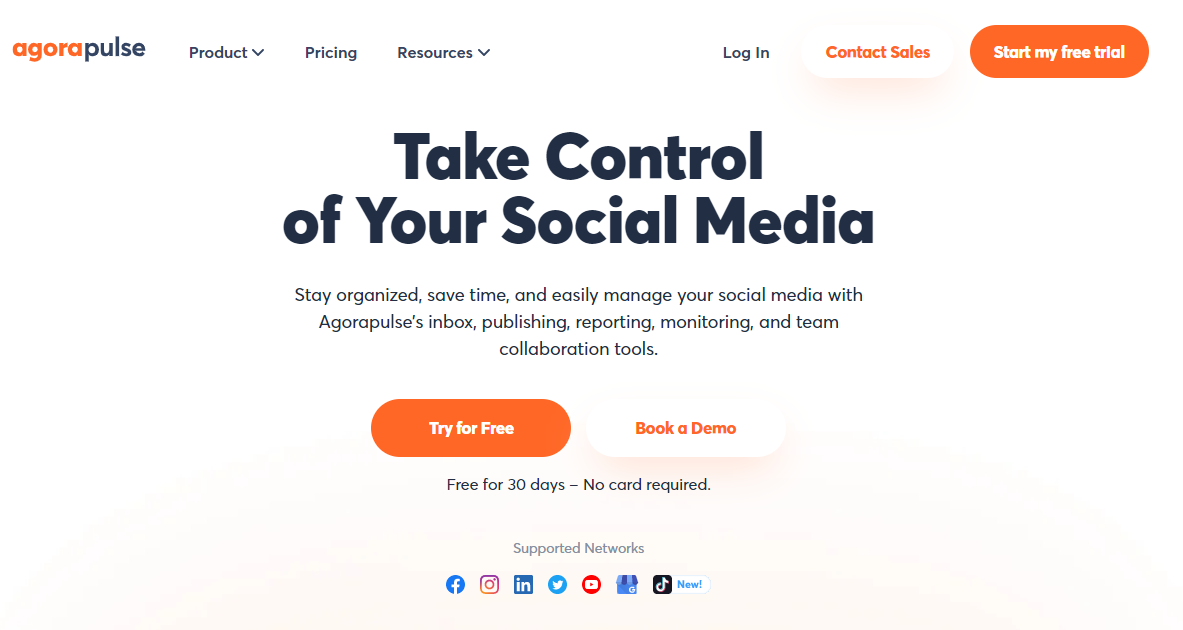
Agorapulse is built for teams that treat engagement as seriously as publishing. While Sked Social focuses mainly on scheduling, Agorapulse goes further by helping brands manage conversations, moderation, and performance from one place.
As a Sked Social alternative, it suits businesses and agencies handling high volumes of comments, messages, and community interactions.
Key Features
- Unified social inbox: Manage comments, mentions, and private messages across platforms in a single inbox.
- Inbox automation rules: Automatically tag, filter, or assign messages to team members based on custom rules.
- Publishing and scheduling tools: Plan and schedule posts across major social networks with a clear calendar view.
- Advanced analytics and reporting: Track engagement, reach, response times, and growth with exportable reports.
- Team collaboration and moderation: Assign conversations, leave internal notes, and prevent duplicate replies.
- Competitor analysis: Compare your performance against competitors to spot trends and opportunities.
Our Experience with Agorapulse
Agorapulse feels more structured than Sked Social from the start. The inbox alone changes how you manage social media. Everything lands in one place, clearly organized, which makes responding faster and less stressful.
The automation rules were especially helpful. Once set up, routine moderation tasks handled themselves, freeing up time for more meaningful interactions. This is something Sked Social doesn’t offer at the same level.
Scheduling is solid, but Agorapulse really shines after posts go live. For brands that care about community management, customer responses, and performance tracking, it offers far more depth than Sked Social.
Pricing
Agorapulse plans typically start around $99/month, with higher tiers available depending on users and features. Compared to Sked Social’s $59/month starting plan, Agorapulse is definitely more expensive.
The extra cost is justified for teams that need stronger engagement tools, automation, and analytics rather than basic scheduling alone.
7. Buffer ($6/Month)
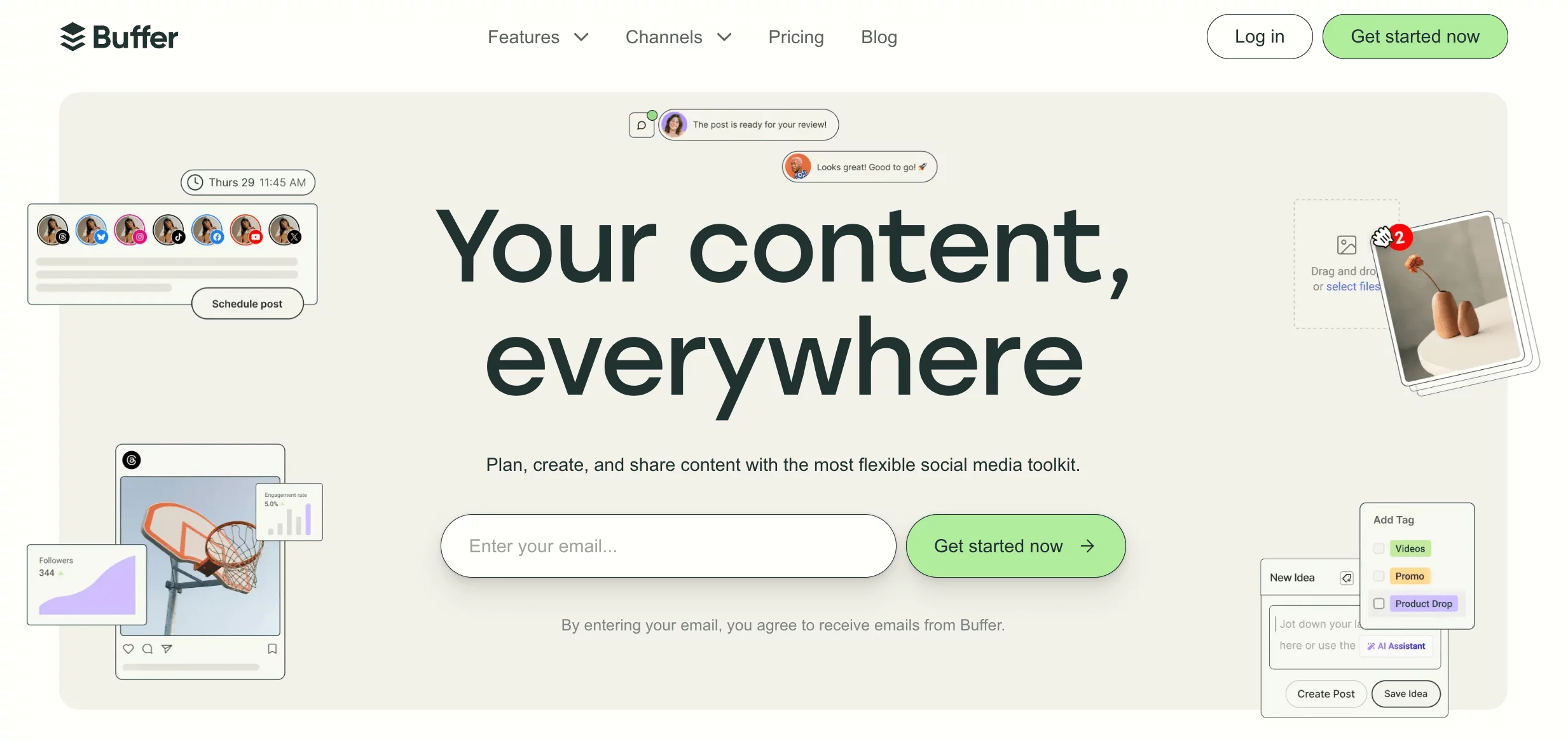
Buffer has always leaned into simplicity, and that’s still its biggest strength today. It doesn’t try to do everything at once. Instead, it focuses on making scheduling, planning, and basic engagement easy to understand and quick to use.
Buffer is a perfect option for small teams, creators, and businesses that want a clean workflow without a steep learning curve. If you have been concerned about Sked Social’s pricing or it’s becoming overly rigid for everyday posting, Buffer offers a more relaxed, straightforward experience.
Key Features
- Multi-platform scheduling: Schedule posts across Instagram, Facebook, LinkedIn, X, TikTok, and Pinterest from one dashboard.
- Content calendar: View all scheduled posts clearly and make quick edits when plans change.
- AI assistant for captions: Get help generating captions, ideas, and variations when you’re stuck.
- Hashtag manager: Save and reuse hashtag groups to speed up posting.
- Engagement tools: Reply to comments and messages from supported platforms without switching apps.
- Analytics and reports: Track post performance, engagement trends, and audience growth with simple reports.
Our Experience with Buffer
Buffer feels calm to use. Compared to Sked Social, there’s less friction and far fewer distractions. Scheduling posts is quick, and the interface makes it hard to get lost, even if you’re new to social media tools.
The AI assistant is handy for everyday use. It’s not overly advanced, but it helps speed up caption writing and idea generation when you’re posting regularly. We also liked how easy it was to manage hashtags and reuse them across posts.
Where Buffer falls short is in deep automation and advanced analytics. But for many users, that’s a fair trade. If your priority is consistency and ease rather than complex workflows, Buffer is a comfortable alternative to Sked Social.
Pricing
Buffer offers a free plan with limited features, which is helpful for beginners. Paid plans usually start around $6-$12 per channel per month, depending on features and usage.
Compared to Sked Social, Buffer is far more accessible. While it doesn’t match Sked Social in advanced scheduling depth, it delivers strong value for users who want reliable posting without premium costs.
8. SocialPilot ($30/Month)
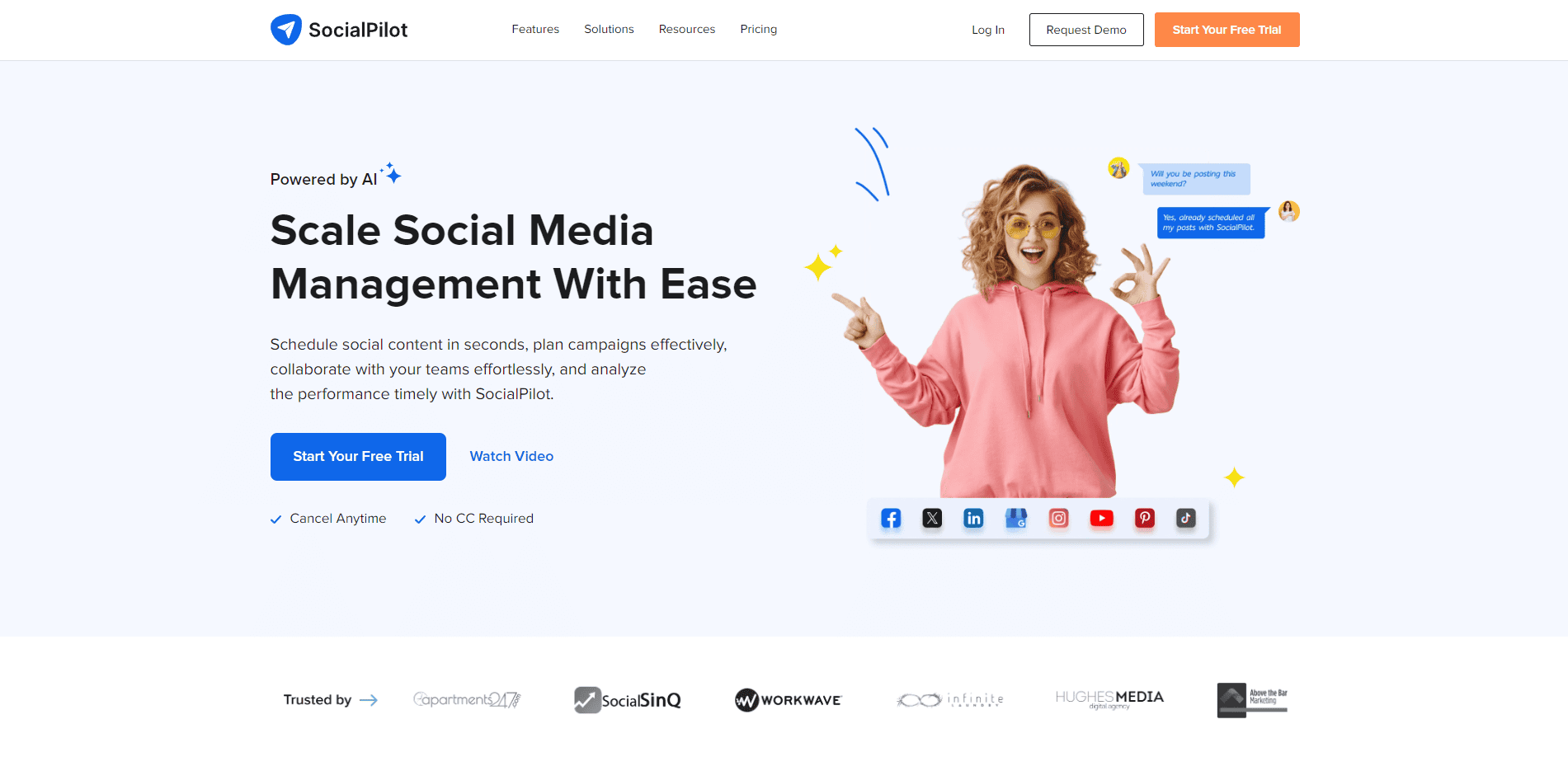
SocialPilot is built with scale in mind. It’s the kind of tool you reach for when scheduling a handful of posts turns into managing dozens of accounts across multiple platforms.
SocialPilot is more practical and no-nonsense compared to Sked Social, especially for agencies and growing teams that want strong features without enterprise-level pricing.
Key Features
- Multi-platform scheduling at scale: Schedule content across up to 7 different social platforms.
- Bulk scheduling and CSV uploads: Upload and schedule large volumes of posts in minutes, ideal for campaigns and content batching.
- Client and team management: Add clients, assign roles, and manage access without mixing accounts or workflows.
- Content calendar: A clean calendar view makes it easy to track what’s scheduled and adjust plans quickly.
- Analytics and reporting: Generate white-label reports to track engagement, reach, and growth across platforms.
- RSS feed automation: Automatically share blog posts and updates from connected feeds.
Our Experience with SocialPilot
SocialPilot immediately stood out for how much it lets you do at once. Compared to Sked Social, managing multiple accounts felt less restrictive and far more cost-efficient. Bulk scheduling worked smoothly, which is a big win when planning weeks of content ahead.
We also liked how client management was handled. Keeping brands separated while working from one dashboard reduced friction and made daily workflows cleaner. Reporting was straightforward and easy to share, especially for agency use.
The interface isn’t flashy, but it’s functional. SocialPilot focuses more on efficiency than aesthetics. For teams that value speed, volume, and control over visual planning, that trade-off makes sense.
Pricing
SocialPilot’s plans start at $30-$42/month. Compared to Sked Social’s $59/month base price, SocialPilot offers better value for teams managing multiple accounts.
It’s a strong alternative for anyone who needs scale without jumping into high-cost plans.
9. CoSchedule ($29/Month)
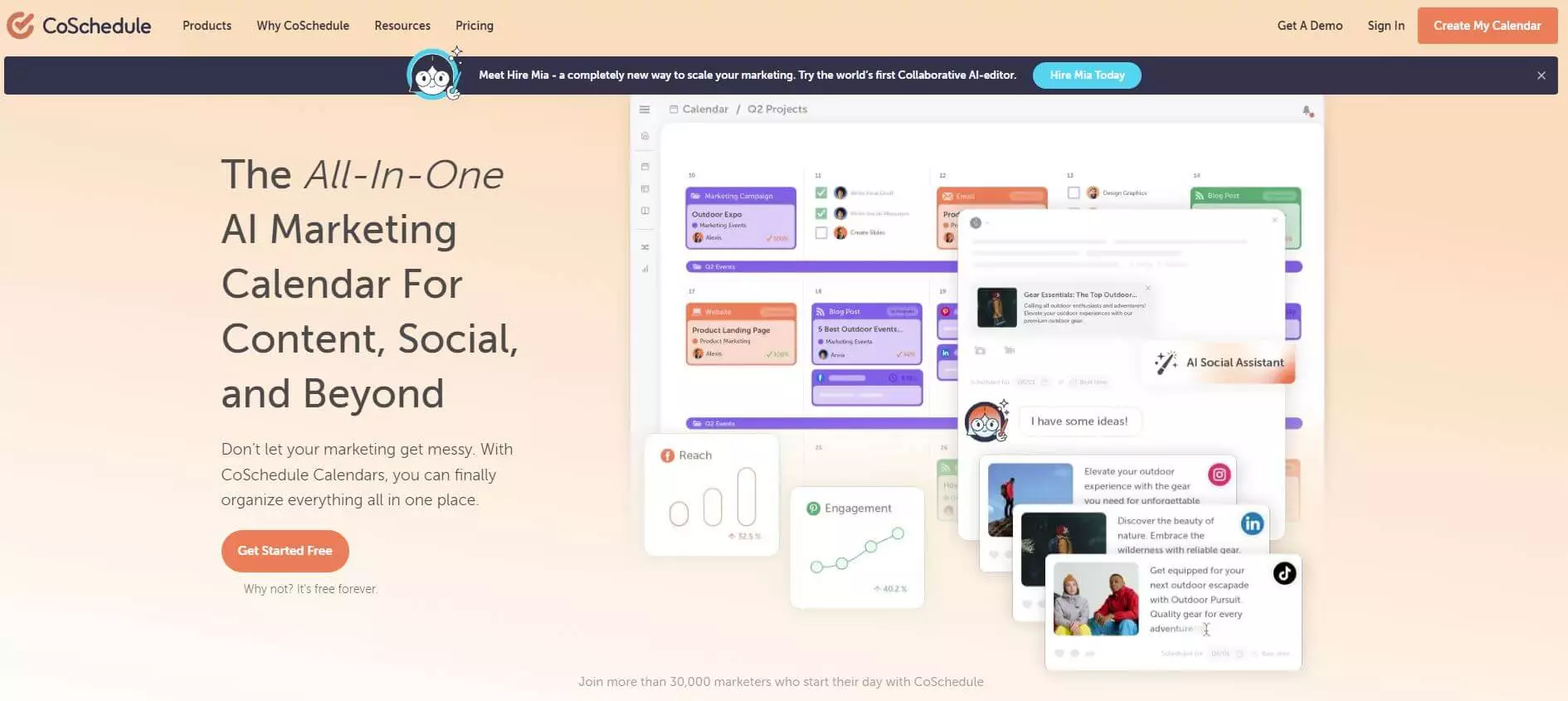
CoSchedule sits slightly outside the typical “social scheduler” box. It’s built for teams that plan content as part of a wider marketing system, not just as individual posts. The tool works best for businesses that connect social media with blogs, campaigns, and launches rather than treating it as a standalone task.
Unlike Sked Social that feels a little too focused on posting alone, CoSchedule offers a more connected way to plan and execute.
Key Features
- Unified marketing and social calendar: View social posts alongside blog content, campaigns, and tasks in one shared calendar.
- Drag-and-drop scheduling: Easily reschedule posts and campaigns when priorities shift.
- ReQueue automation: Automatically recycle evergreen content to keep accounts active without manual scheduling.
- Team collaboration tools: Assign tasks, manage approvals, and track progress across teams.
- AI-powered assistance: Get help generating post ideas and optimizing publishing times.
- Performance tracking: Monitor which posts and campaigns perform best over time.
Our Experience with CoSchedule
CoSchedule feels more strategic than Sked Social. Instead of focusing only on when a post goes live, it encourages you to think about why you’re posting and how that content supports bigger goals.
The calendar view is the standout feature. Seeing everything in one place made planning less chaotic, especially when social posts were tied to blog releases or campaigns. ReQueue also helped fill gaps automatically without constant attention.
There is a learning curve, especially if you’re used to lighter tools. But once set up, CoSchedule brings structure that Sked Social doesn’t really offer. For teams managing multiple content types, that structure becomes a major advantage.
Pricing
CoSchedule offers a free plan with limited features. Paid plans for social media users typically start around $29/month, with more advanced marketing suites available via custom pricing. While CoSchedule’s doesn’t match Sked Social in direct Instagram-first automation, it delivers broader planning and collaboration value for content-driven teams.
10. Sprout Social ($199/Month)
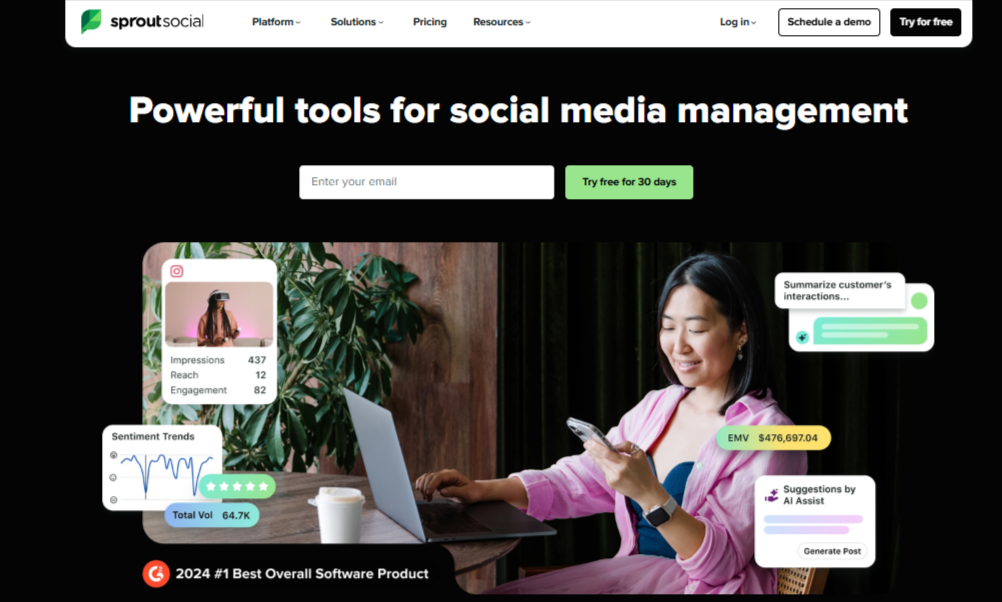
Sprout Social is built for teams that want deep insight into how their social media actually performs. It goes far beyond scheduling and puts a lot of emphasis on analytics, engagement, and structured workflows.
The social media management tool makes sense for mid-sized to large teams that need clarity, reporting, and control rather than just automation.
Key Features
- Advanced publishing and scheduling: Plan and publish posts across major platforms with flexible scheduling and optimization tools.
- Unified social inbox: Manage messages, comments, and mentions from multiple networks in one organized inbox.
- AI-powered message prioritization: Surface important conversations first based on sentiment and urgency.
- In-depth analytics and reporting: Track engagement, reach, paid vs organic performance, and audience trends with interactive reports.
- Social listening and trend analysis: Monitor brand mentions, topics, and sentiment to stay ahead of conversations.
- Team collaboration and governance: Role-based permissions and approval workflows help maintain consistency at scale.
Our Experience with Sprout Social
Sprout Social feels polished and data-driven from the first login. Compared to Sked Social, it offers far more visibility into what’s working and why. The analytics alone change how decisions are made, especially for teams reporting to stakeholders or clients.
The inbox is another highlight. Conversations are easy to prioritize and assign, which is helpful when engagement levels are high. This makes Sprout Social feel less like a posting tool and more like a customer communication hub.
That said, it’s not built for simplicity. There’s a learning curve, and smaller teams may feel overwhelmed by the depth of features. But for organizations that rely on insights and structure, Sprout Social delivers real value.
Pricing
Sprout Social’s pricing typically starts at $199 per user per month, with higher tiers available for advanced features. Compared to Sked Social, Sprout Social pricing is significantly more expensive.
However, the higher cost reflects its focus on analytics, listening, and enterprise-grade workflows rather than basic scheduling.
11. Metricool ($18/Month)
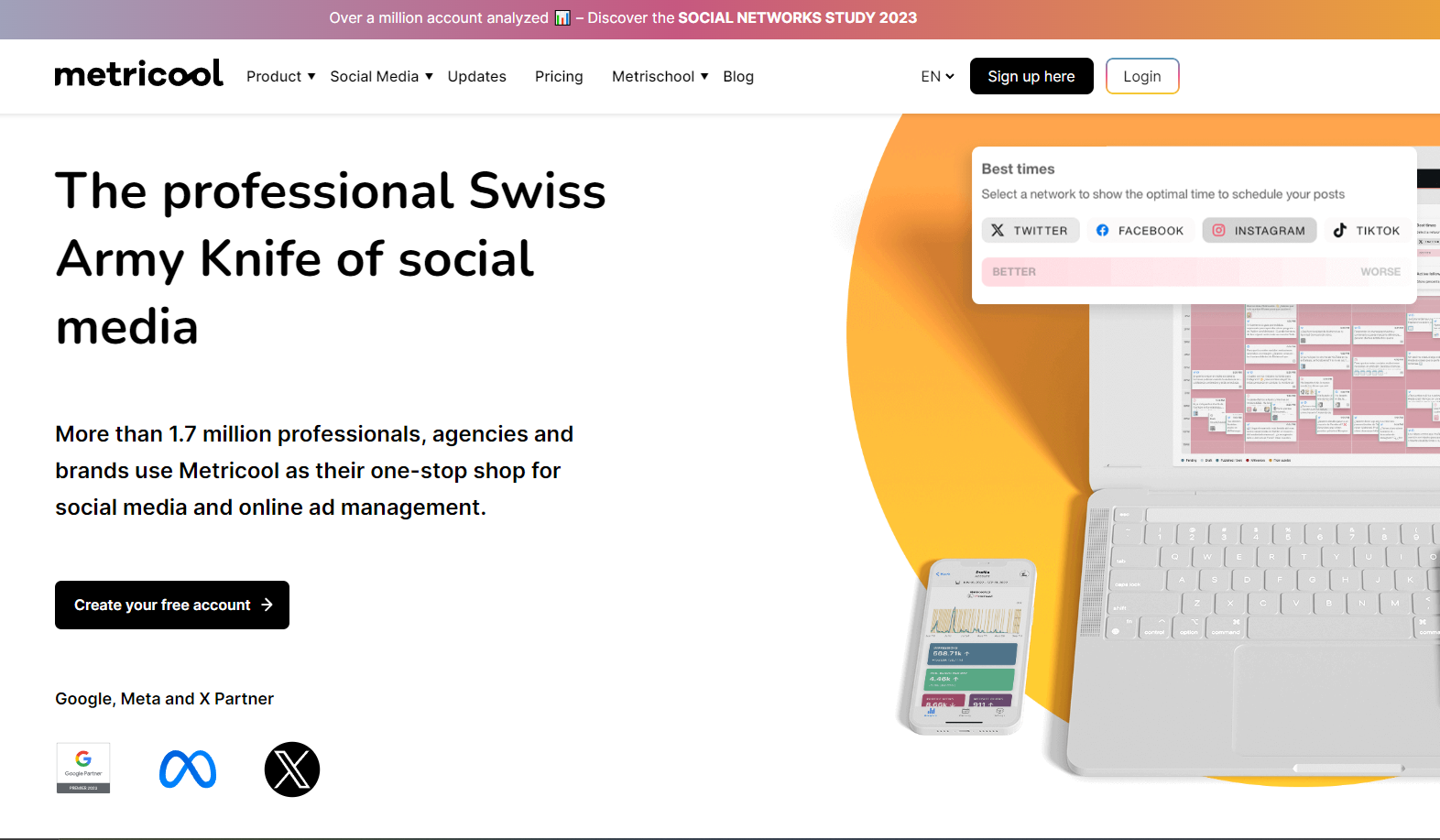
Metricool is a solid Sked Social alternative for people who want clearer answers from their data. It blends scheduling with strong analytics, making it especially appealing to marketers who care about what’s working, not just posting on time.
Metricool is a good fit for creators, marketers, and small teams that want visibility into performance without paying enterprise prices.
Key Features
- Multi-platform scheduling: Schedule posts across Instagram, Facebook, LinkedIn, X, etc., from one dashboard.
- Strong analytics and performance tracking: Track engagement, reach, clicks, follower growth, and content performance with clear charts and breakdowns.
- Best-time-to-post insights: Identify when your audience is most active and schedule posts accordingly to improve reach.
- Competitor analysis: Compare your profiles against competitors to understand benchmarks and spot opportunities.
- Hashtag and content performance tracking: See which hashtags and post types are driving the most engagement.
- Reporting and exports: Generate clean reports that are easy to understand and share with clients or stakeholders.
Our Experience with Metricool
Metricool stood out for how easy it made performance analysis. Compared to Sked Social’s more limited analytics, Metricool gives you a clearer picture of trends over time, not just surface-level metrics. This made it easier to adjust content strategy instead of guessing.
Scheduling is straightforward and reliable. While it doesn’t push heavy automation like queues or evergreen recycling as aggressively as some tools, it does the basics well and ties them neatly into analytics.
We also liked how accessible it felt. The dashboard isn’t cluttered, and data is presented in a way that makes sense even if you’re not deeply analytical. For users who want smarter decisions without complexity, Metricool fits nicely.
Pricing
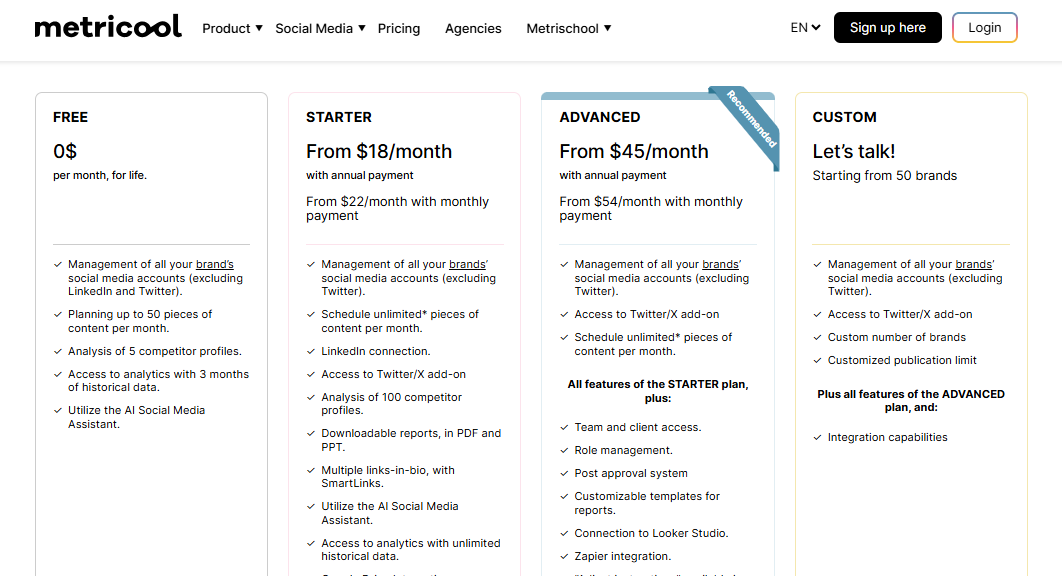
Metricool offers a free plan with limited features, which is useful for testing. Paid plans starts at $18/month with higher tiers available, offering more profiles and advanced reporting.
When we put Metricool side by side Sked Social, it feels far more affordable. While it may not match Sked Social’s Instagram-first automation depth, it delivers better analytics and value for users focused on insights and performance.
Choosing the Right Sked Social Alternative for Your Needs
Not every Sked Social alternative will fit the same way. The right choice depends on how you work, what you manage daily, and where you want your social strategy to go next.
Before switching tools, it helps to step back and look at a few practical factors that actually matter in real use.
1. Budget and pricing structure
Some tools look affordable at first, but become expensive as you add profiles, users, or features. Check not just the starting price, but how pricing scales. If you’re managing only a few accounts, a simpler tool may be enough. If you’re growing, platforms like OnlySocial or SocialPilot tend to offer more value without steep jumps between plans.
2. Supported platforms
Make sure the tool supports all the platforms where your audience is active. Some schedulers focus heavily on Instagram, while others support networks like Google Business Profile, Threads, Mastodon, or TikTok. Missing just one key platform can force you back into manual posting.
3. Level of automation you need
Think about how hands-on you want to be. If you prefer evergreen queues and “set it once” systems, tools like Metricool or OnlySocial are strong options. If you enjoy planning posts manually and visually, tools like Later or Planoly may suit you better.
4. Team collaboration and approvals
If you work with a team or clients, collaboration matters. Look for tools that offer shared calendars, approval workflows, and clear user roles. Platforms like Planable or Agorapulse shine here, while simpler schedulers may feel limiting.
5. Analytics and performance insights
Posting is only half the job. Understanding what works is what improves results. If you rely on reporting and insights to guide decisions, tools with stronger analytics may be worth the investment. In that case, you may want to consider tools like Metricool or Sprout Social.
Final Note
Sked Social can be a solid tool, but it’s not the right long-term fit for everyone. As your social media efforts grow, issues like pricing, limited analytics, or workflow constraints start to matter more.
The alternatives covered in this guide show that you have plenty of options, each offering a different balance of automation, collaboration, and insight.
The key is choosing a tool that supports how you work today and where you’re headed next. Some teams need better analytics, others want smoother approvals, and many simply want better value for money.
Once you’re clear on your priorities, finding a Sked Social alternative that feels like an upgrade, not just a replacement, becomes much easier.
FAQs
What is Sked Social mainly used for?
Sked Social is primarily used for scheduling and publishing social media posts, especially for Instagram-focused workflows. It also offers basic collaboration and analytics features.
Why do people look for Sked Social alternatives?
Most users start looking elsewhere due to pricing concerns, limited analytics, syncing issues, or the steep jump between pricing tiers as their needs grow.
Are Sked Social alternatives cheaper?
Many are. Several alternatives offer similar or broader features at a lower starting price, and some scale more gradually as you add accounts or users.
Which Sked Social alternative is best for small businesses?
Tools like OnlySocial, Buffer, and Metricool are often a good fit for small businesses because they balance affordability, automation, and ease of use.
Is OnlySocial a good replacement for Sked Social?
Yes. OnlySocial offers wider platform support, bulk scheduling, team collaboration, analytics, and a unified inbox at a lower starting price, making it a strong alternative for growing teams.