How the LinkedIn Algorithm Works [Latest Update]
LinkedIn isn’t the kind of platform where a random post goes viral overnight. It never has been. And in 2025, the algorithm has doubled down on that idea.
Instead of chasing entertainment or shock value, LinkedIn pushes content that teaches something, sparks a useful conversation, or helps someone do their job better.
That means the creators who understand how the algorithm works instantly have an advantage.
The good news is that the system isn’t mysterious. Once you know what LinkedIn rewards and what it quietly filters out, you start showing up in more feeds, reaching the right people, and getting engagement that actually leads to opportunities.
In this guide, we break down how the LinkedIn algorithm works today. You’ll see what’s changed in the latest update and how to create content it genuinely wants to promote.
Table of Contents
- 1 What Is the LinkedIn Algorithm (And What Makes It Different?)
- 2 How the LinkedIn Algorithm Works in 2025: The 3-Step Process
- 3 Key Ranking Factors the LinkedIn Algorithm Looks At
- 4 Recent LinkedIn Algorithm Changes (2025 Update)
- 5 What Content Types Does the LinkedIn Algorithm Love?
- 5.1 1. Question-Based Posts That Spark Real Conversations
- 5.2 2. Conversational, Story-Driven Posts
- 5.3 3. Timely Industry Updates and Insights
- 5.4 4. Visual Content: Carousels, Infographics, and Even Light Humor
- 5.5 5. Native Video and LinkedIn Live
- 5.6 6. Employee-Focused and Human-Centric Content
- 5.7 7. Event Coverage and Behind-the-Scenes Moments
- 5.8 8. Bite-Sized Advice and Quick Lessons
- 6 How to Optimize Your Content for the LinkedIn Algorithm
- 6.0.1 Be Relevant and Informative
- 6.0.2 Mix Up Your Formats – Don’t Just Post Links
- 6.0.3 Use Mentions and Hashtags Sparingly (But Smartly)
- 6.0.4 Post at the Right Time (and Stay Consistent)
- 6.0.5 Encourage Meaningful Engagement (Not Empty Comments)
- 6.0.6 Engage with Others, Not Just Yourself
- 6.0.7 Learn from Your Analytics and Double Down on What Works
- 7 Making the LinkedIn Algorithm Work for You (Not Against You)
- 8 Final Note
- 9 FAQs
What Is the LinkedIn Algorithm (And What Makes It Different?)
The LinkedIn algorithm is a recommendation system that decides which posts show up in your feed, and in what order. But unlike most social platforms, LinkedIn doesn’t reward shock value, virality, or entertainment-first content.
Its entire purpose is to surface posts that feel useful, credible, and professionally relevant to each user.
Instead of chasing views, the algorithm focuses on one thing: relevance. It learns what you care about based on your skills, the people you interact with, the industries you follow, and the topics you engage with regularly.
Then it fills your feed with posts it believes will help you work smarter, learn something new, or connect with people in your field. This is why LinkedIn works so differently from TikTok, Instagram, or X.
Those platforms push content that’s fun, surprising, or emotionally explosive. LinkedIn intentionally does the opposite – it slows the feed down and prioritizes meaningful conversations over viral moments.
And with more than one billion members and billions of posts competing for attention every day, the algorithm has to be selective. It doesn’t just ask, “Is this interesting?” It asks:
- “Is this professionally useful?”
- “Is this coming from someone the user trusts or knows?”
- “Does this fit the user’s industry or interests?”
- “Is this creator an expert on the topic?”
Once you understand that LinkedIn is built to reward value and expertise – not virality – the entire platform becomes easier to navigate.
How the LinkedIn Algorithm Works in 2025: The 3-Step Process
The LinkedIn algorithm might feel complicated at first glance, but the way it evaluates your posts is surprisingly straightforward once you break it down.
Every piece of content goes through the same three steps, and the outcome of each step determines how far your post will travel.
Let’s walk through the process in simple terms.
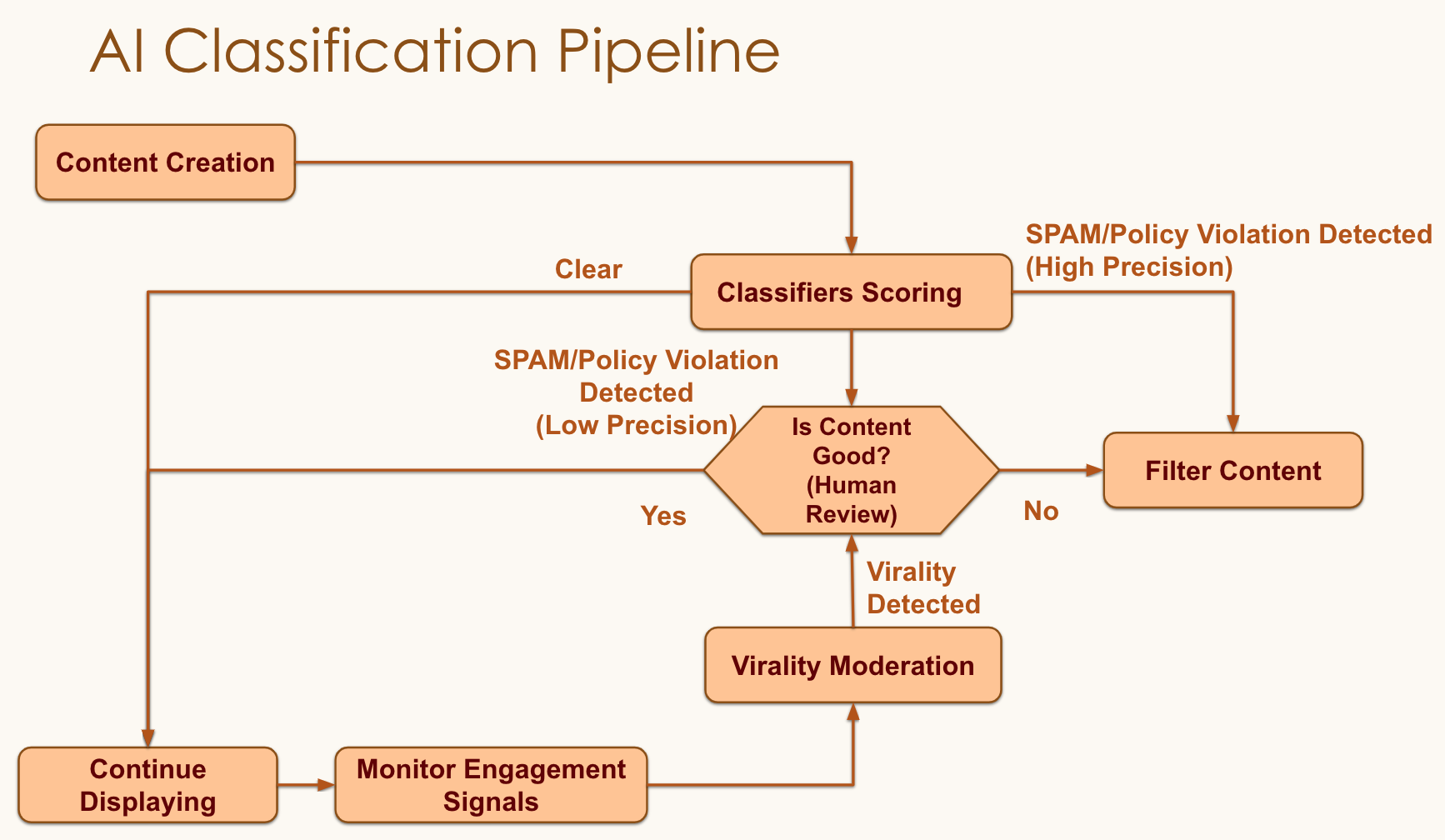
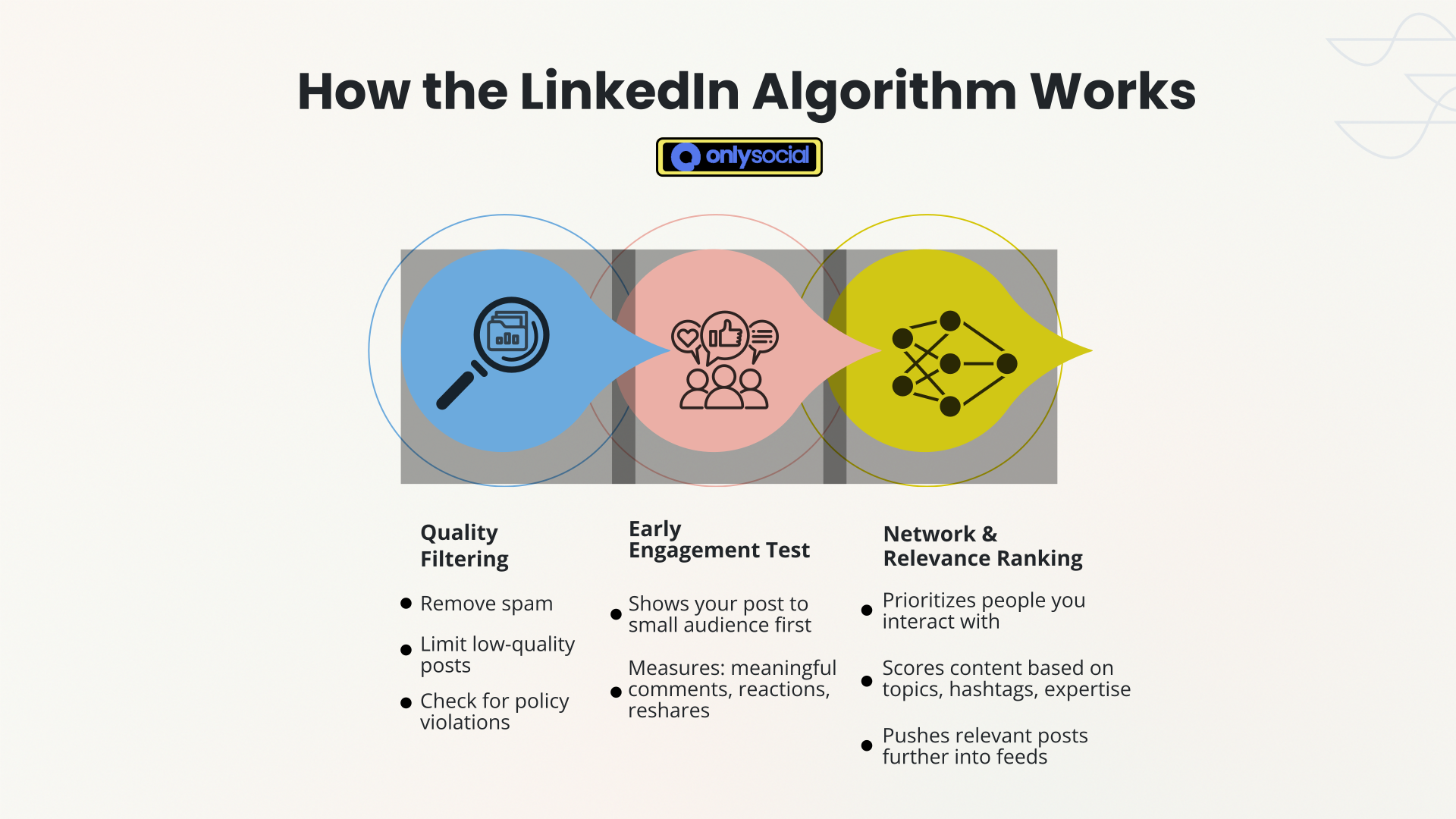
Step 1: Quality Filtering – Spam, Low Quality, or High Value
The moment you hit “Post,” LinkedIn scans your content to decide where it belongs. This first stage is all about filtering out noise.
The system checks for things like:
- spammy behavior (tagging random people, keyword stuffing, link dumping)
- sloppy or error-heavy writing
- too many hashtags
- posting too frequently
- misleading formatting or engagement-bait tactics
If the algorithm detects obvious spam, your post’s reach shrinks immediately. If it isn’t sure, it may send the post for human review. But if your content looks useful, original, or clearly tied to your expertise? It moves on to the next stage.
This is where clean, relevant, and thoughtful content already puts you ahead of most users.
LinkedIn shared a flowchart detailing what this process looks like:
Step 2: Engagement Testing – The First Hour Matters
Once your post passes the initial filter, LinkedIn quietly tests it with a small slice of your audience. Think of this as a soft launch – the platform is checking whether real people find your post worth interacting with.
LinkedIn watches for:
- comments (especially meaningful ones)
- reactions
- reposts
- dwell time (how long people pause to read)
If your post gets early engagement, LinkedIn treats it as a sign that the content is helpful or interesting and it starts showing the post to more of your network.
If engagement stays strong, your reach expands beyond first-degree connections to second- and third-degree ones.
Remember, the algorithm isn’t looking for hype. It’s looking for conversation.
Step 3: Network & Relevance Ranking – Who Should See This Next?
Once LinkedIn sees that your post is performing well, it shifts into full recommendation mode. But it doesn’t show your post to everyone. It shows it to the people it believes will genuinely care.
This is based on:
- who you regularly interact with
- shared interests, skills, and hashtags
- people who follow topics related to your post
- users with similar job roles or career paths
- people who engage with creators similar to you
LinkedIn deeply prioritizes relevance. That’s why some posts you made two weeks ago suddenly reappear with new comments – the algorithm is resurfacing them to people who might benefit now.
In short, the more consistently you talk about certain topics, and the more your network engages with those themes, the easier it becomes for LinkedIn to understand your “content identity” and push your posts to the right audience.
Key Ranking Factors the LinkedIn Algorithm Looks At
The LinkedIn algorithm isn’t as mysterious as people make it seem. In reality, it looks at a handful of signals to decide whether your post deserves to travel. And at the core of all those signals is one idea: LinkedIn wants to show people content that feels useful, trustworthy, and genuinely relevant.
Here’s how it decides that.
1. Content Quality Signals
LinkedIn starts by assessing the quality of your content – not just the topic, but the clarity, formatting, and overall value.
Posts with clear thoughts, real expertise, and a bit of structure tend to perform well because they keep people reading for longer. That “dwell time” tells LinkedIn your content is worth slowing down for.
On the other hand, messy posts, engagement bait, or vague motivational fluff tend to lose momentum fast. The algorithm spots this quickly and limits how far those posts travel.
High-quality posts don’t need to be long. They just need to feel thoughtful, relevant, and written with intention.
2. Relationship & Network Signals
LinkedIn doesn’t throw your content into random feeds. Instead, it starts with people you already have some kind of relationship with. LinkedIn prioritizes posts from:
- people you frequently interact with
- colleagues or industry peers
- accounts you’ve messaged privately
- creators whose content you consistently engage with
If those people engage with your post, the algorithm sees that as a green light and expands your reach.
This is why commenting on other people’s posts helps your own reach. The more active your two-way interactions, the more you appear in each other’s feeds.
Think of it as LinkedIn’s way of saying:
“Show your network you care, and we’ll show your network your content.”
3. Relevance & Topical Fit
LinkedIn doesn’t push content randomly. It tries to match posts with the right audiences based on behavior and interests.
It uses signals like:
- hashtags you follow
- topics you regularly engage with
- skills listed on your profile
- your job title and industry
- the themes you post about most often
- who your network typically interacts with
If you consistently share insights on hiring, marketing, AI, design, finance, or another niche, LinkedIn starts to categorize you as a voice in that space. And once the platform understands your “content lane,” it becomes easier for your posts to reach the right people.
4. Behavior & Activity Signals
LinkedIn rewards creators who act like members of the community, not broadcasters. If you only show up when you want to post something, the algorithm doesn’t have much incentive to push your content.
But when you regularly comment on posts, reply to people who engage with you, reshare with thoughtful context, or join ongoing discussions, the system treats you differently.
Consistent activity signals that you’re here to participate – and platforms always amplify the people who keep conversations alive. For LinkedIn, that’s the whole point.
Recent LinkedIn Algorithm Changes (2025 Update)
LinkedIn has been rolling out steady updates over the past year, and while the core ranking system hasn’t changed dramatically, several new tweaks are shaping how posts perform in 2025.
These updates all push toward one direction: more expertise, more relevance, and more meaningful conversations. If you’ve noticed certain posts suddenly doing better (or worse), these changes are probably the reason.
Bigger Boost for Experts and Original Insight
LinkedIn is now prioritizing posts that clearly come from experience. If you consistently share insights in one area – whether that’s HR, design, AI, consulting, sales, or leadership – the platform begins to recognize you as a “topic expert.”
Once that recognition kicks in, your posts get distributed more widely to people who care about that subject.
This means your best-performing posts in 2025 often won’t be the ones chasing virality. They’ll be the ones where you share what you personally know – frameworks, mistakes, lessons, stories, unique angles.
Older Posts Can Now Resurface Based on Relevance
This is one of the biggest shifts in 2025. LinkedIn has confirmed that it’s now resurfacing posts that are two, three, even four weeks old – but only if they’re relevant to what individual users are currently interacting with.
This means evergreen content has a longer shelf life. Your posts no longer need to “hit” in the first 48 hours to survive. If the content is strong and aligned with your niche, LinkedIn will keep showing it to people who may find it useful.
This also reduces pressure to post daily. One great post can travel for weeks.
Less Reward for Clickbait and Engagement Bait
LinkedIn has finally tightened its rules around engagement bait. Posts like “Comment YES if you agree” or “React with a 💚 for this option” don’t go far anymore. The platform can now detect these tactics faster and down-rank them almost immediately.
What LinkedIn rewards instead is real discussion. A thoughtful question, a strong opinion, or a clear prompt for conversation performs far better than anything that feels forced.
Early Engagement Still Matters
The “first-hour rule” is still alive, but LinkedIn has refined it. Instead of looking only at likes or quick reactions, the algorithm now prioritizes:
- meaningful comments
- replies within comment threads
- how long people spend reading
- whether the post sparks back-and-forth conversation
So the quality of the initial engagement matters just as much as the speed.
Native Content Gets a Major Push
If you’ve been seeing fewer external links in your feed, it’s not your imagination. LinkedIn is actively promoting native content, especially text posts, carousels, and videos uploaded directly to the platform.
This doesn’t mean you can’t share links. But if the link is the entire point of the post, your reach will likely shrink. A good workaround is adding the link in the comments or sharing valuable context before mentioning it.
What Content Types Does the LinkedIn Algorithm Love?
LinkedIn may not be built for virality, but it absolutely rewards content that sparks conversation, teaches something useful, or feels authentically human.
In 2025, the algorithm’s favorites are clear – and the good news is that none of these require fancy production or huge budgets. They simply require intention.
1. Question-Based Posts That Spark Real Conversations
Questions are still one of the most reliable ways to generate meaningful engagement on LinkedIn. They invite people in. They make the feed feel like a roundtable instead of a bulletin board. And because LinkedIn prioritizes posts that lead to discussion, question-led posts naturally travel farther.
These questions don’t have to be complicated:
- “What’s a lesson you wish you learned 5 years earlier?”
- “What’s one overhyped trend in our industry right now?”
- “What’s the best advice a mentor ever gave you?”
Simple, open-ended questions work because they tap into people’s desire to share their experience – something LinkedIn was built for.

2. Conversational, Story-Driven Posts
LinkedIn used to be formal and stiff. Not anymore. In 2025, conversational posts – ones that sound like a real human telling a story – perform incredibly well. They hold attention, create emotional connection, and encourage people to respond with their own experiences.
It could be a quick behind-the-scenes moment, a lesson from a project, or a mistake you learned from. The key is honesty and clarity. When a post feels personal and grounded, people stay longer, and the algorithm responds to that.
3. Timely Industry Updates and Insights
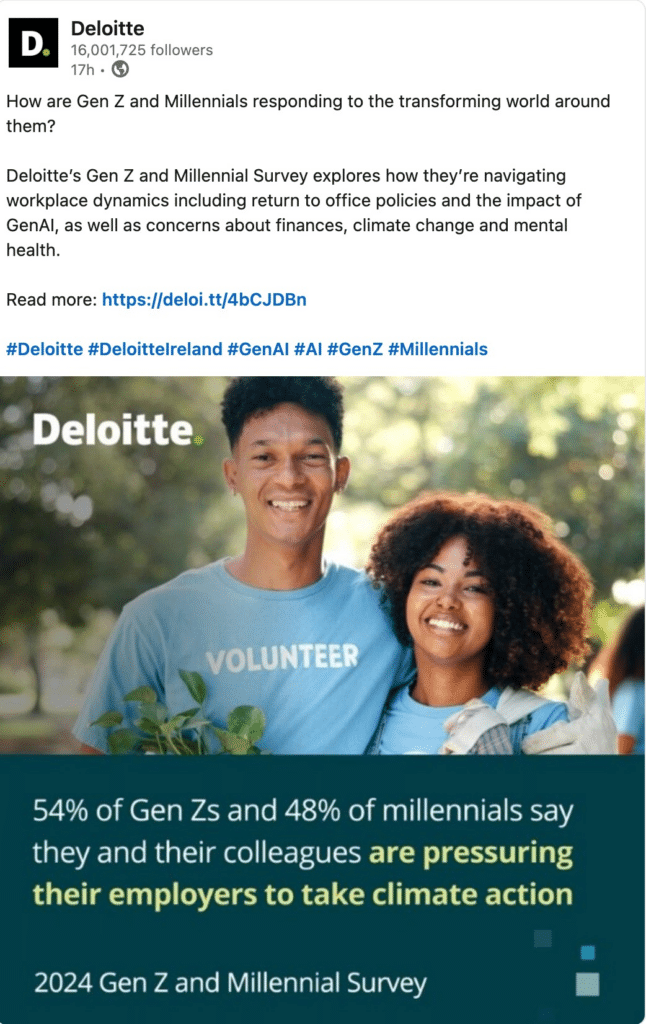
People rely on LinkedIn to understand what’s happening in their field. So posts that break down new trends, share data, or explain a change in the industry tend to get strong engagement. They position you as someone with a pulse on what matters.
Commentary doesn’t need to be long to work well. Even a small take on a big story can travel if it helps readers understand something faster or from a new angle.

4. Visual Content: Carousels, Infographics, and Even Light Humor
Visual posts consistently outperform text-only ones because they make people pause – and LinkedIn tracks that pause as “dwell time,” a key ranking signal.
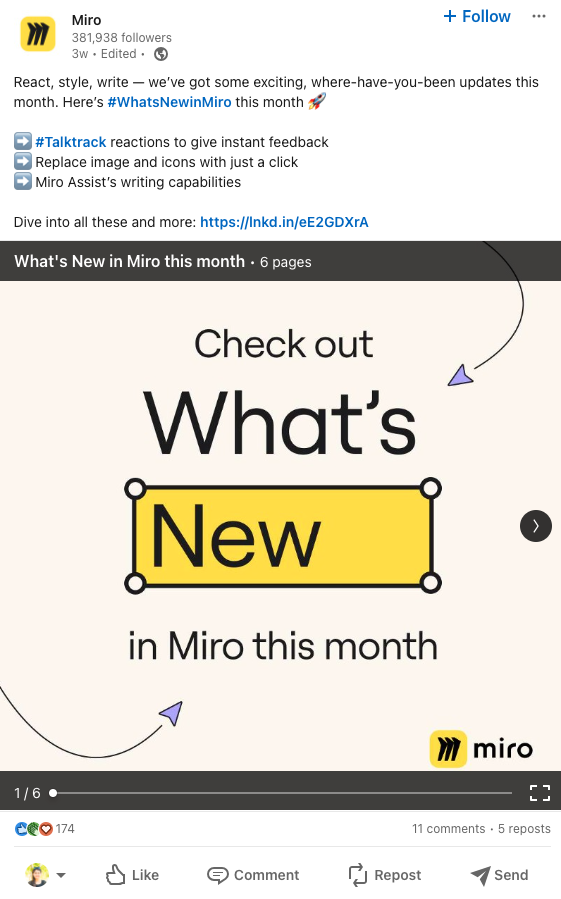
Carousels are especially strong performers. They let you teach or explain something step-by-step. Infographics also do well because they compress information into bite-sized visuals.
And yes, in 2025, even tasteful memes perform surprisingly well, especially when they reflect an industry pain point or relatable moment.
The platform is still professional, but it’s no longer allergic to personality.
5. Native Video and LinkedIn Live
Native video continues to be a strong format. LinkedIn rewards videos uploaded directly to the platform over external links like YouTube. These videos don’t need to be polished; quick tutorials, behind-the-scenes clips, or short explanations often outperform higher-budget productions because they feel more real.
LinkedIn Live also continues to grow. Q&As, event coverage, expert interviews – anything interactive does well. Live video creates real-time engagement, which LinkedIn values highly.
Below is a video post by Mailchimp, showing how much engagement videos can get on the platform.
6. Employee-Focused and Human-Centric Content
People love seeing the human side of a company. Posts that highlight employees, share team moments, or celebrate internal wins tend to attract meaningful feedback.
They make your brand feel approachable and real – two qualities that perform strongly in the algorithm.
You don’t need elaborate production. A candid team photo works as well as a polished campaign.

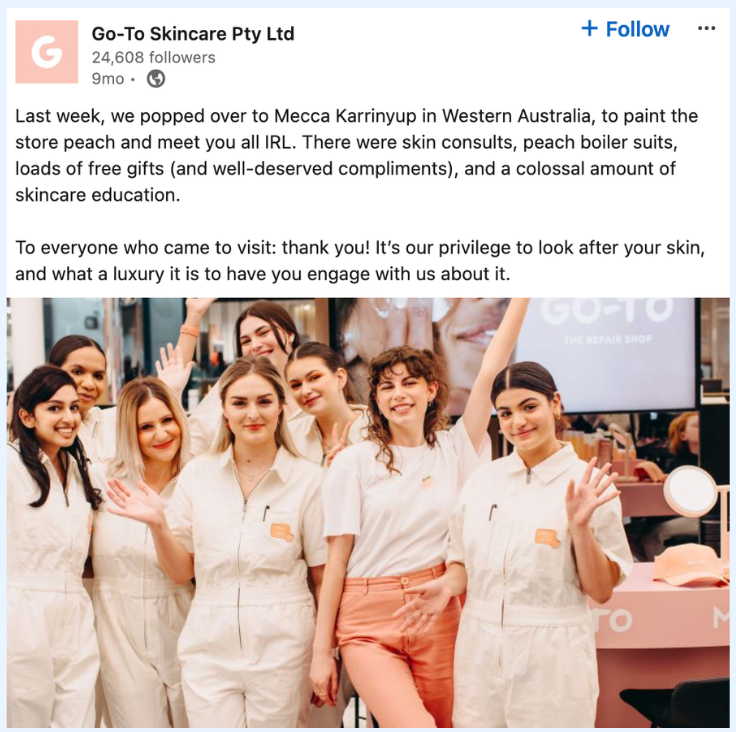
7. Event Coverage and Behind-the-Scenes Moments
Whether you’re attending a conference, hosting a webinar, or showcasing a new initiative, event-focused posts give your audience something to connect with. They can be fun, educational, or even aspirational.
Events naturally spark comments because people involved – or those who want to be part of that world – jump into the conversation.
8. Bite-Sized Advice and Quick Lessons
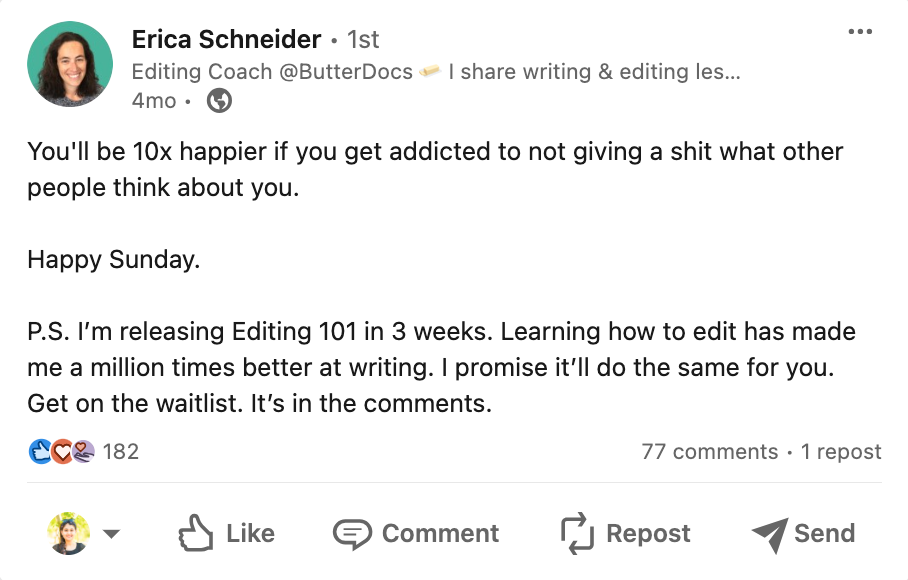
Some of the best-performing posts on LinkedIn are short, simple, and packed with value. A quick story, a two-line insight, a small idea people can apply today – these formats spread because they’re easy to digest and easy to share.
Users no longer want dense corporate messaging. They want clarity and usefulness.
How to Optimize Your Content for the LinkedIn Algorithm
Understanding the algorithm is one thing. Shaping your content so the algorithm actually wants to push it is another. The good news is that you don’t need hacks or gimmicks to make LinkedIn work for you. What you need is relevance, clarity, and consistency.
Here’s how to create posts the algorithm naturally favors.
Be Relevant and Informative
LinkedIn surfaces posts that are useful to the people reading them. That means the more your content overlaps with your audience’s skills, interests, and day-to-day challenges, the more likely your posts are to appear in their feeds.
Take time to understand what your audience cares about – whether that’s hiring trends, marketing tactics, AI updates, leadership advice, or industry breakdowns. Then create content that connects your expertise with their needs.
The algorithm rewards depth, so stay in your lane and build a recognizable voice around a few core topics.
Mix Up Your Formats – Don’t Just Post Links
Posting only external links is one of the fastest ways to hurt your reach. LinkedIn prefers content that keeps people on the platform, such as text posts, visuals, carousels, and native video.
You can still share articles, case studies, or blog posts, but wrap them in a thoughtful takeaway instead of dropping a link with no context. Or post the link in the comments while giving value in the main post.
The more you vary your format, the more signals you give LinkedIn that your content is worth distributing widely.
Tagging others can increase distribution, but only if the people you tag are likely to engage. Tag unrelated people or companies, and the algorithm treats it like spam.
The same applies to hashtags. Stick with two or three strong, specific hashtags that genuinely match your topic. Using ten might feel like you’re boosting discoverability, but LinkedIn reads it as over-optimization and quietly reduces your reach.
Post at the Right Time (and Stay Consistent)
LinkedIn still cares about quick engagement in the first hour. That means timing matters.
For most industries, engagement tends to be strongest Tuesday–Thursday during work hours. But your actual best times to post on LinkedIn depend on your audience. So check your analytics instead of guessing.
More important than timing is consistency. Posting once every few weeks won’t build momentum. Even once or twice a week can significantly improve your reach and relevance signals.
Encourage Meaningful Engagement (Not Empty Comments)
LinkedIn doesn’t reward generic engagement. What it wants is thoughtful conversation.
Ask questions that make people think. Share opinions that spark discussion. Add a call-to-action that invites real responses, not “comment YES if you agree.”
And most importantly, jump into your own comments. LinkedIn boosts posts where the creator is active in the thread because it helps keep the conversation alive.
Engage with Others, Not Just Yourself
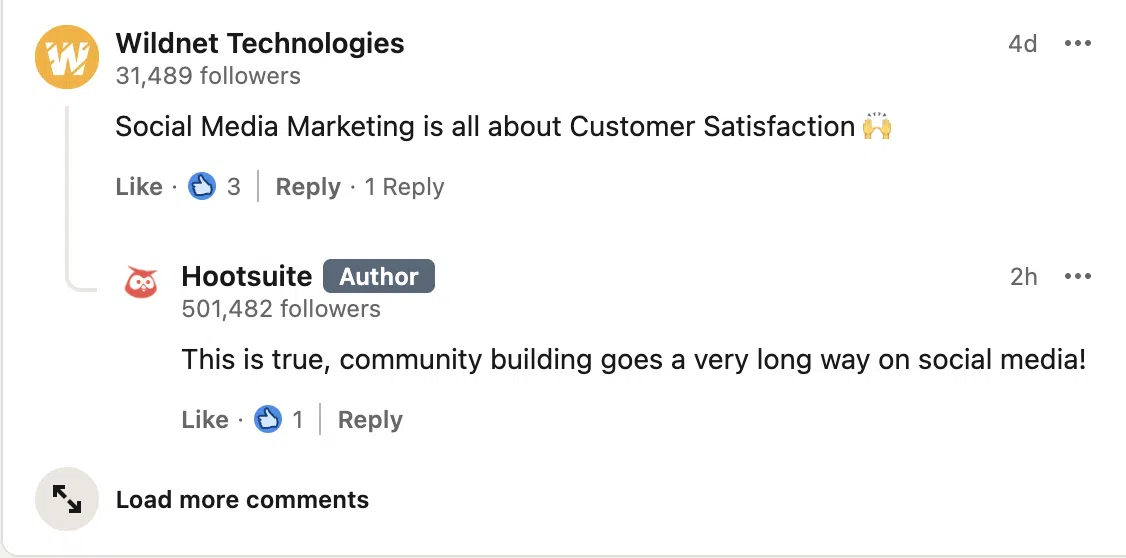
If you only show up to post your own content, your reach will always feel limited. But when you consistently comment on posts from your network, industry peers, or topic leaders, the algorithm sees you as an active contributor.
This creates a two-way relationship:
- your comments boost others
- their content becomes more visible to you
- your posts become more visible to them
- your authority in that niche strengthens
Think of comment engagement as part of your posting strategy – not an afterthought.
Learn from Your Analytics and Double Down on What Works
LinkedIn rewards consistency and expertise, so the more you understand what topics, formats, and posting times resonate, the easier it becomes to keep that momentum going.
Check which posts earned:
- longer dwell time
- meaningful comments
- strong reach beyond your first-degree network
- better engagement rates
Patterns will emerge. When they do, lean into them. Success on LinkedIn is rarely random; it’s usually repeatable.
Making the LinkedIn Algorithm Work for You (Not Against You)
Now that you know how to optimize your content to call the attention of the algorithm, it’s time to focus on what actually pushes your content forward.
The LinkedIn algorithm may seem mysterious, but its priorities are surprisingly simple: help users find content that is relevant, valuable, and conversation-worthy. If your posts tick those boxes, you’ll consistently show up in feeds, even weeks after posting.
Here’s how to align your strategy with what the algorithm wants.
- Focus on Relevance First – Not Virality
LinkedIn is built for professional value, not viral entertainment. The algorithm prioritizes posts that match a user’s skills, interests, job role, and the topics they engage with. This means your best-performing posts won’t be the ones that appeal to everyone – they’ll be the ones that resonate deeply with your community.
Stay consistent with your niche. The clearer your expertise, the easier it is for LinkedIn to understand where your content belongs.
- Create Content That Sparks Real Conversations
LinkedIn’s 2025 update emphasizes meaningful discussion. Thoughtful comments matter far more than quick reactions. Your job is to post something that naturally leads people to share their experiences, opinions, or insights.
A few effective angles include:
- A relatable industry struggle
- A lesson learned the hard way
- A bold perspective others may disagree with
- A question that invites honest input
The more depth your comments section has, the longer your post keeps circulating.
- Show Up Where Your Audience Already Engages
One little-known factor: LinkedIn prioritizes posts from people you regularly interact with. This means the algorithm rewards you for engaging with others before you post.
Spend 10-15 minutes commenting on posts in your niche. Join conversations, share insights, and show the algorithm you’re active in your community. It’s one of the simplest ways to prime your next post for reach.
- Use Visuals and Native Content to Boost Dwell Time
Dwell time, which is how long someone pauses to read or watch your content, is a major ranking factor. Visuals, carousels, screenshots, infographics, and videos slow a user’s scroll and increase your odds of being pushed further into the feed.
Native content (shared directly on LinkedIn instead of linking out) also earns a natural boost. When in doubt, keep your best content on the platform.
- Publish at the Right Time (Especially for the Golden Hour)
The first 60 minutes – LinkedIn’s “golden hour” – are critical. If your post gets early engagement from relevant users, the algorithm tests it with a wider audience.
Post when your followers are most active. For many industries, Tuesday mornings or Thursday late afternoons work best, but your own analytics will give you the real answer.
- Be Consistent, Predictable, and Strategic
LinkedIn rewards active, consistent creators. Posting once a month won’t give the algorithm enough signals to understand your niche or distribute your content widely. You don’t need to post daily, even once or twice a week with strong relevance is enough to build momentum.
Over time, the algorithm recognizes your voice, your topics, and your community – and that’s when growth becomes predictable.
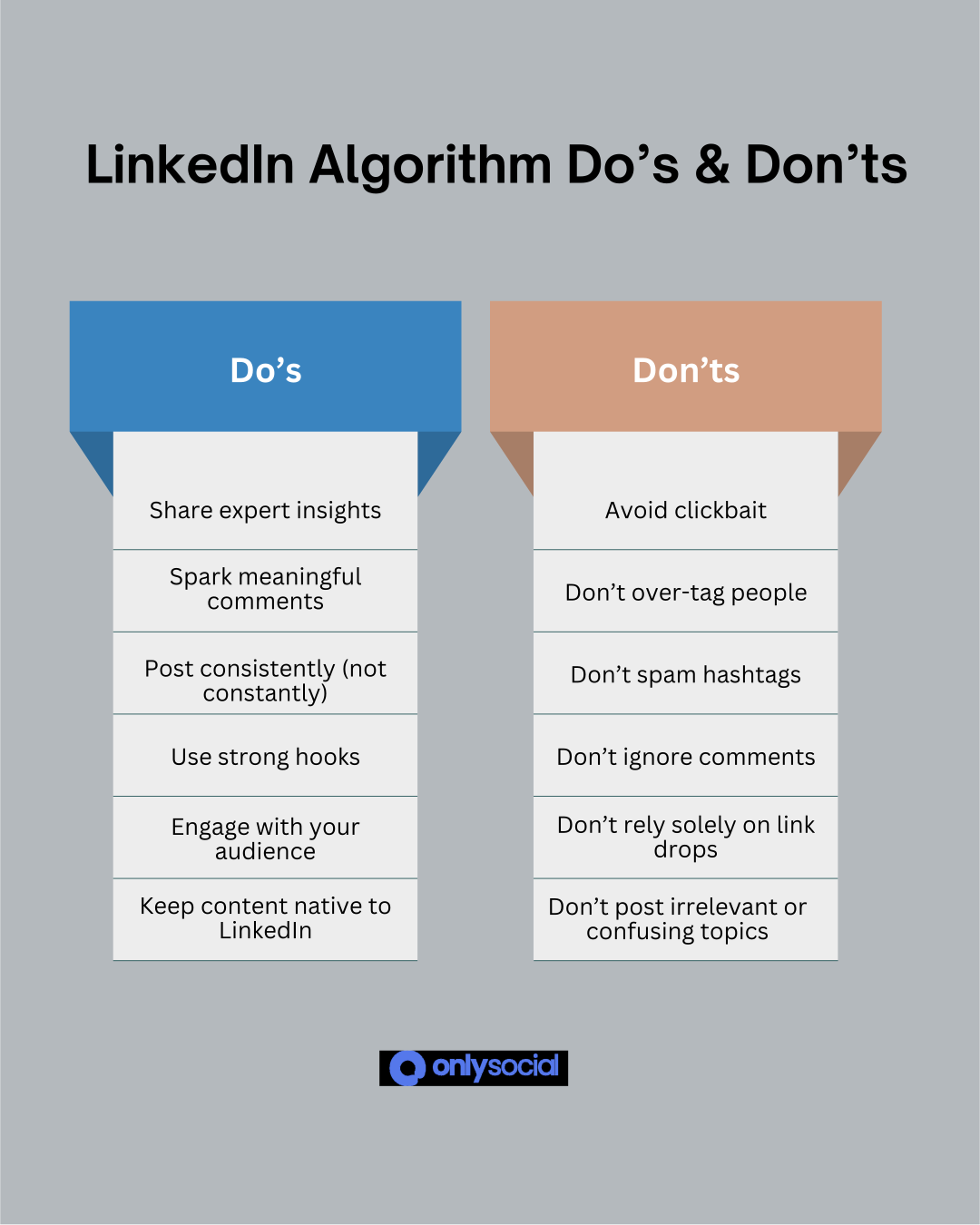
Final Note
The LinkedIn algorithm in 2025 isn’t something to “beat” – it’s something to understand and work with. Once you know what it values, the platform becomes a lot less intimidating and a lot more predictable.
LinkedIn wants to show people content that teaches them something, helps them do their jobs better, or sparks meaningful conversations. That’s it.
If you consistently show up with useful insights, speak to the right audience, and engage with people in your niche, the algorithm will do the rest. You don’t need gimmicks, hacks, or shortcuts. You just need clarity, consistency, and content that actually helps someone.
Use this guide as your foundation, keep an eye on new feature updates, and remember –LinkedIn rewards creators who stay relevant, stay active, and stay human.
If you can do that, the algorithm will start working for you, not against you.
FAQs
Is it still possible to “go viral” on LinkedIn in 2025?
Yes, but not in the traditional sense. LinkedIn isn’t built for TikTok-style virality. Instead, you can achieve professional reach – meaning your post can travel far within your industry if it generates meaningful comments and discussions. High-value posts can stay alive for weeks, not hours.
What hurts my reach the most on LinkedIn?
Spammy behavior, posting too often, using irrelevant hashtags, tagging too many people, engagement bait, and relying solely on external links. Anything that signals “low quality” or “low relevance” to the algorithm will slow your reach.
How many times should I post on LinkedIn per week?
LinkedIn recommends posting at least once a week, but most active creators post between 2-4 times weekly. What matters more is quality; not quantity. Posting every day won’t help if the content isn’t useful.
Does LinkedIn penalize external links?
LinkedIn prioritizes native content, so posts with external links don’t perform as well. The common workaround is to place your link in the comments rather than the main post.
How important is the first hour after posting?
Very important. LinkedIn’s “golden hour” still applies in 2025. Strong engagement in the first 60 minutes helps the algorithm decide whether to show your post to second- and third-degree connections. Scheduling posts at optimal times is crucial.
What type of content performs best on LinkedIn?
Content that teaches something, starts a conversation, or shares a personal insight. This includes question-based posts, industry commentary, visual content, carousels, data-driven insights, and short storytelling. The key is relevance + usefulness.
How do I know what topics to post about?
Look at your audience’s skills, interests, and job roles. LinkedIn ranks content based on how well your post aligns with what your audience cares about. Use LinkedIn analytics, polls, competitor insights, and industry hashtags to find the right topics.