OnlySocial vs Metricool: Which White-Label Platform Gives Agencies the Edge?
If you’re running an agency, you already know the pressure: clients want results, clean reporting, smooth communication, and tools that feel like they came from you, not from a third-party platform.
A true white label social media platform doesn’t just look good; it helps you grow, scale your services, and deliver a consistent experience across every client.
That’s where the decision between OnlySocial and Metricool becomes important. Metricool gives you branded reports, a custom domain, and a dashboard that carries your logo. OnlySocial, on the other hand, goes much further with a fully white-labeled SaaS platform you can resell as your own.
In this guide, we’ll break down both platforms, section by section, so you can see exactly which one gives your agency the stronger edge in 2025 and beyond.
Table of Contents
- 1 What Agencies Actually Want from a White-Label Platform
- 2 Metricool White-Label: What It Really Offers
- 3 Where Metricool’s White Label Stops
- 4 OnlySocial White Label: What Agencies Get
- 4.0.1 Full Platform White-Label Control
- 4.0.2 Dedicated Admin Dashboard Built for Agencies
- 4.0.3 Powerful Automation & Scheduling Tools
- 4.0.4 Built-In AI Tools That Speed Up Content Creation
- 4.0.5 A Unified Inbox for All Messages & Comments
- 4.0.6 Collaboration That Keeps Your Team and Clients in Sync
- 4.0.7 Advanced Analytics
- 4.0.8 Impersonate Users for Instant Support
- 4.0.9 Payment Management Built In
- 4.0.10 Pricing That Makes Scaling Affordable
- 5 OnlySocial vs Metricool: Feature-by-Feature Comparison
- 6 Which Platform Fits Your Agency’s Workflow?
- 7 Pricing: Which Platform Gives You Better Value?
- 8 Final Verdict: Which Platform Gives Agencies the Edge?
What Agencies Actually Want from a White-Label Platform
Before comparing OnlySocial and Metricool, it helps to step back and look at what agencies truly need from a white-label tool. It’s not just about swapping logos or changing colors. Agencies want a platform that makes their day easier, keeps clients impressed, and removes the constant pressure that comes with delivering social media at scale.
Here’s what that looks like in real life.
A Platform That Feels 100% Like Their Own
Agencies need more than a logo on the corner of a dashboard. They want clients to log in, view reports, approve posts, and receive emails – all under their name. No outside branding. No distractions. Just a clean, seamless platform that feels owned, not rented.
A Client Experience That Reduces Questions and Confusion
Every agency knows that half the battle is keeping clients aligned. A good white-label tool should make it easy for clients to see scheduled posts, approve content, download reports, and understand performance without needing a walkthrough every week.
When the platform is simple, your workload drops.
Automation That Cuts Down Manual Work
Scheduling each post manually, copying captions from documents, juggling spreadsheets – that’s where time disappears. Agencies need automation that actually matters: bulk posting, smart scheduling, reusable templates, AI support, RSS imports, and anything else that helps teams get more done without burning out.
Smooth Team Collaboration
Whether you’re two people or twenty, collaboration can get messy fast. A white-label platform needs to support comments, approvals, drafts, roles, and internal notes – all in one place, swapping many back-and-forth for more clarity.
Strong, Client-Ready Analytics
Agencies rely on data to prove their value. Reports must be clean, visual, easy to understand, and branded. Clients shouldn’t have to interpret confusing charts. They should see performance at a glance, with your branding leading the story.
Pricing That Doesn’t Punish Growth
As agencies add more clients, costs shouldn’t explode. White-label pricing needs to be predictable and scalable, allowing agencies to say “yes” to growth instead of worrying about the next billing cycle.
Reliability and Real Support
When agencies bring clients into a white-label dashboard, their reputation is tied to the platform’s stability. They need a tool that doesn’t glitch, crash, or confuse users – and support that actually responds when something goes wrong.
With these needs in mind, let’s take a close look at how Metricool approaches white-labeling and how far its offering goes for agencies.
Metricool White-Label: What It Really Offers
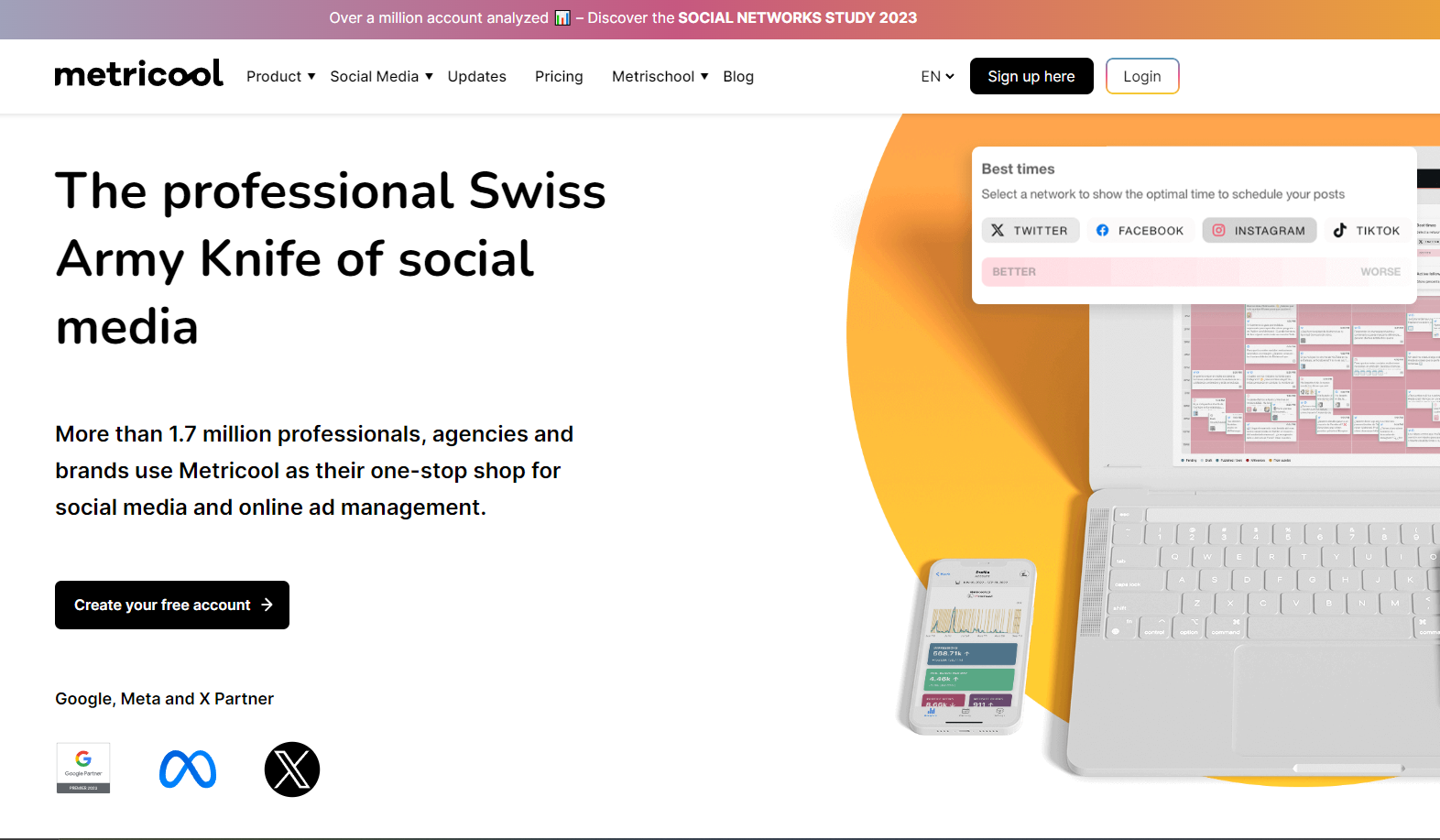
Metricool is well-known for its clean interface, solid analytics, and easy-to-use scheduler – and its white-label option follows the same pattern.
It’s simple, polished, and designed mainly to help agencies present a branded experience to clients without building their own platform from scratch. But it’s important to understand how far Metricool’s white label actually goes and where it stops.
Here’s what Metricool brings to the table.
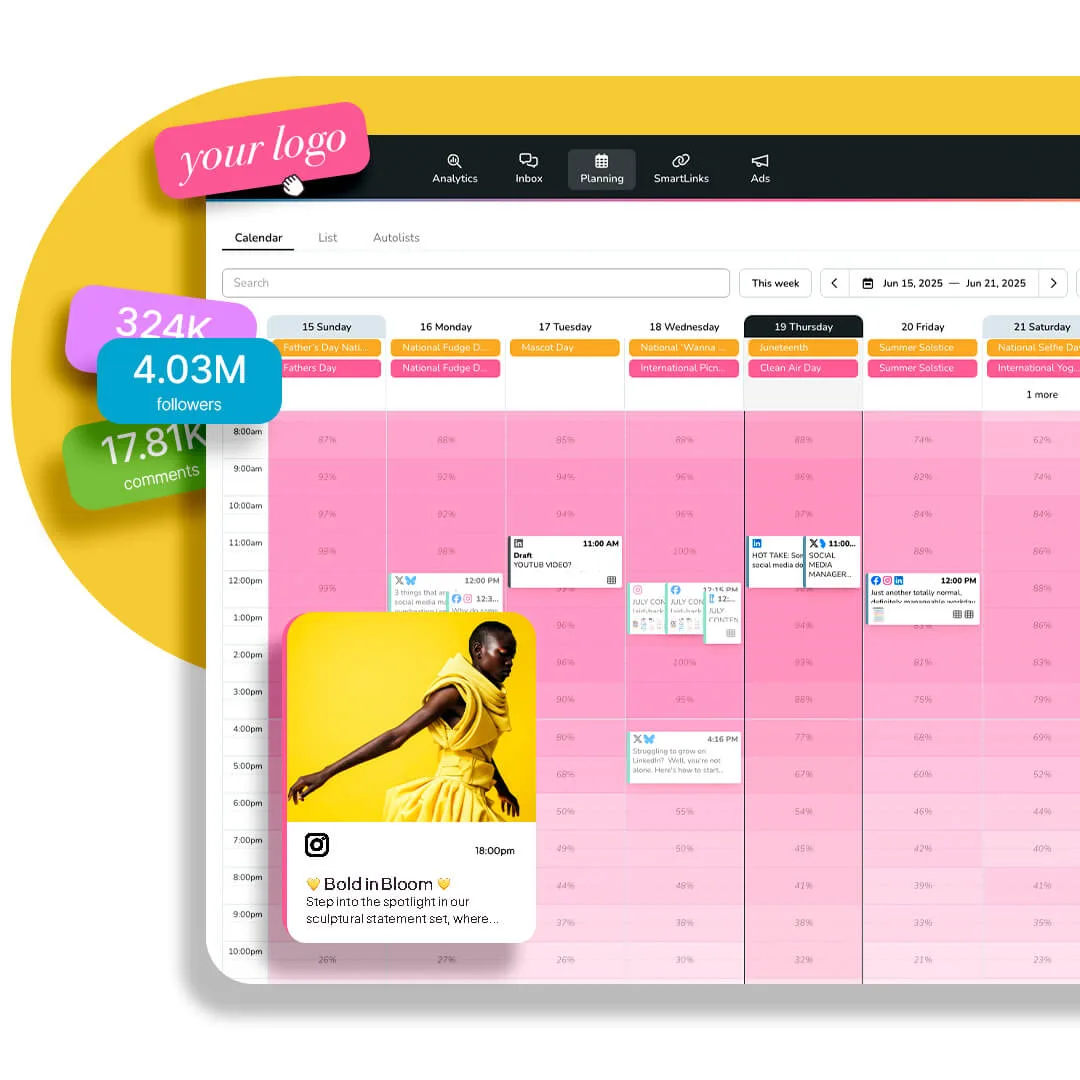
1. Custom Domain Branding
Metricool lets you create a branded login experience using your own domain or subdomain – something like: clients.youragency.com
This instantly removes Metricool’s name from client-facing URLs and makes the platform feel more professional from the moment clients log in.
2. Your Logo and Brand Colors Everywhere
Your agency’s visual identity replaces Metricool’s branding across dashboards, reports, and key touchpoints. For agencies that care about consistency, this helps maintain a seamless feel and reinforces your brand during every client interaction.
But remember: this is still skin-level white labelling. The underlying platform remains Metricool’s.
3. Branded Email Communications
Clients receive notifications and automated emails with your name, not Metricool’s.
This includes login instructions, alerts, reminders, and other system messages – all fully branded to look like they’re coming directly from your agency.
It’s a simple feature, but one that strengthens trust and visibility without manual effort.
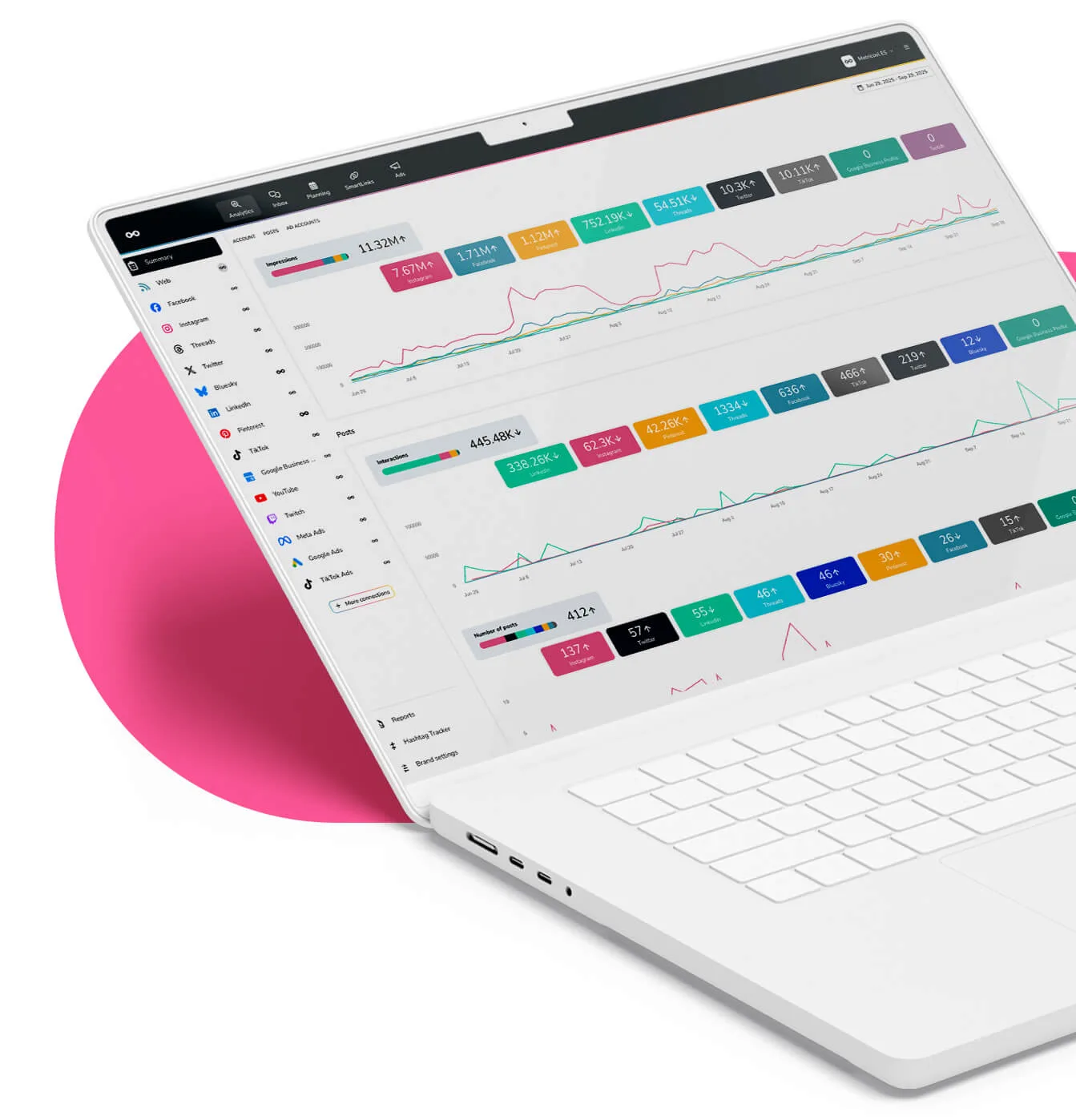
4. Automatic Reports with Your Branding
Metricool is known for strong analytics, and its white-label reports are no exception.
You can send clients:
- overview reports
- performance summaries
- detailed data breakdowns
All carrying your logo and design. It’s a clean way to keep clients updated without spending hours formatting PDFs.
5. Client & Team Access Under Your Brand
Metricool lets you invite clients or internal team members to your branded workspace so they can:
- view their analytics
- check upcoming posts
- review performance
- collaborate inside the platform
From their perspective, it feels like your agency built the software yourself, even though it’s powered by Metricool.
Where Metricool’s White Label Stops
Here is where many agencies start to feel the limitations:
Not a Full White-Label Platform
Metricool offers cosmetic branding – domain, logo, colors, reports – but you don’t get full control of the dashboard or the experience. It’s still Metricool under the hood.
Not Built with Agencies as the Core User
Metricool is creator-focused. Its white label is a layer on top, not an agency-first ecosystem.
Limited Automation & Scaling Tools
While scheduling is solid, Metricool lacks:
- workspace-level management
- impersonation tools
- advanced automation
- AI content creation features
- team-level workflows built for agencies
Opaque Pricing
White label is only available under the Custom Plan, and you can’t see pricing publicly. Most users report pricing starting around: $270/month. And the final cost varies depending on your setup.
OnlySocial White Label: What Agencies Get
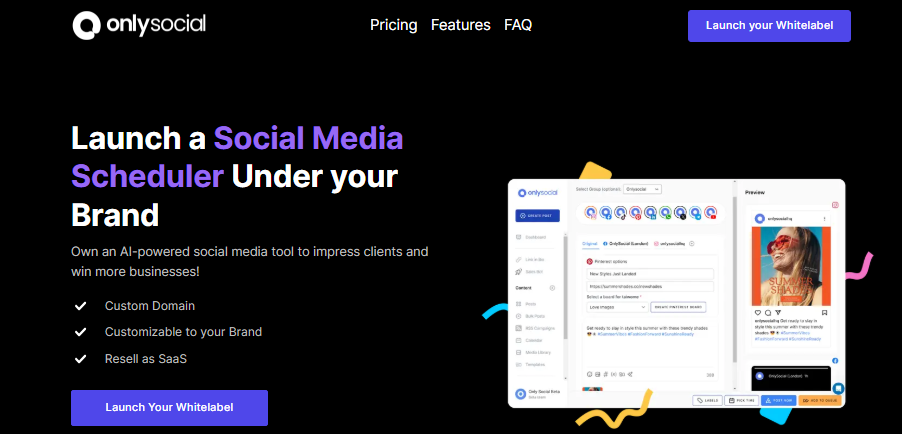
OnlySocial approaches white labeling differently from most tools in the market. Instead of giving agencies light branding on top of an existing platform, it hands over a system that actually feels like your own software. Clients log in, look around, and see you everywhere – not a trace of the underlying provider.
Here’s what that looks like in real, practical terms.
Full Platform White-Label Control
OnlySocial lets you put your brand front and center – not someone’s. Your clients log into a platform that carries your domain, your colors, your logo, and your voice across every screen.
The dashboard, the login page, the workspace, the emails… everything looks like it was built in-house. For agencies who want to look bigger and more established, this level of control makes a huge difference.
Dedicated Admin Dashboard Built for Agencies
Instead of squeezing agency needs into a creator-focused tool, OnlySocial gives you a dedicated admin area designed for managing multiple clients.
You can organize workspaces, assign permissions, track activity, and manage accounts without the usual back-and-forth. It’s clean, intuitive, and built for teams who handle many brands at once.
Powerful Automation & Scheduling Tools
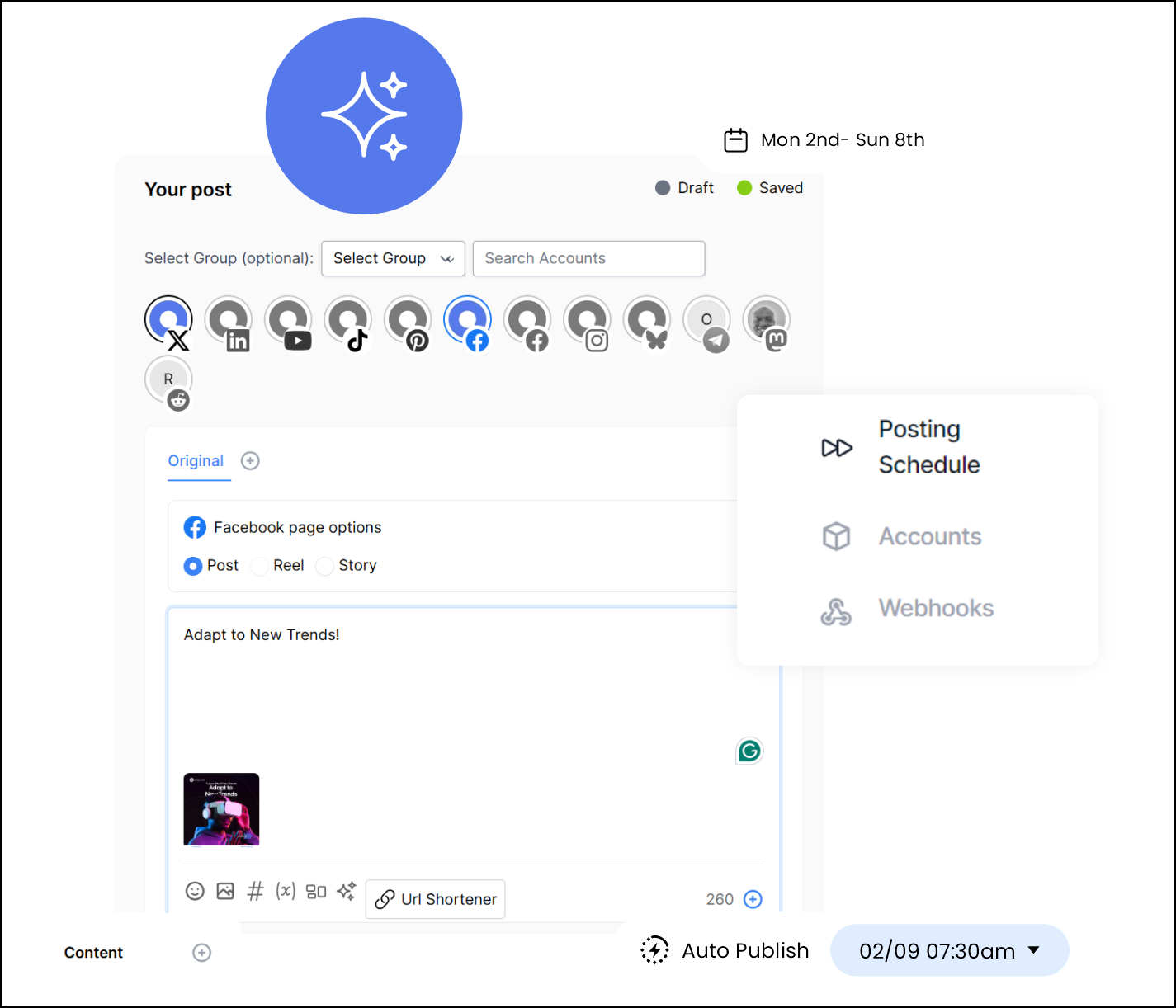
OnlySocial makes content scheduling fast and predictable. You can plan posts across 15+ social networks, upload content in bulk, queue hundreds of posts with CSV files, or even use RSS feeds to auto-share fresh content.
Agencies love this part because it frees up hours every week, especially when managing multiple clients with frequent posting needs.
Built-In AI Tools That Speed Up Content Creation
With OnlySocial, you don’t need a separate AI tool for captions, hashtags, ideas, or images. Everything is inside your dashboard. Whether you’re filling an empty content calendar or polishing a month’s worth of posts, the AI tools help your team move quicker without compromising quality.
A Unified Inbox for All Messages & Comments
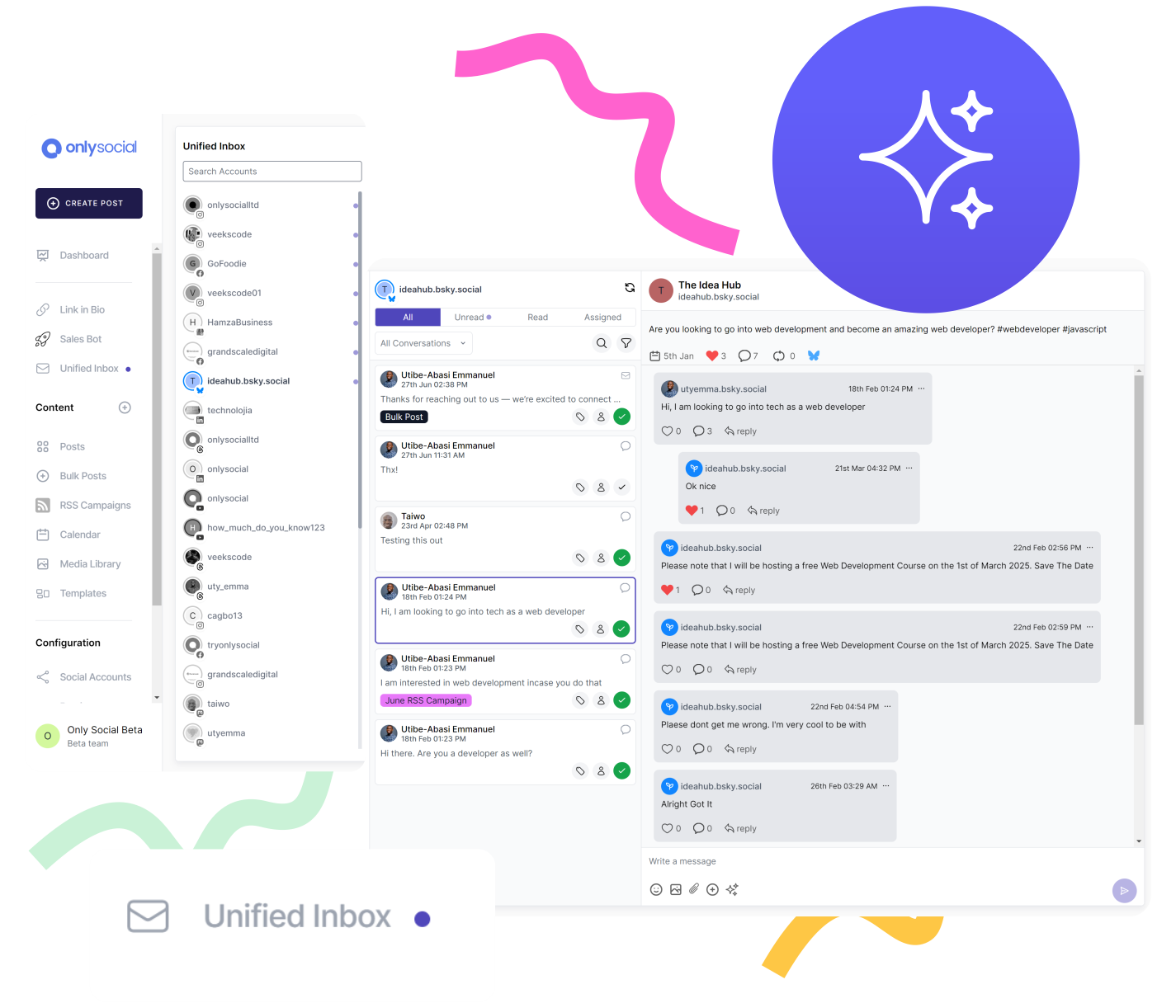
Instead of checking messages across different platforms, OnlySocial pulls them into one inbox. Comments, DMs, mentions, and replies become much easier to manage. Your team can respond faster, stay organized, and keep client communities active without juggling multiple logins.
Collaboration That Keeps Your Team and Clients in Sync
Workspaces in OnlySocial make collaboration simple. Team members can draft, review, and refine content while clients approve posts directly inside their branded dashboard. No scattered emails. No disorganized Google Docs. Just one clean workflow that keeps everyone aligned.
Advanced Analytics
OnlySocial doesn’t just show likes and comments. You get deeper insights into what’s working, when your audience is active, and how your content performs over time. Agencies use these metrics to refine strategy, prove ROI, and present meaningful results during client meetings.
Impersonate Users for Instant Support
Helping clients becomes much easier when you can see exactly what they see. OnlySocial’s impersonate tool lets you jump into their account view instantly. If something isn’t working, you can fix it without guessing, sending screenshots, or asking for logins. It’s one of the most loved features for support-heavy agencies.
Payment Management Built In
This is where OnlySocial goes beyond normal white labeling. You can integrate Stripe, Paystack, or Paddle and sell your own subscription plans inside your branded platform. Agencies use this to build recurring revenue, without building any custom software.
Pricing That Makes Scaling Affordable
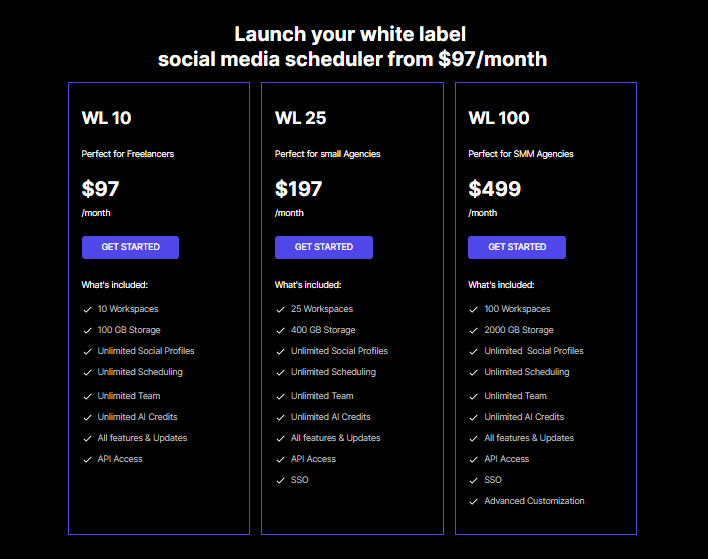
OnlySocial keeps pricing transparent and agency-friendly. Plans start at $97/month for 10 workspaces and scale gently as you grow. Even at higher tiers, each workspace often costs less than a cup of coffee. It’s built so agencies can expand without worrying about unpredictable jumps in cost.
OnlySocial vs Metricool: Feature-by-Feature Comparison
Branding Depth
Metricool offers clean branding – your logo, your colors, your domain, and your name on reports and emails. It gives your agency a more polished presence, but the branding sits on top of Metricool’s core system. Clients will see your identity, but the experience still feels very much like Metricool underneath.
OnlySocial takes branding much deeper. Your domain, your dashboard layout, your client workspaces, your notifications – everything feels like your agency’s own platform. When clients log in, they’re stepping into a system that could genuinely pass as software you built yourself.
White-Label Experience
Metricool’s white label is mostly aesthetic. It’s great for adding credibility, but it doesn’t change how the platform functions. You get your logo and custom domain, but the dashboard design and workflow stay the same.
OnlySocial offers a true white-label SaaS experience. Your clients see your software, your navigation, your branding, your emails, and your workspace structure. It’s not just a reskinned tool; it’s a fully branded platform that you can confidently sell as your own product.
Scheduling and Automation
Metricool handles scheduling well. It covers the major platforms, and its calendar is simple to use. But automation is limited, and agencies working with multiple clients may find themselves doing a lot manually.
OnlySocial gives agencies much more room to automate. You can bulk-schedule hundreds of posts, upload content via CSV, sync content with RSS feeds, and publish to 15+ social platforms at once. When your workload increases, OnlySocial absorbs it without burning out your team.
Reporting and Analytics
Metricool has attractive, branded reports and useful performance summaries. They’re clean, clear, and easy for clients to understand. For some agencies, this is enough.
OnlySocial goes further with analytics built for strategy refinement. Engagement trends, audience patterns, best time-to-post insights, and cross-platform performance breakdowns give agencies more data to work with. The reports are also white-labeled, but the depth behind them helps agencies drive smarter decisions.
Client Collaboration
Metricool makes client access straightforward. You can add users, assign basic permissions, and let clients check calendars or approve content. It works fine for smaller operations.
OnlySocial’s workflows are built for agencies with bigger teams and more complicated processes. Workspaces keep everything separated. Approvals happen inside the platform. Team members can collaborate without stepping on each other. Clients have a clear path for reviewing and approving content. It turns messy communication into a clean, trackable workflow.
Support for Multiple Social Platforms
Metricool covers the essentials well – Facebook, Instagram, Twitter, LinkedIn, and a few others. It’s strong enough for creators, freelancers, and small agencies.
OnlySocial supports a much wider ecosystem, including traditional networks plus emerging platforms like Bluesky, Telegram, Mastodon, and VK. Agencies servicing niche industries or multilingual clients get far more flexibility.
Scalability
Metricool’s structure and pricing can work for small teams, but once you start adding more clients, you’re limited by the platform’s workflow design and the cost of the Custom Plan.
OnlySocial is intentionally built to scale. Workspaces expand easily, automation removes repetitive tasks, AI tools help with high-volume content creation, and the pricing remains predictable as you grow. Agencies looking to expand will feel the difference instantly.
Pricing Transparency
Metricool’s white-label pricing is hidden behind a Custom Plan. You need to talk to sales, and most users don’t know the cost until they’re deep into onboarding. It generally starts around $270/month but varies from agency to agency.
OnlySocial keeps everything public and simple. Plans start at $97/month for 10 workspaces and scale up from there. Agencies can budget confidently without worrying about sudden pricing surprises.
Which Platform Fits Your Agency’s Workflow?

Choosing between OnlySocial and Metricool isn’t just about features. It’s about which tool fits the way your agency actually works day to day.
Different teams have different demands, and the right platform should remove pressure, not add more of it.
If your agency runs a small number of accounts and mainly needs a branded dashboard, clean reports, and simple scheduling, Metricool can get the job done. It’s straightforward and familiar, especially for agencies that offer light social media support or manage only a few clients at once.
If you’re not dealing with heavy collaboration or high posting volume, you may not notice the platform’s limitations.
But if your agency juggles multiple clients, produces content at scale, or wants a platform that can grow as your client list expands, the experience is very different. OnlySocial is built for agencies that need structure – clean workspaces, advanced automation, deeper analytics, AI-driven content tools, and a full admin dashboard that keeps everything organized.
Teams that handle daily posting, active communities, and frequent approvals will feel the workflow difference almost immediately.
There’s also the question of how polished you want your client experience to be. Metricool gives you basic branding, but the core platform stays the same. OnlySocial gives you a platform that feels like software you developed internally.
For agencies aiming to look more established, offer a higher-end service, or build recurring revenue around their “own” dashboard, OnlySocial becomes the more natural fit.
So the simplest way to decide is this:
If you want a light white-label layer over a solid tool, Metricool works.
If you want a platform your agency can truly build on, and grow with, OnlySocial fits far better.
Pricing: Which Platform Gives You Better Value?
Pricing is one of the biggest differences between OnlySocial and Metricool, and it’s usually where agencies realize which platform makes more sense long-term.
Both tools offer white-label options, but the way they structure the cost, and what you actually get for that cost, is very different.
Metricool keeps its white-label pricing locked behind a Custom Plan. You can’t see it on the website, and you won’t know the exact amount until you speak with their sales team.
Most agencies report that it starts at around $270/month, but the final price varies depending on your setup, the number of brands you manage, and the features you request. For smaller teams, this unpredictability can make budgeting harder, especially if your client list changes often.
OnlySocial takes the opposite approach. Everything is transparent, published, and easy to understand. The white-label option starts at $97/month for 10 workspaces, and the price increases only as you choose to scale.
Larger plans, such as 25 workspaces at $197/month or 100 workspaces at $499/month, offer even better value, with the cost per workspace dropping dramatically. Agencies with growth plans appreciate the fact that they can predict expenses without needing a sales call or worrying about hidden tiers.
The more important detail is what you get for the price. Metricool’s white label focuses on branding and reports. OnlySocial gives you a fully branded platform, advanced scheduling tools, AI features, collaboration workflows, payments, impersonation, a complete admin dashboard, and one of the widest sets of supported platforms.
When you compare the actual output to the price, OnlySocial consistently delivers more for less.
Final Verdict: Which Platform Gives Agencies the Edge?
Metricool is a solid tool. It’s familiar, easy to use, and offers just enough branding for smaller agencies who want to look professional without changing how they work.
If your team manages a handful of clients and mainly needs simple scheduling, branded reports, and a clean dashboard, Metricool can deliver that experience comfortably.
But if your agency handles multiple clients, produces content at scale, or wants a platform that feels truly yours, OnlySocial is on another level. The fully white-labeled dashboard and many more amazing features make it far more than a scheduling tool. It’s a platform agencies can build their business on – not just operate inside of.