On this page
- Video Size for Instagram: All Placements in 2026
- Why Resizing Matters
- Can You Crop Videos on Instagram?
- How to Resize a Video for Instagram on iPhone
- How to Resize a Video for Instagram on Android
- Free Tools to Resize Videos for Instagram
- Turning Horizontal Video Into Vertical
- Resizing One Video for Every Platform
- Video Length on Instagram
- Example: Repurposing a YouTube Video for Instagram
- Captions and Accessibility When Resizing
- Safe Zones for Text and Faces
- Export Settings for Instagram Video
- How Videos Look on Your Profile Grid
- Scheduling Resized Videos
- Common Instagram Video Size Mistakes
- Frequently Asked Questions
- The Short Version
Instagram is a vertical, mobile-first platform, but videos come from everywhere: horizontal camera footage, square clips from another app, screen recordings and edits made for YouTube. When the shape does not match the placement, Instagram crops it, zooms it or adds bars, and the result often looks unprofessional. Faces get cut off, captions disappear behind buttons, and the most important part of the shot ends up outside the frame.
The fix is simple once you know the sizes. This guide lists the right video size for each Instagram placement, explains how to crop and resize videos inside Instagram, and walks through free tools to resize videos on your phone or computer, plus tips for keeping text and faces in the safe zone.
To resize a video for Instagram, use 9:16 at 1080 × 1920 pixels for Reels and Stories, and 4:5 at 1080 × 1350 for feed posts and carousels (square 1:1 at 1080 × 1080 also works). Crop or reframe your video in a free editor such as CapCut, Instagram’s Edits app, Canva or your phone’s photo editor, export as MP4, and keep text and faces away from the top and bottom of the frame. Instagram lets you crop and zoom when posting, but resizing beforehand gives you full control.
Video Size for Instagram: All Placements in 2026
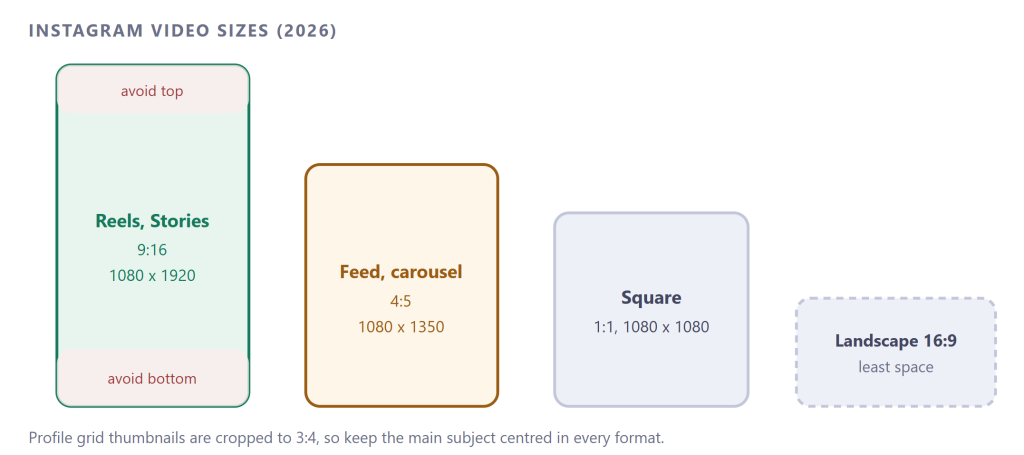
Each Instagram placement has an ideal shape and size.
| Placement | Aspect ratio | Recommended size | Notes |
|---|---|---|---|
| Reels | 9:16 | 1080 × 1920 px | Full-screen vertical; keep key content in the centre |
| Stories | 9:16 | 1080 × 1920 px | Full screen; avoid the top and bottom edges |
| Feed video (portrait) | 4:5 | 1080 × 1350 px | Takes the most space in the feed |
| Feed video (square) | 1:1 | 1080 × 1080 px | Safe, neutral option |
| Feed video (landscape) | 16:9 or 1.91:1 | 1080 × 608 px or similar | Takes the least space; less recommended |
| Carousel video slides | Same as first slide | 1080 × 1350 px (4:5) | All slides share the first slide’s ratio |
| Profile grid thumbnail | 3:4 | Shown cropped | Keep important content centred |
Instagram processes videos up to 1080 pixels wide for most placements, so 1080-pixel-wide exports are the sweet spot. Use MP4 with H.264 video and AAC audio for the most reliable uploads.
Why Resizing Matters
The right size makes your video look intentional and keeps the important parts visible. If you upload a horizontal video as a Reel, Instagram either crops the sides, cutting off people and text, or shows it small with empty space. If you upload a 9:16 video to the feed, it is cropped to 4:5 in the feed and 3:4 on your grid, which can cut off titles at the top and bottom.
Size also affects performance. Vertical videos fill more of the screen, which holds attention better, and Instagram has said it may show Reels with borders or very low resolution to fewer people. Taking a minute to resize properly helps both appearance and reach.
Can You Crop Videos on Instagram?
Yes, Instagram lets you crop and reframe videos while posting, but with limited control. When you create a feed post, you can pinch to zoom or tap the expand icon to switch between the original shape and a square or 4:5 crop, then drag to reposition. For Reels and Stories, you can pinch to zoom and drag the video to fill the 9:16 frame. Instagram’s Edits app offers more precise editing and reframing for Reels.
The limitation is that in-app cropping is quick but basic: you cannot always choose exact ratios, track a moving subject or add a blurred background. For anything important, resize in an editor first, then upload a file that already matches the placement.
How to Resize a Video for Instagram on iPhone
The iPhone Photos app can crop videos to Instagram ratios without extra apps.
- Open Photos and select the video.
- Tap Edit, then the crop icon.
- Tap the aspect ratio button and choose 9:16 for Reels and Stories or 4:5 for the feed (choose Vertical or Horizontal as needed).
- Drag and pinch to frame the subject.
- Tap Done. The edit is saved and can be reverted later.
For more control, such as adding a blurred background to a horizontal video or captions, use CapCut or Edits, both available free on iPhone.
How to Resize a Video for Instagram on Android
Android phones can crop videos in Google Photos or the built-in gallery editor. Open the video in Google Photos, tap Edit, choose Crop, select an aspect ratio such as 9:16, 4:5 or square, adjust the frame, and save a copy. Samsung’s Gallery app offers similar crop and ratio options. For more advanced resizing, CapCut and Edits are free on Android and let you change the canvas size, reframe and add backgrounds.
Free Tools to Resize Videos for Instagram
These free or freemium tools make resizing quick and precise.
- CapCut (mobile and desktop): set the canvas to 9:16, 4:5 or 1:1, reframe, add blurred or coloured backgrounds, auto-captions and export without watermark on most plans.
- Edits by Instagram (mobile): Meta’s own video editor for Reels, with reframing, captions, effects and direct sharing to Instagram.
- Canva (web and mobile): resize designs and videos to Instagram presets and add text, branding and music.
- iPhone Photos and Google Photos: basic cropping to standard ratios.
- Clipchamp (Windows and web): aspect ratio presets for social, simple timeline editing.
- Kapwing (web): resize to Instagram ratios, smart cropping and subtitles in the browser.
- iMovie and DaVinci Resolve (desktop): more control for longer edits, with custom project sizes.
Most of these apps include Instagram presets, so you do not need to remember exact pixel sizes; choose the Instagram Reels or Instagram post preset and the canvas is set for you.
Turning Horizontal Video Into Vertical
Horizontal footage needs reframing to work as a Reel or Story. You have three main options. First, crop to the subject: zoom in on the most important area and follow it with keyframes if it moves. Second, place the horizontal video in the middle of a 9:16 canvas with a blurred copy, brand colour or text filling the top and bottom. Third, split the frame into two stacked clips, such as a speaker above and a screen recording below.
Cropping gives the most immersive result but may lose context; the blurred background keeps the whole shot but looks smaller. For future shoots, film vertically or use a wider frame with space around the subject so you can crop to both vertical and horizontal later.
Resizing One Video for Every Platform
A video size for Instagram often needs to work on other platforms too, and planning for that saves time. Most short-form platforms share the 9:16 vertical format: Instagram Reels, TikTok, YouTube Shorts and Facebook Reels all display best at 1080 × 1920. Feed placements differ: Instagram and Facebook feeds favour 4:5, LinkedIn supports vertical and square video, and YouTube’s main player is 16:9 horizontal.
A practical approach is to edit a 9:16 master for short-form platforms, then export a 4:5 version for Instagram and Facebook feeds and, if needed, a 16:9 version for YouTube. Keep the main subject centred when filming, so all crops work. In a multi-network scheduler, you can attach the right version to each network in a single post, so the 9:16 video goes to Reels, TikTok and Shorts while the 4:5 version goes to the feed.
Video Length on Instagram
Size is not the only limit; length matters too. Instagram expanded Reels to up to three minutes in January 2025, and Stories show videos in segments of up to 60 seconds, splitting longer uploads into several Stories. Feed videos are now generally shared as Reels. For carousels, short clips work best on each slide.
Shorter is usually better for reach: many of the best-performing Reels are under 60 seconds, with a hook in the first second. If a video is long, consider trimming it into several shorter Reels, each with one clear point, rather than resizing a single long video.
Example: Repurposing a YouTube Video for Instagram
Here is how a creator might turn one horizontal video into several Instagram posts. A cooking creator publishes a 12-minute 16:9 recipe video on YouTube. In CapCut, she creates a 9:16 project and imports the footage. She picks four short moments: the finished dish, a tricky technique, a common mistake and a taste test. For each, she reframes the horizontal shot to follow her hands, adds captions in the safe zone and a short text hook at the top of the frame.
She exports four 1080 × 1920 Reels and one 4:5 carousel of still frames with the recipe steps. In her scheduler, she schedules the Reels across the week to Instagram, TikTok and YouTube Shorts and the carousel to the Instagram feed, choosing covers that look good in the 3:4 grid. One long video becomes a week of correctly sized content.
Captions and Accessibility When Resizing
Resizing is a good moment to add captions, which help both accessibility and engagement. Many people watch Instagram with the sound off, so on-screen captions keep them watching. Most editors, including CapCut and Edits, generate captions automatically; check them for errors. Place captions in the safe zone, in the middle third of the frame, in a readable font with enough contrast against the background.
When you reframe a horizontal video into vertical, make sure captions and text overlays are added after reframing, so they are not cut off. And add alt text to your post where Instagram allows, describing what the video shows.
Safe Zones for Text and Faces
Instagram’s interface covers parts of vertical videos, so keep key content in the safe zone. On Reels, the caption, username, audio label and action buttons sit along the bottom and right side, and the top has the Reels header. On Stories, the top shows your profile and progress bar, and the bottom has the reply bar. Keep text, faces and logos roughly in the middle area of the frame, leaving space at the top and a larger margin at the bottom and right.
Remember that a Reel’s cover is cropped to 3:4 on your profile grid, and to 4:5 if shown in the feed, so centre titles on the cover frame too.
Export Settings for Instagram Video
Good export settings prevent blurry or rejected uploads. Export at 1080 pixels wide in the correct ratio, as MP4 with H.264 video and AAC audio, at 30 frames per second or the frame rate you filmed in. A bitrate in the range most editors offer for “high quality 1080p” is fine; extremely high bitrates do not improve quality after Instagram compresses the video. Upload over Wi-Fi, and in Instagram’s settings, turn on high-quality uploads if available.
How Videos Look on Your Profile Grid
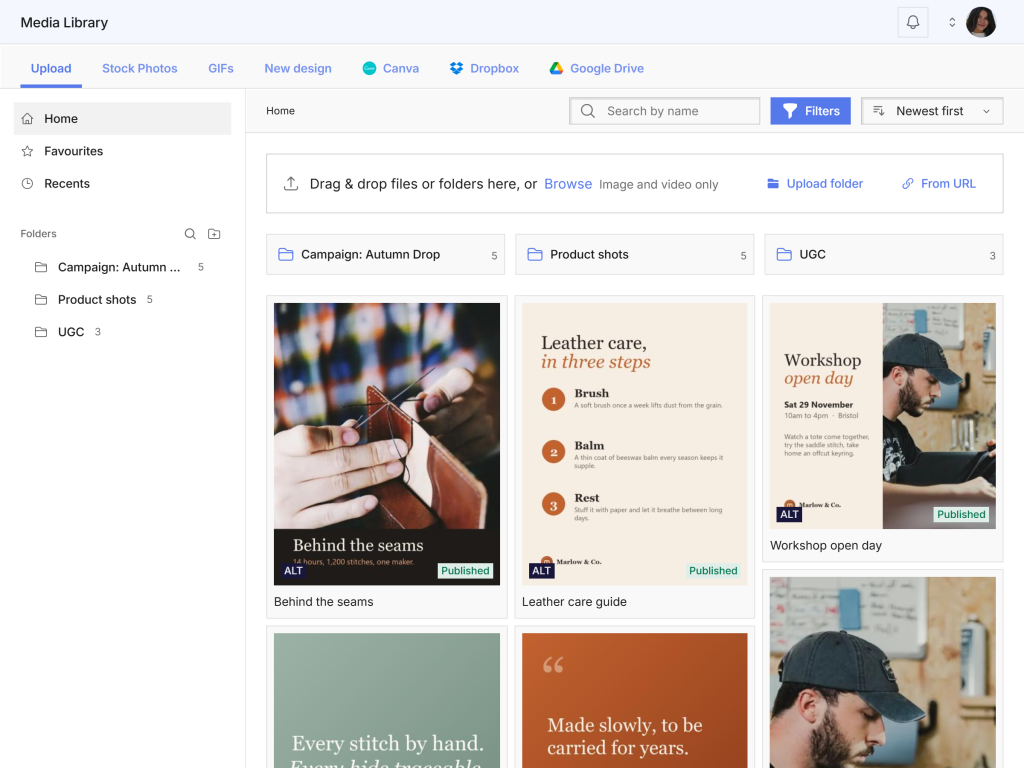
Since January 2025, Instagram’s profile grid shows taller 3:4 thumbnails. A 4:5 feed video is cropped slightly at the top and bottom on the grid, and a 9:16 Reel is cropped more. When you post a Reel, choose a cover frame or upload a cover image and check the grid preview, so the thumbnail shows the subject and any title clearly. Consistent covers make your grid look tidy and help people choose what to watch.
Scheduling Resized Videos
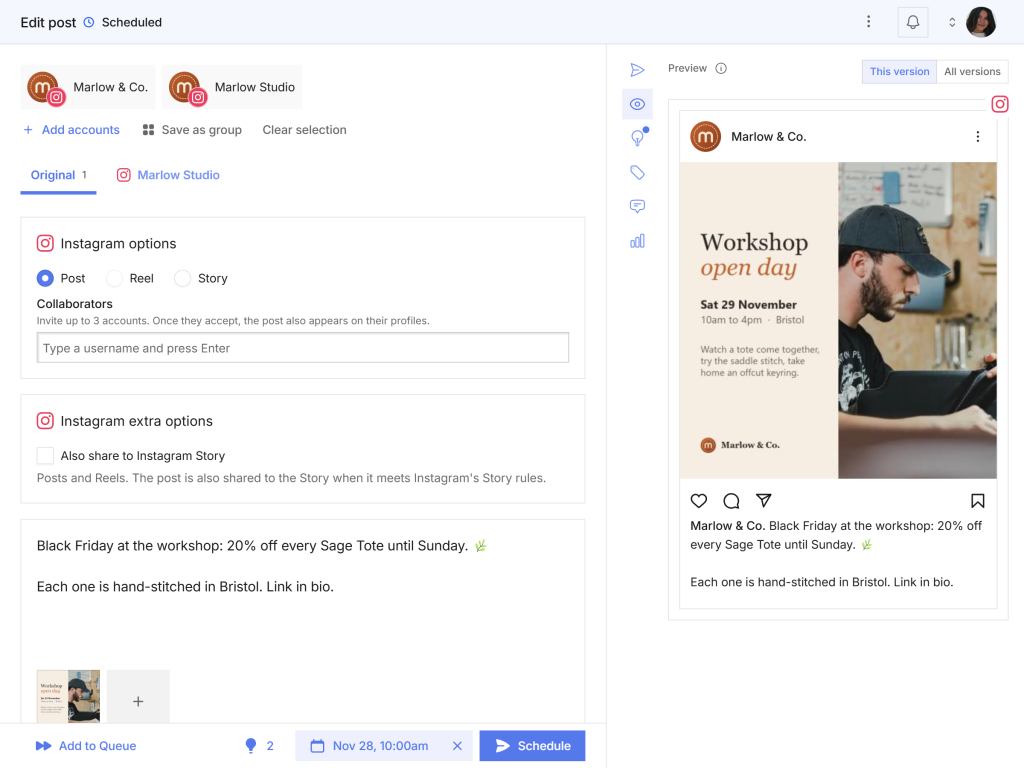
Once your videos are resized, scheduling them saves time and keeps you consistent. In a scheduler such as OnlySocial, upload your 9:16 video for a Reel or Story and your 4:5 version for a feed post, choose the post type for each account, preview how it will look, and schedule. The same vertical video can go to TikTok, YouTube Shorts and Facebook Reels at the same time, with captions tailored for each network.
Common Instagram Video Size Mistakes
A few mistakes cause most bad-looking Instagram videos. Uploading horizontal video as a Reel without reframing. Placing captions at the very bottom, where Instagram’s interface covers them. Using one 9:16 video for the feed without checking the 4:5 crop. Exporting at low resolution or with heavy compression. Leaving black bars or borders, which look unpolished and may reduce reach. Reposting TikToks with watermarks. And forgetting to choose a cover that works in the 3:4 grid.
OnlySocial lets you upload resized videos, preview them as posts, Reels or Stories, and schedule them to Instagram, TikTok, YouTube and Facebook together, from $29 a month for 15 profiles.
Frequently Asked Questions
What is the best video size for Instagram?
9:16 at 1080 × 1920 for Reels and Stories, and 4:5 at 1080 × 1350 for feed posts and carousels.
Can you crop videos on Instagram?
Yes. When posting, you can zoom, reposition and switch between some ratios. For precise control, crop in an editor first.
How do I resize a video for Instagram without cropping?
Place the video on a 9:16 or 4:5 canvas with a blurred or coloured background in an editor such as CapCut or Canva.
What is the best free video cropper for Instagram?
CapCut, Instagram’s Edits app and Canva are popular free options; your phone’s photo editor also crops to standard ratios.
Why does Instagram crop my video?
Because its shape does not match the placement. Resize to 9:16 for Reels and Stories or 4:5 for the feed.
What format should Instagram videos be?
MP4 with H.264 video and AAC audio, 1080 pixels wide, is the most reliable format.
How do I keep text visible on Reels?
Keep text in the middle of the frame, away from the top, bottom and right edges where Instagram’s buttons and captions appear.
The Short Version
Resize videos to 9:16 for Reels and Stories and 4:5 for the feed, at 1080 pixels wide, before uploading. Use free tools such as CapCut, Edits, Canva or your phone’s editor, keep text and faces in the safe zone, export as MP4, check the 3:4 grid crop, and schedule each version to the right placement.