On this page
- Why Timing Works Differently on Pinterest
- Best Times to Post on Pinterest
- Best Days to Post on Pinterest
- When to Post Seasonal Pins
- Best Time to Post on Pinterest by Niche
- How to Find Your Best Time: When to Post on Pinterest for Your Audience
- How Often to Post on Pinterest
- A Simple Pinterest Posting Schedule
- How to Schedule Pins
- Time Zones and Global Audiences
- Fresh Pins and Timing
- How to Use Pinterest Trends to Time Your Pins
- When to Post on Pinterest for Businesses
- Video Pins and Timing
- Example: A Food Blogger’s Pinterest Calendar
- Pinterest Timing vs Instagram and TikTok
- Common Pinterest Timing Mistakes
- Frequently Asked Questions
- The Short Version
Ask when to post on Instagram or TikTok and you will get advice about specific hours, because posts there live and die within a day or two. Pinterest is different. It is a visual search engine and planning tool, used by 661 million people a month in the third quarter of 2026, and people come to it looking for ideas they will act on later: recipes for the weekend, outfits for a holiday, decor for a new flat, gifts for December.
Because Pins are discovered through search and recommendations long after they are published, the exact hour you post matters less than on other platforms. What matters more is posting consistently, publishing seasonal content early enough, and getting your Pins in front of your audience when they are planning. This guide covers the best times to post on Pinterest, how to test your own, and how to build a schedule around how people actually use the platform.
There is no single official best time to post on Pinterest. Many accounts see good results on evenings and weekends, roughly 8pm to 11pm in their audience’s time zone, and on Saturdays and Sundays, when people browse and plan. More important than the hour: post consistently every week, publish seasonal Pins 30 to 90 days early, and check Pinterest Analytics to find your own peaks. You can schedule Pins in Pinterest up to about 30 days ahead, or further with a scheduler.
Why Timing Works Differently on Pinterest
A Pin can keep bringing views, saves and clicks for months, so Pinterest timing is about planning cycles more than hours. On Instagram, most engagement on a post happens in the first day. On Pinterest, a Pin is indexed for search and can be recommended in home feeds and related Pins long after it goes live. A well-optimised recipe or tutorial Pin may get most of its traffic weeks after publication, once Pinterest understands what it is about and shows it to the right searchers.
That does not mean timing is irrelevant. When you publish, your followers see new Pins in their feeds, and early saves give Pinterest a signal about quality. And people plan ahead: they search for Halloween costumes in September and Christmas recipes in November. So on Pinterest, think about three layers of timing: the season (months ahead), the week (consistent publishing) and the hour (your audience’s active times).
Best Times to Post on Pinterest
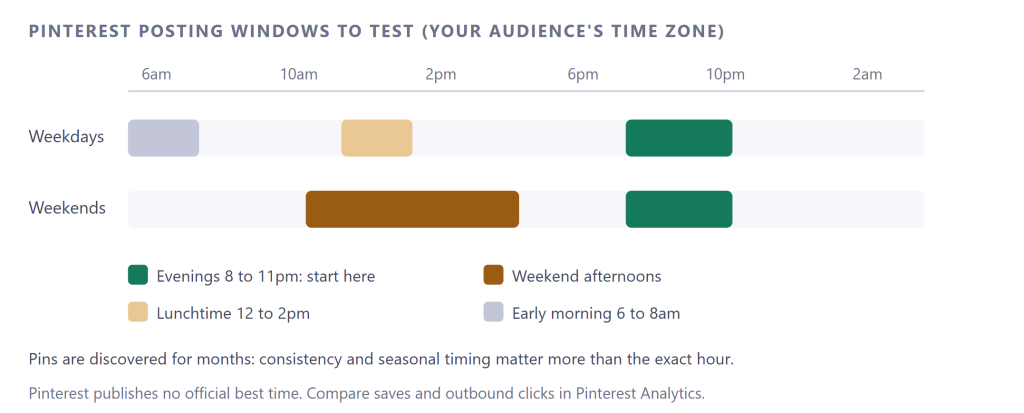
Evenings tend to be strong on Pinterest, because many people browse and plan in their free time. Pinterest does not publish an official best time, and studies from social media tools reach different conclusions because their samples differ. Common patterns across accounts are:
| Time (audience’s time zone) | Why it can work |
|---|---|
| 8pm to 11pm | Evening browsing and planning after work and family time |
| Weekend afternoons | Longer sessions for projects, recipes and shopping research |
| Lunchtime, 12pm to 2pm | Short browsing breaks during the working day |
| Early morning, 6am to 8am | Commute and coffee browsing, and other time zones’ evenings |
Use these as a starting point. Because Pins live a long time, the difference between two good slots is usually smaller than on other networks. Spreading Pins across the day and week is often better than putting everything into one “perfect” hour.
Best Days to Post on Pinterest
Weekends are often the best days to post on Pinterest, with weekday evenings close behind. Saturday and Sunday give people time for longer Pinterest sessions: planning meals for the week, browsing home projects, researching purchases and saving ideas for events. Many niches also see activity rise towards the end of the week, as people plan weekend cooking, outings and projects.
That said, there is no bad day to post on Pinterest if your Pins are relevant and well optimised. Spreading Pins across the whole week keeps your account active and gives Pinterest a steady stream of fresh content, which tends to work better than saving everything for the weekend.
When to Post Seasonal Pins
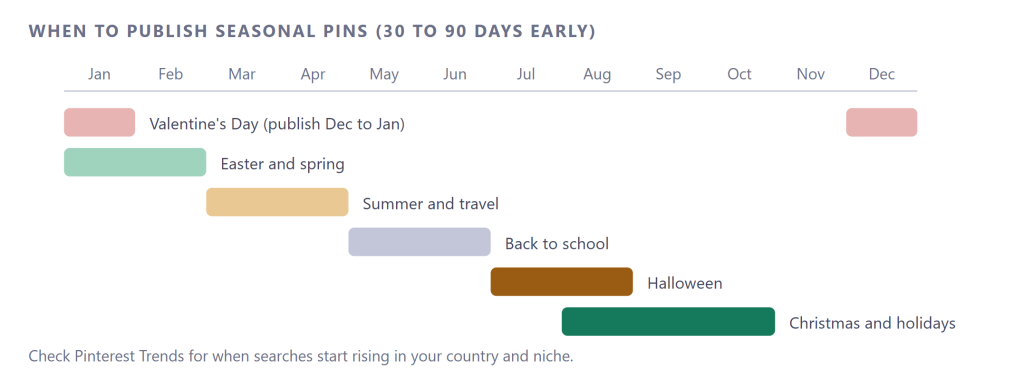
Seasonal timing is the most important timing on Pinterest, and most people start too late. Pinners plan ahead, so searches for seasonal ideas rise weeks or months before the event. Searches for Christmas gifts, recipes and decor build through autumn, and searches for summer holidays, weddings and back-to-school ideas start long before the date.
A good rule is to publish seasonal Pins 30 to 90 days before the event, and earlier for big moments such as Christmas, weddings and summer travel. That gives Pinterest time to index your Pins and start recommending them as interest grows. Pinterest Trends, a free tool, shows when searches for a topic start rising in your country, so you can time your content to the curve rather than guessing.
Best Time to Post on Pinterest by Niche
Different niches have different rhythms, both daily and seasonal.
- Food and recipes. Evenings and weekends for meal planning, with peaks before holidays. Publish holiday recipes six to eight weeks ahead.
- Home and decor. Weekend afternoons, when people plan projects, with spring and autumn refresh seasons.
- Fashion and beauty. Evenings and lunchtime, with seasonal outfit content published as the season approaches.
- Weddings and events. Steady year-round interest, with planning starting many months before typical wedding seasons.
- Travel. Evenings and weekends, with summer travel planning starting early in the year.
- DIY and crafts. Weekends, and well ahead of holidays for gift and decor projects.
- Business and education. Weekday mornings and lunchtimes may perform better for professional audiences.
How to Find Your Best Time: When to Post on Pinterest for Your Audience
Pinterest Analytics shows how your Pins perform, so you can test times and keep what works. You need a free Pinterest business account to see analytics.
- Pick three time slots to test, for example 7am, 1pm and 9pm in your audience’s time zone.
- Publish similar Pins in each slot for two to four weeks.
- Compare saves, outbound clicks and impressions after a week and after a month. Saves and clicks matter more than impressions.
- Check your audience insights for location, so you know which time zones matter.
- Look at seasonal patterns in your top Pins: when did they start gaining traction compared with the event?
- Adjust and repeat every quarter.
Because Pins have a long life, compare results over longer periods than you would on Instagram. A Pin that starts slowly may become a top performer a month later.
How Often to Post on Pinterest
Consistency beats volume on Pinterest. Pinterest has said for years that publishing regularly, ideally every week, works better than publishing many Pins in one burst and then going quiet. For most businesses and creators, a realistic goal is a few fresh Pins a week to one or two a day, depending on how much content you have.
Focus on fresh Pins: new images or videos, even if they link to the same page. You can create several Pins for one blog post, product or recipe, with different images, layouts and titles, and spread them over weeks. That gives Pinterest a steady supply of new content and lets you test which designs perform best.
A Simple Pinterest Posting Schedule
A schedule you can keep for months is better than an ambitious one you abandon. Here is a starting point for a small business or creator:
| Day | Pin | Suggested time |
|---|---|---|
| Monday | New blog post or product Pin | 8pm |
| Tuesday | How-to or tips Pin | 1pm |
| Wednesday | Seasonal Pin (30 to 90 days ahead) | 9pm |
| Thursday | Fresh design for an older popular page | 8pm |
| Friday | Idea Pin or video Pin | 12pm |
| Saturday | Inspiration or roundup Pin | 3pm |
| Sunday | Seasonal or planning Pin | 7pm |
Adjust the times to your analytics and the number of Pins to your capacity. Batch-create a week or month of Pins at once, then schedule them, so publishing happens automatically.
How to Schedule Pins
You can schedule Pins in Pinterest itself or with a social media scheduler. In Pinterest on desktop, create a Pin, add the image or video, title, description, link and board, then choose Publish at a later date and pick a date and time, up to about 30 days ahead. Scheduled Pins appear in your profile’s scheduled section, where you can edit or delete them before they go live.
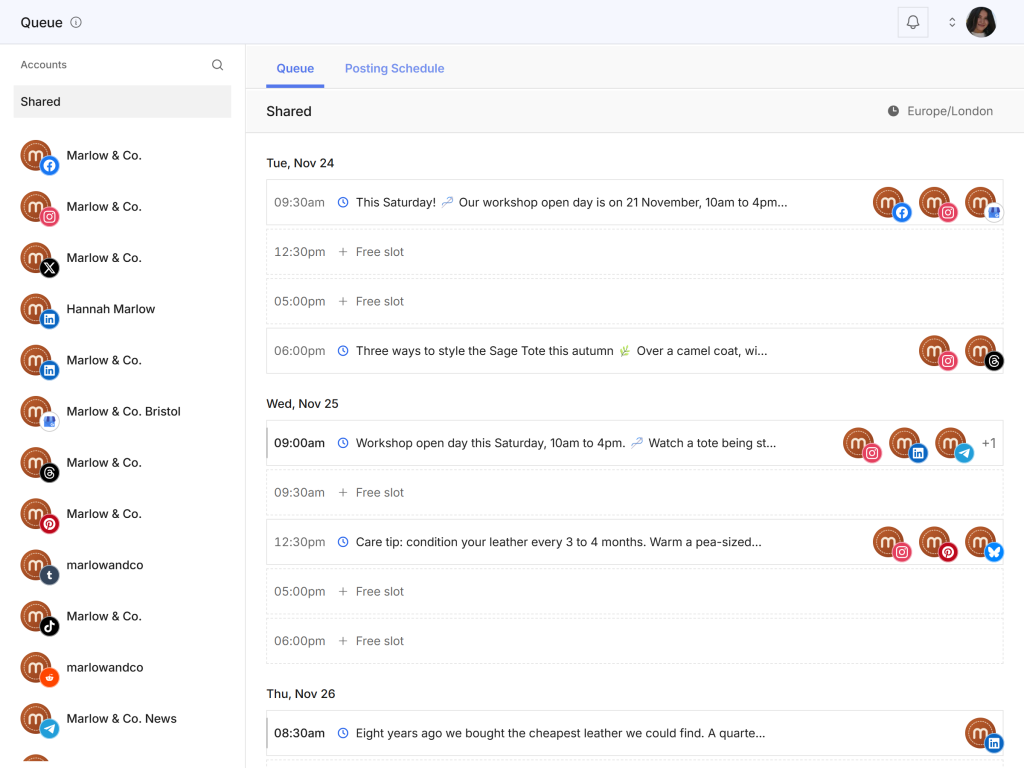
A scheduler lets you plan further ahead and manage Pinterest alongside other networks. In OnlySocial, you upload images or videos, write the Pin title, description and link, choose the board, and schedule Pins on a calendar or add them to a queue with time slots, together with your Instagram, Facebook and TikTok posts. That is especially useful for seasonal campaigns planned months in advance.
Time Zones and Global Audiences
Post for your audience’s time zone, not your own. Pinterest Analytics shows where your audience is located. If most of your audience is in the US, US evening times reach the East Coast first and the West Coast a few hours later. If you have large audiences in several regions, spread Pins across the day so each region sees new content in its evening.
Seasonal timing also differs by country. Holidays, school years and seasons vary, so a “summer” Pin for Australia goes out at the opposite time of year from one for the UK. Use Pinterest Trends for each country you target, and schedule separate Pins where needed.
Fresh Pins and Timing
Pinterest favours fresh Pins, which makes regular scheduling more valuable. A fresh Pin is a new image or video that Pinterest has not seen before. Re-pinning the same image again and again adds little; creating new designs for the same content keeps your account active and gives each page several chances to rank.
A practical approach is to create three to five Pin designs for each important page, such as a recipe, product or guide, and schedule them a week or two apart. Combine that with seasonal Pins published well ahead, and you will always have fresh content going out at good times without daily effort.
How to Use Pinterest Trends to Time Your Pins
Pinterest Trends is the best free tool for seasonal timing, because it shows when people actually start searching. Open Pinterest Trends, choose your country, and type a keyword such as “christmas cookies”, “spring outfits” or “garden ideas”. The chart shows search interest over the past year, so you can see when interest starts to rise, when it peaks and when it falls away.
Use the start of the rise, not the peak, as your publishing deadline. If “halloween costumes” starts climbing in late August and peaks in October, your Pins should be live by mid-August so Pinterest can index them as interest grows. Trends also suggests related terms, which help with Pin titles and descriptions, and shows which topics are growing fastest this year, useful for planning new content.
When to Post on Pinterest for Businesses
For businesses, the most important Pinterest timing is around buying moments. People use Pinterest to research purchases long before they buy, so shops and brands should publish product Pins well ahead of key sales periods: gift guides and holiday collections in early autumn, summer products in spring, and back-to-school items in early summer. Pinners who save your products early often come back to buy closer to the date.
On a weekly basis, schedule product and offer Pins for evenings and weekends, when people browse with time to click through. Coordinate with your website: if a sale starts on Friday, make sure Pins linking to the sale page go live a few days before, and that the page works when people arrive. Track outbound clicks in Pinterest Analytics and conversions in your web analytics to see which Pins and times drive sales.
Video Pins and Timing
Video Pins follow the same timing principles, with a few differences. Video can catch attention in the home feed, especially for how-to, recipe and before-and-after content. Short, vertical videos with clear text overlays work best, because many people watch without sound. Publish video Pins at your audience’s active times, and pair them with static Pins for the same page, so you reach people who prefer each format.
Because video takes more effort to produce, batch it: film several short clips at once, edit them into Pins, and schedule them across weeks. A video that works well can also be repurposed as an Instagram Reel, TikTok or YouTube Short, which a multi-network scheduler makes easy.
Example: A Food Blogger’s Pinterest Calendar
Here is how one creator might put it all together. A food blogger publishes two new recipes a week. For each recipe, they create four Pin designs: a finished-dish photo, a step-by-step collage, a short video, and a text-led Pin with the recipe name. They schedule the first design for the evening the recipe goes live, and the others one to two weeks apart, all at 8pm or on weekend afternoons.
In August, they start publishing Christmas recipes and gift ideas, using Pinterest Trends to see that festive baking searches begin rising in September. In February, they publish spring and Easter recipes. They check Pinterest Analytics monthly and notice that their step-by-step collages earn the most saves, so they make more of them. Over a year, their traffic from Pinterest grows steadily, with older Pins continuing to bring visitors long after publication.
Pinterest Timing vs Instagram and TikTok
If you manage several networks, it helps to treat Pinterest timing differently. On Instagram and TikTok, the first hours after posting decide most of a post’s reach, so the exact hour matters a lot, and seasonal content is posted close to the moment. On Pinterest, a Pin’s life is measured in months, the hour matters less, and seasonal content should go out weeks or months early.
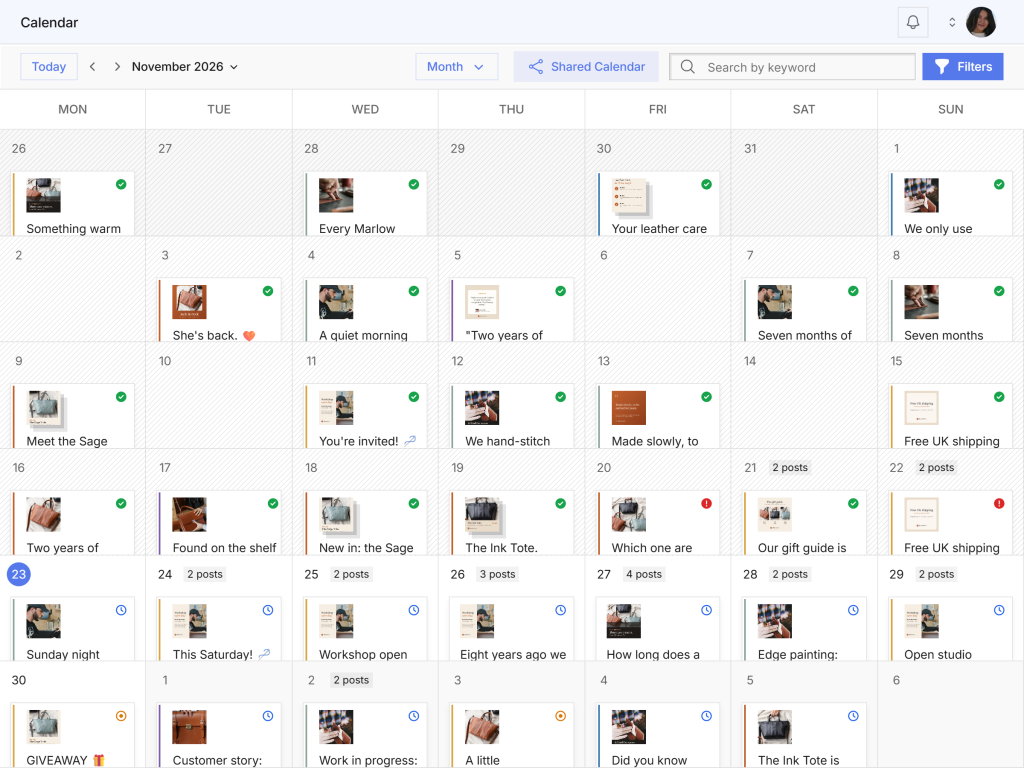
In practice, that means your Pinterest calendar runs ahead of your other channels. Your Halloween Reels might go out in October, while your Halloween Pins went live in August. A shared calendar that shows all networks makes this easy to manage, and lets you reuse the same images and videos at the right time for each platform.
Common Pinterest Timing Mistakes
A few timing habits hold many Pinterest accounts back. Publishing seasonal content too late, when searches have already peaked. Posting in bursts, then going quiet for weeks. Using your own time zone instead of your audience’s. Judging Pins after a day, when many take weeks to gain traction. Re-pinning the same image instead of creating fresh Pins. And ignoring analytics, which leaves you guessing. Fix these, and the exact hour you post becomes a minor detail.
OnlySocial lets you schedule Pinterest Pins with titles, descriptions, links and boards alongside every other network, with a calendar, queue and analytics, from $29 a month for 15 profiles.
Frequently Asked Questions
What is the best time to post on Pinterest?
There is no official answer, but evenings, roughly 8pm to 11pm in your audience’s time zone, and weekend afternoons are strong starting points. Check Pinterest Analytics for your own peaks.
What is the best day to post on Pinterest?
Weekends often perform well because people browse and plan, but posting consistently across the week matters more.
How far in advance should I post seasonal Pins?
Thirty to 90 days before the event, and earlier for big moments such as Christmas, weddings and summer travel.
How often should I post on Pinterest?
Consistently every week. A few fresh Pins a week to one or two a day works for most accounts.
Can you schedule Pins on Pinterest?
Yes, up to about 30 days ahead in Pinterest on desktop, or further with a scheduler such as OnlySocial.
Does posting time matter on Pinterest?
Less than on other networks, because Pins are discovered for months, but posting when your audience is active helps early saves.
What is a good Pinterest posting schedule for 2026?
One fresh Pin a day, mixing new content, fresh designs for popular pages and seasonal Pins published well ahead, at your audience’s active times.
The Short Version
The best time to post on Pinterest is less about the hour and more about consistency and seasons. Start with evenings and weekends, publish fresh Pins every week, get seasonal content up 30 to 90 days early, post for your audience’s time zone, and let Pinterest Analytics guide you.